Top 10 Stainless Steel Mesh Types for Global Buyers

Stainless steel mesh is used in filtration, screening, guarding, construction, and food-processing equipment. Yet “mesh” covers products with very different structures and performance. A fine woven cloth can retain small particles, while welded panels offer a rigid barrier for enclosures or machine guards. The right choice depends on the job, not just the product name.

Small details matter. Buyers should compare aperture size, wire diameter, weave or weld pattern, alloy grade, finish, and dimensional tolerance. For example, 304 stainless steel may suit many general indoor applications, while 316 is often considered where moisture or chlorides raise corrosion concerns. Actual performance still depends on exposure, fabrication, and maintenance. Not every mesh fits.

This guide introduces ten common stainless steel mesh types, including woven wire cloth, welded mesh, crimped mesh, expanded metal, and knitted mesh. It explains how their structures affect strength, airflow, filtration, and installation. A supplier’s specification sheet can clarify opening size and material grade, but samples are useful when fit or finish is critical. Even experienced buyers can overlook edge conditions, cleaning needs, or how a mesh will be supported. That is worth checking before ordering. The comparisons ahead are a starting point, not a substitute for application testing or a clear technical specification.
Top 10 Stainless Steel Mesh Types for Global Buyers

Classify Stainless Steel Mesh by Weave, Structure, and Manufacturing Method

Stainless steel mesh is easier to compare when classified by how its wires cross, how its panels are built, and how they are made. Plain weave alternates over and under; twill weave passes over two wires, creating a tighter pattern. Dutch weave uses different wire diameters and can support fine filtration. Small detail. Big consequence. ISO 9044:2016 provides specifications for industrial woven wire cloth, including aperture and wire diameter—measurements buyers should check together, not separately.

Structure creates another useful distinction. Woven rolls are flexible, while welded mesh holds its grid at fixed intersections. Expanded mesh is slit and stretched from a sheet, so it has no woven joints. Perforated sheet is punched rather than woven, and should not be treated as wire mesh in a strict specification. These construction differences affect edge stability, open area, and cleaning. A sample can reveal burrs or uneven openings that a product description may miss.

Manufacturing method narrows the choice further: weaving, welding, expanding, and punching produce different shapes and tolerances. The World Stainless Association reported 58.4 million tonnes of global stainless-steel crude production in 2023. That figure describes the broader material supply, not mesh output, but it shows why buyers need precise grades and dimensions. A practical shortlist might include plain, twill, Dutch, welded, expanded, and perforated mesh. Classification is helpful, but labels alone are not enough. Check a physical sample. Not always convenient.

Compare 10 Mesh Types: Plain, Twill, Dutch, Welded, Crimped, and More

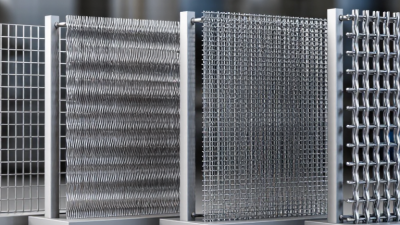
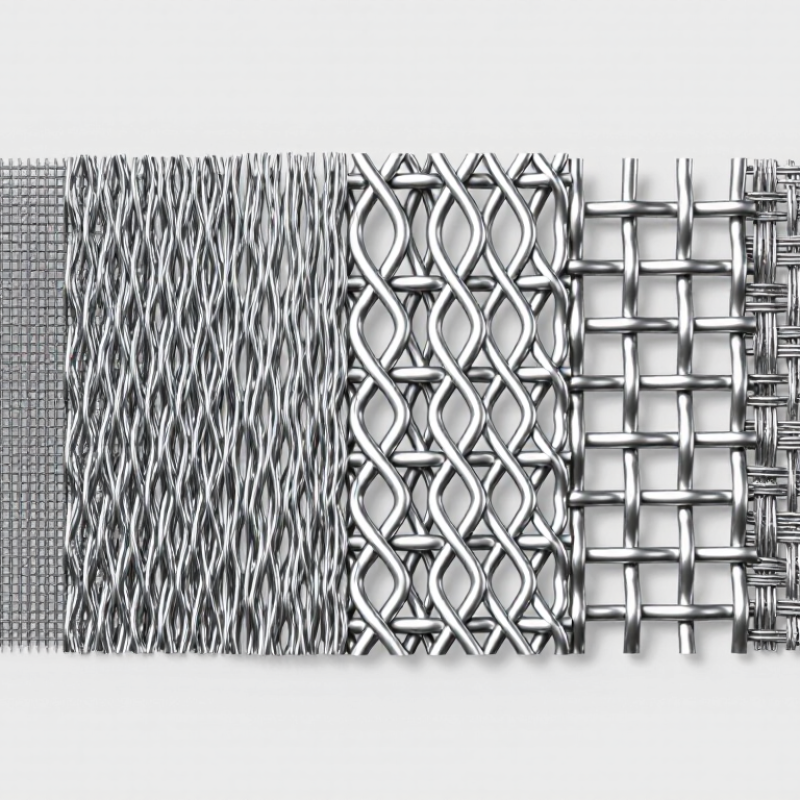
Stainless steel mesh selection begins with the opening, wire diameter, and load—not the name of the weave alone. Plain weave offers balanced openings for general screening. Twill weave packs heavier wires into a tighter, flexible cloth. Dutch weave uses fine wires and dense layers for filtration; reverse Dutch weave changes wire orientation to suit pressure and flow. Welded mesh has rigid, square intersections, while crimped mesh holds larger openings firmly in place. Small details matter.

Other useful options include sintered mesh, laminated from layered cloth for finer filtration; knitted mesh, formed into flexible loops; expanded metal mesh, cut and stretched from sheet; and perforated sheet, punched with regular holes. They are not interchangeable. A fine Dutch filter can clog quickly with dirty feed, while open welded mesh may let small particles pass. ISO 9044 specifies requirements and tolerances for industrial woven wire cloth, so buyers should compare actual aperture and wire measurements, not labels alone.

World Stainless reported 58.4 million tonnes of global stainless crude steel production in 2023, up 4.6% year on year. That figure describes the wider material industry, not mesh output. Still, it highlights why confirming grade, corrosion exposure, and cleaning method matters.

Fit comes first. I would test a sample under real flow conditions; catalog descriptions can miss the awkward part.

Measure Mesh Count, Aperture, and Wire Diameter Under ISO 9044:2016

For buyers comparing stainless steel mesh, ISO 9044:2016 offers a useful framework for checking industrial woven wire cloth. Mesh count is the number of openings along a stated length, so record the unit and measurement direction. Square weaves often match in both directions, but do not assume they always do.

Aperture is the clear space between adjacent wires, not the distance from wire center to wire center. Wire diameter affects that opening and the mesh’s open area. A calibrated optical instrument can help assess apertures across several points; a suitable micrometer can check wire diameter. Use consistent units and avoid relying on a single reading. Small errors matter.

Keep the mesh flat, and note any visible distortion before measuring. A clean sample can still vary from one location to another. Even careful checks have limits. Record the sample location, instrument, and results, then compare them with the applicable ISO tolerances and purchase specifications. One detail is easy to miss: mesh count alone cannot confirm aperture or wire diameter. Ask for measurements of all three, with the test conditions stated, and review any differences before approving the material.

Top 10 Stainless Steel Mesh Types for Global Buyers

Compare nominal mesh count, aperture, and wire diameter for representative woven mesh configurations.

These representative configurations are ordered by mesh count, not ranked by market popularity. Aperture values are calculated from nominal pitch minus wire diameter, using pitch = 25.4 mm ÷ mesh count per inch. ISO 9044:2016 specifies requirements and test methods for industrial woven wire cloth; actual dimensions and tolerances should be confirmed with the supplier and applicable specification.

Compare 304 and 316 Mesh: 18% Cr/8% Ni vs. 2% Mo

For global buyers comparing stainless steel mesh, the key difference between 304 and 316 is not appearance. Both can look bright and clean, but their alloy chemistry affects performance in service. Grade 304 commonly contains about 18% chromium and 8% nickel. Chromium supports a protective surface layer, while nickel helps maintain the steel’s structure and formability. For indoor screens, food-handling equipment, and general-purpose filtration, 304 is often a practical choice.

Grade 316 contains chromium and nickel too, plus roughly 2% molybdenum. That addition improves resistance to pitting and crevice corrosion, especially where chloride salts are present. Think of mesh near a coastal intake, a washdown area, or a process line exposed to salty spray. It is not corrosion-proof, though. Deposits trapped between wires can still cause trouble, and cleaning and exposure conditions matter.

A specification should state more than “316 mesh.” Check wire diameter, aperture, weave, and surface condition; a fine opening can clog even when the alloy is suitable. I would not choose 316 automatically for every wet application. The price difference may be wasted in a mild indoor setting. And 304 can disappoint near chlorides. Small details matter. Ask the supplier for material documentation, then compare it with the actual operating environment before ordering.

Select Mesh by Filtration, Strength, Corrosion, and Operating Conditions

Stainless mesh selection starts with the particle, not the catalog. Plain-weave and twill-weave meshes suit many general screening tasks; Dutch weaves use finer wires to retain smaller particles. Compare the required opening size with the actual wire diameter. A finer opening can reduce flow and plug sooner. For pressure or vibration, welded, crimped, and sintered mesh offer different levels of rigidity. Expanded and perforated metal are useful when open area and structural support matter more than fine filtration. Knitted mesh suits flexible applications, while reverse-Dutch weave can help manage flow in demanding service. Details matter.

Corrosion resistance depends on the alloy, fluid chemistry, temperature, and cleaning cycle—not the word “stainless” alone. The NACE IMPACT study, published in 2016, estimated corrosion costs at US$2.5 trillion globally, or 3.4% of world GDP. That estimate covers many industries, but it underlines why service conditions deserve careful review. Chlorides, acidic washdowns, and trapped deposits may change the best material choice. A mesh that performs well in a dry filter can fail early in a hot, wet line.

Check operating pressure, flow rate, particle shape, and cleaning method before specifying mesh. Ask suppliers for aperture tolerance, wire diameter, alloy grade, and test conditions. ISO 9044:2016 provides requirements and tolerances for industrial woven wire cloth. Still, a standard cannot predict every real installation. A small sample test under actual process conditions may reveal problems a specification misses. That step is easy to overlook.