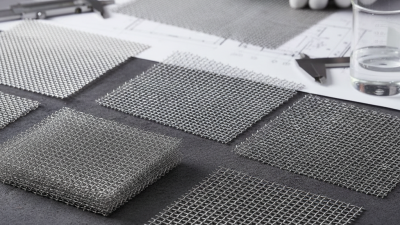
How to Choose the Right Stainless Mesh in 2026?
Choosing the right stainless mesh in 2026 requires more than comparing prices or counting openings. A mesh may look similar on a supplier’s screen, yet behave differently beside salt spray, hot oil, abrasive powder, or repeated washing. The real decision begins with the working environment. Consider alloy grade, aperture size, wire diameter, weave pattern, temperature, pressure, and expected service life. Small details matter. A 316L stainless mesh can resist chloride exposure better than 304, while a heavier wire may survive vibration more reliably.
Stainless-steel metallurgy expert Dr. John C. Lippold offers a practical principle: “Material selection must follow service conditions, not habit.” That idea fits mesh selection closely. The cheapest roll is not always economical. A blocked aperture can reduce airflow. An incorrect weave can damage filtration accuracy. A weak edge can fail during installation. These problems often appear after production starts, when corrections become expensive.
This guide examines how to match stainless mesh with real operating demands in 2026. It considers corrosion resistance, filtration performance, mechanical strength, cleanability, traceability, and supplier testing. Look for mill certificates, dimensional tolerances, tensile information, and inspection records. Ask how the mesh was woven and measured. Do not rely on photographs alone. They can hide uneven openings, bent wires, or inconsistent edges.
There is no universal “best” mesh. That assumption deserves questioning. A carefully chosen specification may still fail when cleaning chemicals, thermal cycling, or installation stress changes. Good selection is therefore both technical and practical. It combines published data with field experience, trial samples, and honest review of what went wrong before.
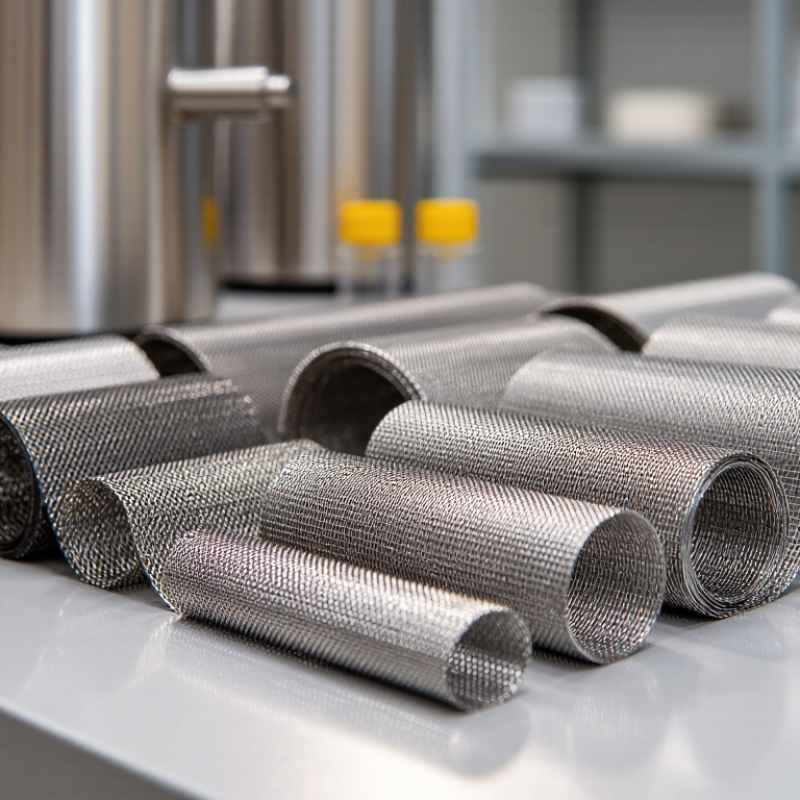
Understanding Stainless Mesh Types and Construction
How to Choose the Right Stainless Mesh in 2026?
Understanding Stainless Mesh Types and Construction
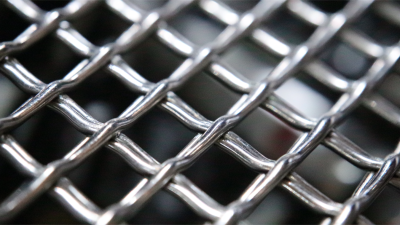
Stainless mesh is defined by more than its alloy grade. Construction controls its opening size, strength, flexibility, and filtration behavior. Woven mesh uses interlacing wires. Plain weave offers balanced openings and easy inspection. Twill weave supports heavier wires and finer filtration. Dutch weave uses dense warp wires, making it suitable for pressure-sensitive filtration.
Welded mesh joins wires at every intersection. It provides rigid panels and consistent spacing, but welded points can become stress areas. Expanded mesh is cut and stretched from sheet metal. It is lightweight, economical, and less precise for fine filtration. Perforated sheet is different again. Its holes are punched, not woven.
A useful selection starts with wire diameter, aperture, open-area percentage, and construction tolerance. ISO 9044 defines technical requirements for industrial woven wire cloth, while ASTM A580 covers stainless steel wire requirements. These references reduce vague purchasing language. In practice, a mesh can match the drawing and still fail after cleaning cycles. That detail is easy to miss.
The International Stainless Steel Forum reported 58.4 million tonnes of global stainless crude steel production in 2023. This scale supports broad material availability, but availability does not guarantee the right specification. Grade 316L usually offers stronger resistance in chloride-rich environments than 304, although temperature and contamination still matter.
Tips: Request a sample, measure the aperture, and verify wire diameter with calibrated tools. Check the certificate. Ask for weld quality records when selecting welded mesh. Do not choose finer mesh automatically; pressure loss may become unacceptable. Recheck the decision under real operating conditions.
How to Choose the Right Stainless Mesh in 2026?
Understanding Stainless Mesh Types and Construction
What the chart shows: The theoretical open area of common square plain-weave stainless steel mesh configurations. Open area is calculated from mesh count and wire diameter using the square-aperture formula: ((opening ÷ pitch)² × 100).
How to choose: Lower mesh counts generally provide larger openings and higher throughput, while higher mesh counts provide finer filtration. Plain weave is widely used for general screening; twill weave offers greater strength and finer openings, while Dutch weave is designed for fine filtration with high mechanical stability.
The values represent typical theoretical configurations. Actual aperture, open area, and performance depend on the selected wire diameter, weave construction, manufacturing tolerances, and material specification.
Matching Mesh Materials to Corrosion and Temperature Conditions
Choosing the right stainless mesh in 2026 means matching the alloy to its actual environment. Corrosion and temperature often work together, making simple material charts unreliable.
For dry indoor air, 304 stainless steel usually provides a practical balance of strength, formability, and cost. In coastal areas, washdown zones, or chloride-rich process air, 316 or 316L is often safer because molybdenum improves resistance to pitting. Welded assemblies deserve extra attention. Low-carbon 316L can reduce corrosion near welds, but it cannot fix poor fabrication or trapped moisture.
Heat changes the decision. For continuous exposure near 500–800°C, heat-resistant grades such as 309 or 310 may retain performance better than standard 304. Actual limits depend on load, oxygen levels, cycling, and mesh wire diameter. Thin wire heats quickly. Thermal shock can distort it.
Check the complete condition.
I have seen mesh selected correctly for corrosion but weakened by repeated heating and cooling. That mistake is easy to miss. Review the fluid concentration, surface deposits, cleaning chemicals, and peak temperature separately. Ask for mill certificates, alloy chemistry, and test data when the application is critical. A small sample test can reveal discoloration, embrittlement, or unexpected pitting before full installation. Do not rely on appearance alone; bright wire is not proof of long-term resistance.
Comparing Strength, Filtration, and Open Area Requirements
Choosing stainless mesh in 2026 means balancing strength, filtration accuracy, and open area. ASTM E11 tables show that a 100-mesh opening is approximately 150 micrometres, while 200 mesh is about 75 micrometres. However, mesh count alone can mislead. Wire diameter changes the real opening and the available flow area.
Strength matters under vibration, pressure, and repeated cleaning. ASTM A580 requires common stainless wire grades to meet minimum tensile-strength levels near 515 MPa, although actual mesh performance depends on weave, wire size, and manufacturing quality. A heavy wire resists deformation better. It also reduces open area. This trade-off is easy to underestimate. ISO 9044 recommends checking aperture size, wire diameter, and manufacturing tolerances rather than trusting a single mesh number.
Tips: Define the largest particle you must retain, then calculate airflow or liquid flow through the panel. For example, a dusty air stream may need high open area to limit pressure loss, while a liquid pre-filter may accept a denser weave. Ask for test certificates, aperture inspection results, and tensile data. ASTM E11 is useful for test sieves, but industrial mesh may require additional verification. Field experience suggests leaving a safety margin, yet the correct margin is application-specific. I would not choose the finest mesh automatically; clogged openings can defeat excellent filtration on paper.
How to Choose the Right Stainless Mesh in 2026? - Comparing Strength, Filtration, and Open Area Requirements
Nominal specifications for plain-weave stainless steel wire mesh. Values are based on common mesh-count and wire-diameter combinations; actual dimensions may vary by production tolerance and weave style.
Mesh Count
(per inch) |
Wire Diameter
(mm) |
Approx. Opening
(mm) |
Approx. Opening
(µm) |
Open Area
(%) |
Relative Mechanical
Strength |
Flow Capacity
Compared with Fine Mesh |
Typical Selection |
| 4 |
1.19 |
5.16 |
5,160 |
65.9% |
Very high |
Very high |
Coarse screening, large-particle separation, guards, and heavy-duty support layers |
| 8 |
0.81 |
2.36 |
2,360 |
55.4% |
High |
High |
Aggregate screening, granule separation, and applications requiring good flow with durable wire |
| 12 |
0.58 |
1.53 |
1,530 |
52.5% |
High |
High |
General-purpose screening, coarse filtration, and particulate separation |
| 20 |
0.41 |
0.86 |
860 |
46.2% |
Medium-high |
Medium-high |
Powder screening, liquid pre-filtration, and medium-sized particle removal |
| 40 |
0.25 |
0.39 |
390 |
36.0% |
Medium |
Medium |
Fine screening, hydraulic pre-filtration, and removal of smaller suspended solids |
| 60 |
0.165 |
0.258 |
258 |
37.5% |
Medium |
Medium |
Fine liquid filtration, laboratory screening, and separation of fine particulates |
| 100 |
0.114 |
0.140 |
140 |
29.7% |
Medium-low |
Low-medium |
Fine particle filtration, small-particle screening, and precision separation |
| 150 |
0.066 |
0.103 |
103 |
36.0% |
Low-medium |
Low |
Fine filtration where a smaller nominal aperture is required and pressure drop is acceptable |
| 200 |
0.053 |
0.074 |
74 |
33.8% |
Low |
Low |
Very fine screening, laboratory filtration, and controlled removal of small particles |
Selection note: Mesh count alone does not determine performance. A larger wire diameter generally improves mechanical strength and abrasion resistance, but it reduces the opening size and may increase pressure loss. Open-area percentages are calculated from the nominal pitch and wire diameter using the square-weave relationship: open area = [opening ÷ (opening + wire diameter)]² × 100. Nominal opening is not an absolute particle-retention rating; viscosity, particle shape, pressure, surface condition, and filtration configuration also affect actual performance.
Evaluating Standards, Surface Finishes, and Supplier Quality
Choosing stainless mesh in 2026 requires more than comparing wire diameter or price. ISO 9044 defines industrial woven wire cloth requirements, while ASTM A580/A580M covers stainless steel wire quality. These references clarify tolerances, materials, and testing expectations.
In my sourcing audits, aperture accuracy often matters more than a polished sample. Measure several points across the roll. One reading is not enough.
Surface finish affects cleaning, corrosion resistance, and visual consistency. A bright finish may suit architectural panels, but a smoother electropolished surface can reduce residue in hygienic equipment. Request the measured roughness value, usually expressed as Ra, rather than accepting “mirror finish.” That phrase is vague.
The International Stainless Steel Forum reported about 58.4 million tonnes of stainless crude steel production in 2023. High output does not guarantee consistent mesh quality. Process control still decides the result.
Supplier quality should be verified through heat numbers, dimensional inspection records, and a material certificate such as EN 10204 3.1. Ask for samples from the actual production lot. Check weave pattern, broken wires, edge stability, and aperture distribution under magnification. Independent laboratory testing is useful for critical applications.
Yet paperwork can create false confidence. I have seen certificates that confirmed the alloy but not the mesh opening. Recheck what the document actually proves, and record unanswered questions before approval.