What Are the 2026 Top Stainless Steel Wire Mesh Types?
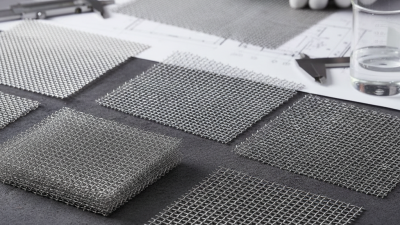
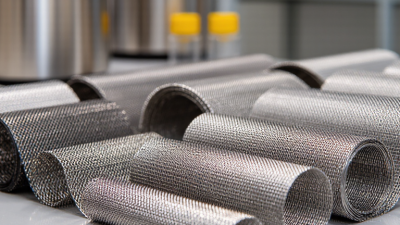
In 2026, stainless steel wire mesh is becoming more specialized, not simply more widely used. Engineers now match mesh geometry with pressure, temperature, corrosion exposure, and cleaning routines. Plain weave remains practical for fine filtration. Twill weave offers stronger support for smaller openings. Dutch weave serves demanding separation work, especially where retention matters more than open area. Welded mesh provides rigid panels for guards, baskets, screens, and architectural structures.
“Mesh selection should begin with the operating duty, not the catalog number,” says wire-mesh engineer Michael R. Hayes. His point is easy to test on a factory floor. A 316 stainless steel mesh may resist saltwater better than 304 grade. Yet poor welding, sharp bends, or incorrect aperture measurement can still cause failure. Material choice alone is not enough.
This guide examines the leading stainless steel wire mesh types expected to attract attention in 2026. It considers weave pattern, wire diameter, opening size, strength, filtration accuracy, and maintenance demands. It also compares woven and welded constructions in realistic applications. Some product rankings remain debatable. That is useful. Performance depends heavily on the environment, supplier quality, and inspection discipline.
Small details matter. A clogged filter behaves differently from a clean sample. A decorative panel faces different stresses from a pressure screen. Buyers should verify alloy certificates, mesh counts, tolerances, and surface finish before ordering. The strongest option is not always the best option. Practical selection requires evidence, field experience, and a willingness to reconsider familiar specifications.
2026 Selection Criteria: Mesh Counts, Apertures, and ISO 9044 Standards
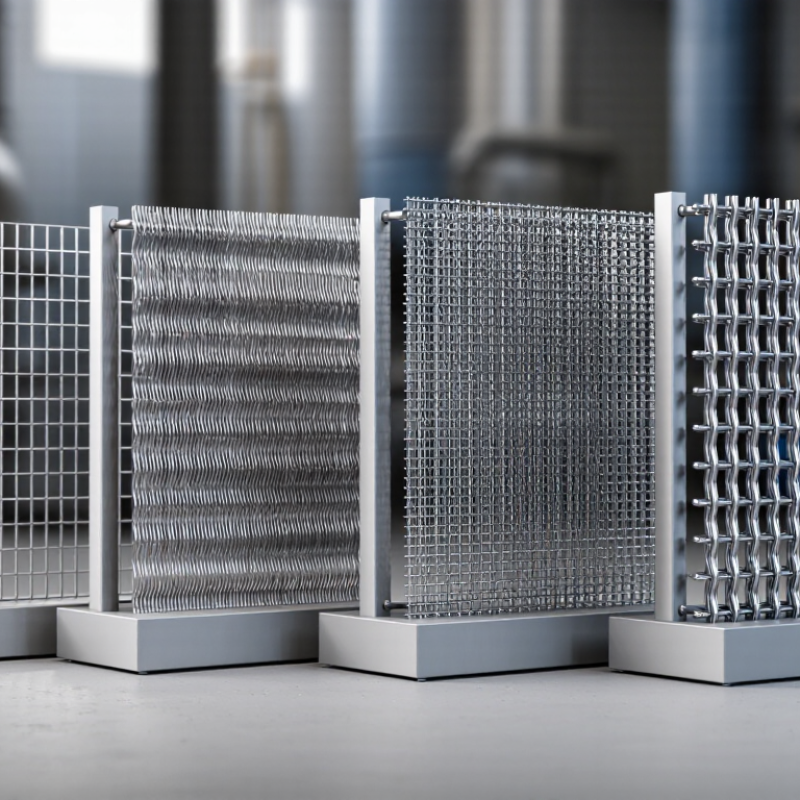
For 2026, stainless steel wire mesh selection starts with aperture, not appearance. Plain weave remains the common choice for filtration, screening, and protective covers. Twilled weave suits finer openings and stronger loading. Dutch weave provides high filtration precision, especially when retaining small particles. Welded mesh fits rigid panels, guards, and structural partitions.
Mesh count can mislead buyers. A 100-mesh cloth with 0.10 mm wire has an aperture near 0.154 mm. Using 0.15 mm wire reduces that opening to approximately 0.104 mm. The count stayed unchanged. Performance did not. ISO 9044:2016 requires woven wire cloth specifications to address mesh, wire diameter, aperture, and relevant tolerances. Ask for measured aperture data, not only a catalog number.
The International Stainless Steel Forum reported about 58.4 million tonnes of global stainless crude steel production in 2023. This expanding material base supports broad mesh availability, but supply does not guarantee consistency. A 2024 industrial filtration outlook also identified finer separation and process reliability as major purchasing drivers. That trend makes aperture tolerance increasingly important. In practical specification reviews, I check the free-area percentage beside the opening size. It predicts flow better. Sometimes, engineers overlook it. A small correction can change pressure drop, cleaning frequency, and service life. ISO 9044 testing remains useful, although it cannot replace application trials with the actual powder, liquid, temperature, and load.
304 Mesh: 18–20% Chromium and 8–10.5% Nickel for General Use
304 stainless steel wire mesh is a practical choice for many everyday screening and filtration tasks. Its typical composition includes 18–20% chromium and 8–10.5% nickel. Chromium helps form a thin protective surface layer, while nickel supports ductility and corrosion resistance. In a workshop, that can mean mesh that handles routine handling and damp air without quickly showing rust.
The details matter. A fine 304 mesh can separate small particles, while a coarser weave allows more airflow or liquid passage. Opening size, wire diameter, and weave pattern all affect strength and flow, so alloy alone cannot determine performance. 304 works well in many indoor and general-purpose settings, but it is not immune to corrosion. Salt spray, strong chlorides, or harsh cleaning chemicals can cause pitting over time. That distinction is easy to miss. I would check the actual environment and cleaning routine before choosing a grade; a specification sheet cannot capture every real-world exposure. Also inspect cut edges and welded areas, where damage or residue may undermine the surface’s protection.
| Stainless Steel Type | Typical Chromium Content | Typical Nickel Content | Key Characteristics | Magnetic Response | Recommended Service Environment | Common Wire Mesh Applications |
|---|---|---|---|---|---|---|
| 304 | 18.0–20.0% | 8.0–10.5% | General-purpose austenitic stainless steel with good corrosion resistance, formability, weldability, and strength. | Generally non-magnetic in the annealed condition; slight magnetism may develop after cold working. | Indoor, outdoor, food-processing, architectural, and moderately corrosive environments. | Filters, strainers, screens, baskets, guards, food equipment, and general industrial mesh. |
| 316 | 16.0–18.0% | 10.0–14.0% | Contains approximately 2.0–3.0% molybdenum, improving resistance to chlorides and pitting compared with 304. | Generally non-magnetic in the annealed condition; slight magnetism may result from processing. | Marine atmospheres, coastal locations, chemical processing, pharmaceutical, and high-humidity environments. | Marine screens, chemical filters, laboratory mesh, pharmaceutical equipment, and saltwater applications. |
| 316L | 16.0–18.0% | 10.0–14.0% | Low-carbon version of 316; the reduced carbon content helps minimize sensitization during welding. | Generally non-magnetic in the annealed condition. | Welded components exposed to moisture, chlorides, chemicals, and hygienic processing conditions. | Welded filter elements, sanitary screens, medical equipment, chemical baskets, and process meshes. |
| 430 | 16.0–18.0% | Usually less than 0.75% | Ferritic stainless steel with good oxidation resistance, useful formability, and lower nickel content than austenitic grades. | Magnetic. | Dry indoor environments and applications requiring moderate corrosion resistance and magnetic response. | Appliance panels, decorative mesh, ventilation screens, automotive trim, and general-purpose guards. |
| 410 | 11.5–13.5% | Usually less than 0.75% | Martensitic stainless steel offering higher hardness and wear resistance than common austenitic grades, with moderate corrosion resistance. | Magnetic. | Dry or mildly corrosive conditions where wear resistance and strength are important. | Wear screens, mechanical components, separation equipment, and heat-resistant support mesh. |
| 310 / 310S | 24.0–26.0% | 19.0–22.0% | High-alloy austenitic stainless steel designed for elevated-temperature oxidation resistance; 310S has lower carbon for improved weldability. | Generally non-magnetic in the annealed condition. | High-temperature furnace, kiln, heat-treatment, and thermal-processing environments. | Furnace conveyor mesh, heat-treatment baskets, burner components, and high-temperature screens. |
| 904L | 19.0–23.0% | 23.0–28.0% | Highly alloyed austenitic grade with molybdenum and copper for strong resistance to sulfuric acid and aggressive chemical environments. | Generally non-magnetic in the annealed condition. | Severe chemical service, acid-processing systems, and highly corrosive industrial environments. | Specialty chemical filters, acid-resistant screens, process baskets, and demanding filtration systems. |
316/316L Mesh: 2–3% Molybdenum for Chloride and Marine Environments
In 2026, 316/316L stainless steel wire mesh remains a strong choice for chloride-rich environments. Its key advantage is molybdenum, normally 2.00–3.00% in 316 chemistry, according to ASTM A240/A240M. This element improves resistance to pitting and crevice corrosion. The benefit is practical near seawater, salt spray, brine tanks, and coastal ventilation systems. 316L contains a lower carbon level, usually 0.03% maximum. That reduces sensitization risks after welding. The difference looks small. In service, it can matter.
The International Molybdenum Association reports that stainless steel generally consumes more than 25% of global molybdenum demand. This reflects its importance in demanding industrial applications. However, alloy grade alone cannot guarantee long service life. Wire diameter, mesh opening, weaving tension, surface finish, and trapped deposits also affect performance. Chloride residue can hide between wires. Even 316L can stain or pit under stagnant, contaminated conditions. That point is often underestimated.
Tips: Specify 316L for welded mesh and request material certificates showing molybdenum content. ASTM A580/A580M can guide stainless steel wire requirements. Clean salt deposits regularly with fresh water and a suitable non-chloride cleaner. Inspect corners, welds, and shaded areas first. Do not assume “marine grade” means maintenance-free; actual exposure should guide the final specification.
Plain, Twill, and Dutch Weaves: 20–500 Mesh for Filtration Control
In 2026, stainless steel wire mesh selection depends on filtration accuracy, pressure, and cleaning demands. Mesh count describes openings per linear inch, but it does not define performance alone. Wire diameter changes aperture size, open area, strength, and flow resistance. A 20-mesh screen offers comparatively open passages for coarse particles and protective screening. A 500-mesh screen supports much finer separation, but it may restrict flow and require careful handling.
Plain weave remains a practical choice for general filtration and screening. Each wire passes over and under the next wire, creating a balanced, stable surface. Twill weave offsets the crossing pattern, allowing smaller openings with heavier wires. It can provide useful strength when fine filtration faces pressure or repeated cleaning. Dutch weave uses different wire arrangements in the warp and weft directions. Its tightly packed surface supports controlled particle retention, especially in demanding liquid and gas filtration systems.
Fit matters more. In real installations, a mesh can meet its stated count yet perform poorly if the gasket, frame, or support layer is unsuitable. I have seen premature blinding caused by selecting mesh only by number. That approach is convenient, but incomplete. Check nominal aperture, wire diameter, open-area percentage, pressure drop, and temperature limits. Confirm the stainless steel grade against the process fluid and cleaning method. Tolerances also deserve attention; “500 mesh” is not a universal guarantee of identical openings. For critical filtration, test the actual media under operating conditions before approving full production.
310S and 321 Mesh: Heat-Resistant Grades for Applications Above 800°C
For applications above 800°C, stainless steel wire mesh selection depends on heat cycles, atmosphere, load, and mesh opening. Two important grades are 310S and 321. Both resist oxidation, but they behave differently under prolonged thermal exposure.
310S contains high chromium and nickel levels, giving it strong oxidation resistance in furnaces, radiant screens, and hot gas filtration. It usually retains useful strength better than common stainless grades at elevated temperatures. However, strength still falls as temperature rises. A fine mesh may sag, distort, or lose its designed opening. Heat changes everything.
321 is stabilized with titanium, which helps reduce carbide precipitation after welding or repeated heating. It suits thermal shields, exhaust components, and mesh supports exposed to cycling temperatures. Yet, I would not treat 321 as automatically superior above 800°C. Long exposure, vibration, sulfur-bearing gases, and sudden cooling can change the result. Its performance needs verification for the actual environment.
Wire diameter matters as much as alloy grade. Thicker wires tolerate mechanical stress better, while finer wires provide tighter filtration but lose stiffness sooner. Specify temperature, exposure time, gas composition, tension, and cleaning method before ordering. Request heat-resistance data, chemical composition records, and dimensional inspection results. In practical testing, a small sample can reveal warping that a data sheet may not show. No grade is perfect.
Related Posts
-
How to Choose the Best Stainless Mesh for Your Needs?
-

Top Uses of Stainless Steel Wire Mesh in Various Industries?
-
What are the Best Uses for Stainless Steel Mesh?
-
How to Choose the Best Stainless Steel Mesh for Your Needs?
-
How to Choose the Right Stainless Mesh in 2026?
-
How to Install Steel Cable Railing for Your Deck or Balcony?