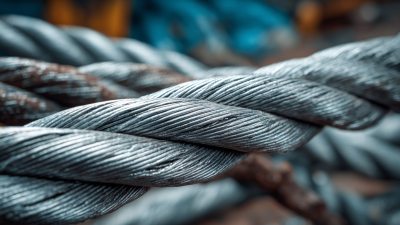
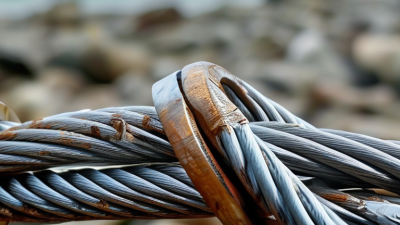
What Is Wire Rope and What Are the Main Types?
Wire rope is more than bundled steel. It is a working machine made from wires, strands, and a core. George A. Costello, a leading researcher in wire-rope mechanics, described it simply: “A wire rope is a machine.” That idea changes how we examine it. Each wire shares load, bends around sheaves, and suffers repeated contact. A small surface crack may signal deeper fatigue.
The market is also substantial. Grand View Research estimated the global wire rope market at about USD 10 billion in 2023, with continued growth expected through 2030. IMARC Group reported a similar multi-billion-dollar market, although its figure differs because research firms use different product and regional boundaries. The numbers are useful, but not perfectly aligned. That deserves caution.
This article will explain the main wire rope types and where they fit. Common designs include standard stranded rope, rotation-resistant rope, compacted rope, and spiral strand. Their differences affect flexibility, strength, crush resistance, and rotational behavior. A crane rope may need fatigue resistance near a sheave. A suspension application may demand exceptional stability and corrosion control. It bends. It wears. It can fail quietly.
Selection should follow the manufacturer’s specifications, ISO 4309 guidance, and applicable workplace rules. Diameter alone is not enough. Construction, core type, lubrication, fleet angle, and inspection history all matter. The wrong rope can look strong while performing poorly. Real reliability comes from matching design, loading, installation, and maintenance—not from trusting a label or a headline figure.

Wire Rope: Definition, Structure, and Core Components
What Is Wire Rope and What Are the Main Types?
Wire rope is a flexible machine element made from steel wires, strands, and a core. The wires form the working surface. Strands twist around the core and distribute tension during lifting, pulling, or suspension. The core supports the strands and helps preserve the rope’s shape. It is not a solid bar.
The Wire Rope Technical Board’s Wire Rope User’s Handbook describes a 6×19 construction as six strands, with 19 wires in each strand. A 6×37 rope uses six strands, each containing 37 wires, so it usually bends more easily. Fiber cores provide flexibility, while independent steel wire rope cores offer stronger crush resistance and higher temperature tolerance. The core matters.
In practical inspections, ISO 4309:2017 directs attention to broken wires, diameter reduction, corrosion, deformation, and core damage. The U.S. Occupational Safety and Health Administration identifies ten randomly distributed broken wires in one rope lay as a removal trigger for certain wire-rope slings. That figure should not be applied blindly to every rope. Construction, duty cycle, lubrication, and loading history change the risk. A simplified diagram can mislead. Small changes matter. Experienced inspectors measure diameter at repeated points, photograph damaged sections, and compare results with the rope manufacturer’s technical specification. I would treat any single inspection number cautiously, especially when internal damage cannot be seen.
Wire Rope: Definition, Structure, and Core Components
Wire rope is a flexible mechanical assembly made from multiple steel wires twisted into strands, which are then helically laid around a core. The chart compares common constructions by their nominal number of metallic wires.
How to read the chart: In a designation such as 6×19, the first number indicates the number of strands and the second indicates the nominal number of wires in each strand. The total is calculated as strands × wires per strand; the core is not included in this count.
How Wire Rope Is Manufactured
Wire rope is a flexible assembly of steel wires twisted into strands around a central core. Its design affects strength, bending performance, abrasion resistance, and rotation control. Common types include standard stranded rope, rotation-resistant rope, compacted rope, and stainless steel rope.
Manufacturing begins with high-quality steel rod. The rod is drawn through dies until it reaches a precise diameter. This process increases strength but can also create internal stress. Heat treatment helps balance hardness and flexibility. After cleaning, the wire receives protective lubrication or coating, depending on its intended environment.
Small wires are then helically twisted into strands. Several strands are laid around a fiber, steel, or independent wire rope core. The machine must control tension carefully. Uneven tension can cause gaps, kinks, or uneven loading during service. Some ropes are compacted afterward, reducing gaps between wires and improving resistance to crushing.
Quality checks include diameter measurement, tensile testing, visual inspection, and lay-length verification. Manufacturers also inspect lubrication coverage and core alignment. In practical inspections, surface damage often appears before serious internal failure. That detail is easy to overlook. Manufacturing is highly controlled, but no process is flawless. Minor variations may remain, so traceable testing and regular field inspection are still essential. The correct rope depends on load direction, sheave size, bending frequency, corrosion exposure, and required safety margin.
Key Properties and Performance Factors
Wire rope consists of steel wires twisted into strands around a central core. Its design determines strength, flexibility, and service life. Common types include rotation-resistant, compacted, galvanized, and stainless steel ropes. Each suits different working conditions. Construction controls behavior. A flexible rope bends easily around small sheaves, while a compacted rope offers greater surface contact and resistance to crushing.
Tensile strength matters, but it is not the only performance factor. Core type affects stability, flexibility, and resistance to drum pressure. A fiber core bends smoothly but may tolerate less heat. A steel core handles higher temperatures and compression. Wire rope also needs suitable lubrication. Dry, damaged wires can develop broken strands faster than expected. Corrosion may begin inside the rope, where visual checks cannot detect it.
Sheave diameter, drum design, load speed, and bending cycles strongly influence fatigue. A rope running over an undersized sheave may show flattened sections and uneven wear. Shock loading creates hidden damage. It can reduce safety margins without obvious deformation. During inspections, I look for broken wires, birdcaging, rust, crushed areas, and changes in rope diameter. Small details matter. I have seen ropes appear usable while internal corrosion had already weakened them. That experience encourages careful records, conservative replacement decisions, and inspections matched to actual working conditions. Even then, no inspection method is perfect.
Common Applications and Selection Considerations
What Is Wire Rope and What Are the Main Types?
Wire rope combines steel wires, strands, and a central core. Its construction determines strength, flexibility, rotation, and resistance to crushing. Common types include fiber-core rope, independent wire-rope core, rotation-resistant rope, and compacted rope. A fiber core bends easily. An independent wire-rope core handles higher heat and compression. Rotation-resistant designs suit tall lifts and suspended loads.
Application should guide selection. Cranes often need high breaking strength, fatigue resistance, and controlled rotation. Elevators usually require flexible ropes that pass repeatedly over sheaves. Offshore lifting adds corrosion, shock loading, and difficult inspection conditions. Smaller sheaves sharply increase bending stress. That detail is often underestimated.
The World Steel Association reported 1,882.6 million tonnes of crude steel production in 2023, showing the scale of steel supply behind lifting products. Yet steel volume does not guarantee rope quality. ISO 4309:2017 recommends inspection and discard practices based on broken wires, wear, corrosion, and deformation. Under OSHA 29 CFR 1910.184, six randomly distributed broken wires in one rope lay can require removal in certain applications. The exact rule depends on rope construction and service conditions. A clean rope can still be unsafe inside. That is why inspection records, measured diameter loss, lubrication, and sheave alignment matter. Selection based only on rated load is incomplete, and sometimes dangerously convenient.