Why Choose Stainless Steel Wire Rope?
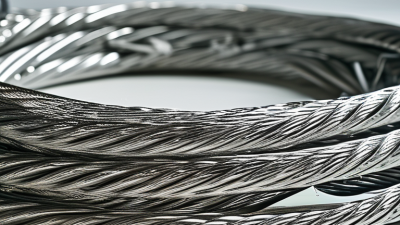
Stainless steel wire rope earns its place where moisture, salt, cleaning chemicals, or frequent handling challenge ordinary steel. Its bright strands may look simple, but each rope combines individual wires, strands, and a core. Construction matters. So do grade, diameter, lay, and end fittings. A rope that works beside a sheltered indoor hoist may not last near a seawater washdown. “Details decide.”
The scale of stainless steel production provides useful context, not a direct measure of wire-rope demand. The International Stainless Steel Forum reported 58.4 million tonnes of global stainless steel melt-shop production in 2023. That figure signals broad industrial use, but it does not prove that every stainless rope performs equally well. For technical checks, ISO 17893:2004 defines terms for steel wire ropes; project specifications and manufacturer data should guide selection. Dr. J. R. Davis, editor of the ASM Specialty Handbook: Stainless Steels, is a credible materials reference, but a verbatim statement from him about stainless steel wire rope should not be invented or presented without a traceable source. That distinction matters.
This guide looks at the practical reasons engineers choose stainless steel wire rope: corrosion resistance, clean appearance, and dependable handling in demanding environments. It also considers limits. Stainless steel is not maintenance-free, and corrosion resistance depends on the alloy and exposure. A quick rinse can help. A wrong fitting can undo careful selection. Check the service conditions before specifying rope, and verify load capacity with documented supplier data.
What Stainless Steel Wire Rope Is and How It Is Made
Why Choose Stainless Steel Wire Rope?
What Stainless Steel Wire Rope Is and How It Is Made
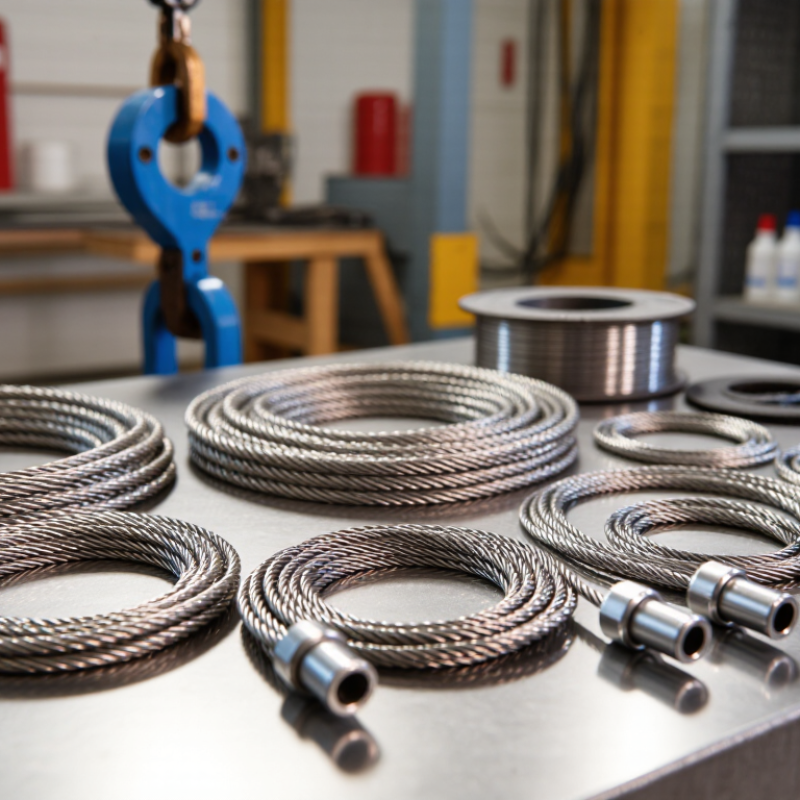
Stainless steel wire rope is a bundle of thin metal wires twisted into strands, then laid around a central core. Common grades include 304 and 316; grade selection affects corrosion resistance, strength, and cost. The International Stainless Steel Forum reported 58.4 million tonnes of global stainless steel crude production in 2023. That figure shows the material’s industrial scale, though it does not indicate the quality of any particular rope.
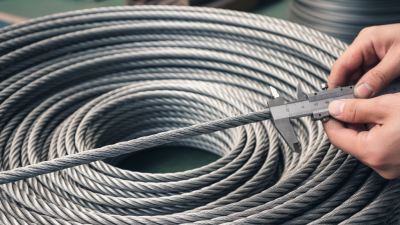
Manufacturing begins with stainless steel wire rod. Drawing dies reduce it to the required wire diameter, sometimes with intermediate heat treatment to restore ductility. Individual wires are then twisted into strands, and strands are laid around a fiber or steel core. Rope construction, such as 7×19, describes strand and wire counts. Finished rope is checked for dimensions, lay, surface condition, and mechanical properties. Small details matter. Corrosion resistance is not immunity: salt, chemicals, and poor maintenance can still shorten service life.
Tips: Match the grade and rope construction to the environment and load. Ask for material and test documentation, and inspect for broken wires, kinks, or corrosion. A bright surface alone is not proof of performance. When conditions are severe, get a qualified engineer to review the selection.
Why Choose Stainless Steel Wire Rope?
What It Is and How It Is Made
Stainless steel wire rope is made by twisting individual wires into strands and then laying the strands together. The chart shows the wire counts represented by common constructions: for example, 7 × 19 has seven strands with 19 wires per strand, for 133 wires total. More wires can allow a more flexible construction, while the right choice depends on the application, rope diameter, and working conditions.
How Stainless Steel Grades Shape Rope Performance
Why Choose Stainless Steel Wire Rope?
How Stainless Steel Grades Shape Rope Performance
The grade matters as much as the rope’s diameter and construction. Grade 304 stainless steel suits many indoor uses and ordinary outdoor conditions. It offers useful corrosion resistance without requiring the added alloying elements found in 316. Near salt spray, coastal air, or frequent washdowns, grade 316 is often a better choice. Its molybdenum content improves resistance to chloride-related pitting. Better, but not immune.
A rope can still stain or corrode if salt and dirt sit between its wires. Grade selection should reflect the actual exposure, not just the product label. Consider contact with other metals, cleaning chemicals, and how often the rope gets wet. A flexible 7x19 construction may bend smoothly over a pulley, but its fine wires also need regular inspection. Small broken wires can be easy to miss. Grade alone does not guarantee long service life, and that is worth remembering.
Tips: Rinse ropes exposed to salt with fresh water, then let them dry. Check end fittings and high-bend areas for rust marks, broken wires, or looseness. When conditions are uncertain, confirm the grade and load requirements with a qualified supplier.
Key Properties That Make Stainless Steel Wire Rope Useful
Stainless steel wire rope earns its place through a useful mix of corrosion resistance, strength, and flexibility. Chromium helps form a thin passive surface film that can renew itself when exposed to oxygen. The International Stainless Steel Forum identifies at least 10.5% chromium as the defining threshold for stainless steel. For 316 alloy, ASTM A240 lists 16–18% chromium, 10–14% nickel, and 2–3% molybdenum. Molybdenum improves resistance to chloride attack, making 316 a common choice near coastal spray or washdown areas. It is not immune to corrosion, though.
The rope’s construction matters as much as its alloy. Small wires bundled into strands can bend around sheaves and fit into compact rigging systems. ASTM A580/A580M covers stainless steel wire, while ASTM A1023/A1023M addresses steel wire rope; buyers should check the applicable product specification and rated load. Look closely at the rope’s diameter, lay, end fittings, and working environment. A rope that runs smoothly over a pulley may still wear quickly if the pulley is too small. Regular inspection helps reveal broken wires, crushed strands, or rust staining. A practical caveat: stainless steel can cost more upfront, and choosing it does not remove the need for maintenance.
Where Stainless Steel Wire Rope Is Commonly Applied
Stainless steel wire rope appears wherever a flexible, load-bearing line must tolerate moisture and repeated movement. At harbors, it can support control lines, lifting gear, and deck equipment; on vessels, crews value its resistance to rust staining. UNCTAD’s Review of Maritime Transport 2023 reported that the global commercial fleet reached about 2.2 billion deadweight tons at the start of 2023. That scale helps explain the demand for durable marine hardware, though it does not measure wire-rope use directly. Salt still attacks.
Construction offers another common setting. Wire rope can brace façades, suspend canopies, guide lifts, or secure temporary access systems. In wind-energy maintenance, technicians may encounter it in lifting and access equipment. The Global Wind Energy Council reported 117 gigawatts of new wind capacity in 2023, bringing global installed capacity to 1,021 gigawatts. These figures describe the expanding sector, not a specific rope market. Material choice still depends on load, rope construction, fittings, and exposure. Stainless steel is not maintenance-free: inspect broken wires, worn terminations, and trapped grit, especially near coastal joints. A small detail matters. A suitable grade can resist corrosion, but poor drainage or incompatible fittings may shorten service life.
How to Choose the Right Rope for a Specific Environment
Choosing stainless steel wire rope for a specific environment means looking beyond its clean finish. Start with exposure: dry indoor service differs from coastal air, pool chemicals, or repeated washdown. Chlorides can cause pitting, so 316 stainless steel is often preferred near saltwater. Grade 304 may suit many sheltered settings. Neither grade is immune to corrosion.
Next, match the rope’s construction and diameter to its job. A flexible construction can bend more easily around small sheaves, while a stiffer rope may suit a straighter run. Check the rated working load, end fittings, and sheave size against the equipment maker’s specifications. Also consider abrasion, vibration, and temperature changes. A rope that looks sound can still hide broken wires, especially near a termination. Inspection matters.
Tips: Rinse salt or chemical residue with fresh water, then dry where practical. Check for corrosion, kinks, and loose fittings on a regular schedule. Don’t assume a thicker rope is automatically safer; fit, load, and installation all matter. The right choice can take a second look.
Why Choose Stainless Steel Wire Rope? — How to Choose the Right Rope for a Specific Environment
| Environment or Use | Common Alloy to Consider | Typical Rope Construction | Why It May Be Suitable | Important Selection Checks |
|---|---|---|---|---|
| Indoor use or dry, mild environments | Type 304 stainless steel | 1×19 for low-flexibility stays; 7×7 or 7×19 where bending is needed | 304 is a widely used stainless steel with good general corrosion resistance in many ordinary indoor and atmospheric conditions. | Check the required working load, rope diameter, end fittings, and whether the rope will bend over sheaves. |
| Outdoor applications away from strong salt exposure | Type 304 or 316, depending on exposure and maintenance | 7×7 for moderate flexibility; 7×19 for greater flexibility | Stainless wire rope can resist ordinary weathering, but performance depends on local pollution, moisture, and maintenance. | Consider nearby roads, industrial emissions, sheltered areas where moisture can collect, and how often the rope can be inspected and cleaned. |
| Coastal air, marine atmosphere, or occasional salt spray | Type 316 is commonly considered because it contains molybdenum, which improves resistance to chloride-related corrosion compared with 304. | 7×7 or 7×19 for flexible runs; 1×19 for relatively straight, static applications | 316 is often selected for chloride-exposed environments, but it is not immune to corrosion. | Rinse salt deposits where practical, avoid water-trapping crevices, and inspect regularly. Exposure severity and rope design affect service life. |
| Continuous seawater immersion, splash zones, or heavy chloride exposure | Do not assume 304 or 316 will be adequate; have the alloy specified for the service conditions by a qualified designer. | Choose construction and fittings as a complete system for the intended load and exposure. | Even 316 can suffer pitting or crevice corrosion in severe chloride conditions, especially where deposits or stagnant water are present. | Assess immersion time, temperature, crevices, galvanic contact, cleaning access, and inspection intervals. Confirm suitability for the specific application. |
| Food-processing or washdown areas | Type 304 may suit many mild indoor conditions; Type 316 may be considered where cleaning agents or chlorides increase exposure. | Use a construction that can be inspected and cleaned for the installation. | Both alloys are used in hygienic settings, but the appropriate choice depends on chemicals, cleaning procedures, and applicable requirements. | Confirm chemical compatibility and hygiene requirements. Avoid designs that trap residues, and follow the facility’s cleaning and inspection procedures. |
| Frequent movement, pulleys, or repeated bending | Select the alloy for the environment, then select construction for the bending duty. | 7×19 is generally more flexible than 7×7; both are more flexible than 1×19. | More wires in the strands generally allow greater flexibility, while a less flexible construction may suit straight or static runs. | Check sheave diameter, bend frequency, load, and fatigue requirements against the rope manufacturer’s specifications. |
| Static stays, bracing, or architectural tensioning | 304 or 316, selected according to the exposure conditions | 1×19 is commonly used where a relatively stiff, low-flexibility rope is suitable. | Its construction is suited to relatively straight runs where frequent bending is not required. | Confirm end-fitting compatibility, tensioning method, load limits, and the corrosion resistance of the entire assembly. |
Selection note: Choose wire rope by considering environment, load, movement, fittings, and maintenance together. Stainless steel grade alone does not determine service life. Verify working-load limits and application suitability with the rope and fitting specifications; do not use a general-purpose wire rope for lifting people or other safety-critical service without the required approval.
Related Posts
-
How to Choose Stainless Steel Wire Rope?
-
2026 Top Stainless Steel Wire Rope Suppliers
-
Top 10 Tips for Choosing the Right Stainless Steel Wire Rope for Your Projects
-
What is Stainless Steel Wire Rope and How is it Used?
-
China Top Stainless Steel Wire Rope Supplier How to Choose Quality
-
Why Choose Stainless Steel Cable for Global Buyers?