How to Choose Stainless Steel Wire Rope?
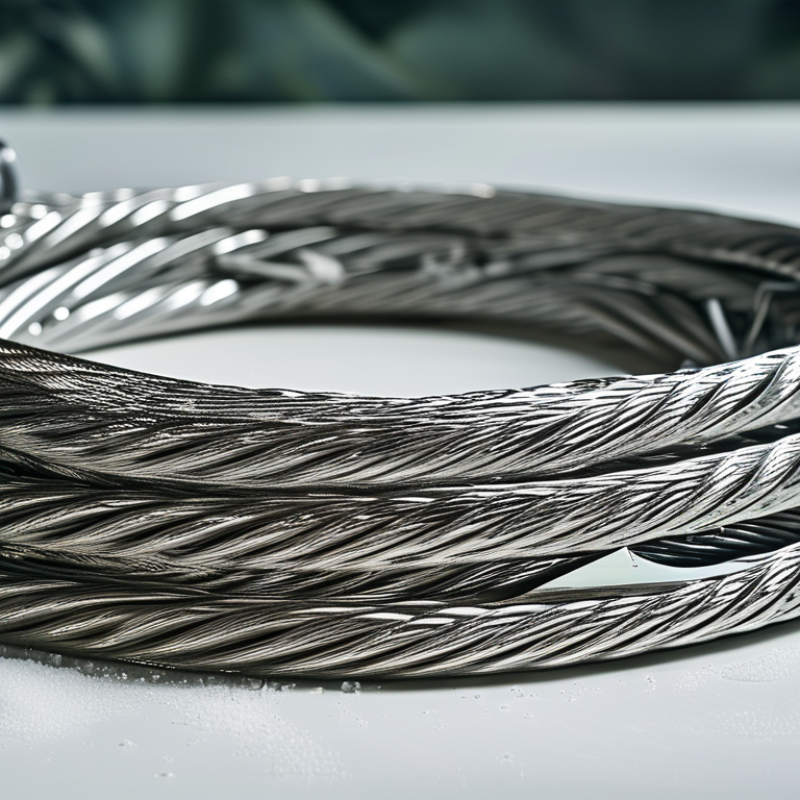
Choosing the right stainless steel wire rope begins with the working environment, not the catalogue photograph. A bright, polished surface can look reassuring. It can still fail in salt spray, repeated bending, or poorly planned connections. The first questions should involve load, movement, exposure, temperature, and inspection access.
John A. Roebling, a pioneering wire-rope engineer, offered a principle that remains useful today: “The strength of a rope must be judged by its construction and use, not its appearance.” That idea deserves attention. Select the stainless grade carefully. Type 304 may suit many indoor and general applications. Type 316 usually offers stronger resistance to chlorides and coastal exposure. Neither choice removes the need for inspection.
Construction matters just as much. A 1×19 stainless steel wire rope offers stiffness and limited flexibility. A 7×19 construction bends more easily around sheaves and fittings. Diameter, minimum breaking force, working load limit, bend radius, and termination quality must work together. One oversized rope may perform badly in a tight pulley. One attractive fitting may distort the strands.
Look closely.
This guide explains how to compare these details without relying on vague product claims. It also considers certification, traceability, corrosion patterns, and supplier testing. The process is not perfectly simple. Real installations often reveal compromises between strength, flexibility, cost, and service life. That is why experienced selection combines calculations with field evidence, careful questioning, and honest review of what may have been overlooked.
Identify the Application, Load, Environment, and Required Safety Factor
How to Choose Stainless Steel Wire Rope?
Choose stainless steel wire rope by matching it to the application, load, environment, and safety factor. Begin with the real working condition, not only the catalog description. A lifting operation needs reliable strength and controlled movement. A marine railing may need better corrosion resistance than breaking strength. Consider rope diameter, construction, flexibility, core type, and end fittings. Field inspections often reveal that fittings fail before the rope itself.
Calculate the maximum working load, including shock, bending, vibration, and uneven loading. Then apply the required safety factor specified by your industry or project documentation. Never treat the breaking load as the permitted working load. For saltwater, chemical exposure, or outdoor use, compare suitable stainless steel grades and confirm compatibility with nearby metals. A small galvanic reaction can become serious over time. Ask a qualified engineer when loads are critical or conditions are uncertain.
Tips: Keep a written load record. Inspect crushed strands, rust spots, broken wires, and loose fittings. Replace questionable rope early. Do not rely on appearance alone. One overlooked bend can reduce service life. My first selection would remain provisional until the actual installation, movement, and maintenance routine are reviewed. Practical judgment matters, but measured evidence should guide the final choice.
| Application | Typical Load and Movement | Environmental Conditions | Recommended Stainless Steel | Suitable Rope Construction | Preliminary Safety Factor | Selection Guidance |
|---|---|---|---|---|---|---|
| Architectural railing, balustrade, and guard-wire systems | Primarily static tension; limited movement; loads are transferred through terminals and posts. | Indoor areas, urban outdoor locations, or moderately corrosive atmospheres. | Grade 304 for mild environments; Grade 316 for coastal or chloride-exposed locations. | 1×19 for straight, low-flexibility runs and clean appearance. | 3:1 or higher, subject to local building and guardrail regulations. | Check the complete assembly, including end fittings, posts, anchors, deflection, and pretension. The rope alone does not determine system capacity. |
| Marine lifelines, sailboat standing rigging, and deck fittings | Static or cyclic tension; vibration and repeated adjustment may occur. | Salt spray, high humidity, splash water, and outdoor exposure. | Grade 316 is normally preferred because it provides better resistance to chloride exposure than Grade 304. | 1×19 for standing rigging; 7×7 or 7×19 where more flexibility is required. | 5:1 or higher for load-bearing rigging, unless a governing marine standard requires another value. | Inspect for broken wires, corrosion staining, kinks, terminal movement, and fatigue. Rinse salt deposits and avoid mixing incompatible metals without suitable isolation. |
| General material lifting and hoisting | Suspended loads, possible acceleration, shock, bending over sheaves, and repeated cycles. | Wet, clean industrial, food-processing, or corrosive service conditions. | Grade 316 for corrosive service; Grade 304 may be suitable in less aggressive environments. | 7×19 for flexibility over sheaves; use a construction specified for lifting by the applicable standard. | 5:1 minimum as a preliminary target; local lifting regulations and rope standards may require a different factor. | Use the manufacturer’s certified minimum breaking load. Account for bending efficiency, termination efficiency, shock loading, sling angle, and drum or sheave diameter. |
| Personnel lifting, fall-arrest, or life-safety systems | Potentially dynamic loading with severe consequences if failure occurs. | Indoor or outdoor service; corrosion, UV exposure, and contamination may be present. | Use the stainless grade and rope type explicitly approved by the applicable safety standard. | Use only a construction and termination system certified for the specific life-safety application. | 10:1 or the value required by the governing standard. | Do not select by general guidance alone. Require documented certification, compatible fittings, controlled installation, inspection procedures, and regulatory approval. |
| Control cables, actuators, and mechanical linkages | Low to moderate tensile load; frequent reciprocating movement and bending. | Indoor equipment, outdoor machinery, moisture, dust, or moderate chemical exposure. | Grade 304 for general service; Grade 316 for marine or chloride environments. | 7×7 for moderate flexibility; 7×19 for higher flexibility and repeated bending. | 3:1 or higher, increased when shock, fatigue, or uncertain loading is present. | Select the rope and end fittings as one assembly. Confirm minimum bend radius, stroke life, friction, routing, and compatibility with pulleys. |
| Winches, guide cables, and light-duty tensioning systems | Variable tension with possible starts, stops, and intermittent bending. | Outdoor, wash-down, humid, or moderately corrosive conditions. | Grade 316 for frequent water or salt exposure; Grade 304 for less aggressive service. | 7×19 where flexibility is important; 1×19 only for mostly straight, static tension. | 5:1 for lifting-like service; 3:1 may be suitable for controlled static tensioning. | Check drum winding, fleet angle, sheave diameter, crushing resistance, and the possibility of shock loading before final selection. |
| Food-processing, pharmaceutical, and cleanable equipment | Usually static or moderate cyclic loads; frequent cleaning and wash-down. | Moisture, detergents, sanitation chemicals, and strict cleanliness requirements. | Grade 316, selected according to the actual cleaning chemicals and concentration. | 1×19 for fixed tension; 7×7 or 7×19 for movement. | 3:1 or higher, adjusted for dynamic loading and fatigue. | Surface finish, crevice formation, drainage, terminal design, and cleaning compatibility can be as important as nominal tensile strength. |
| Decorative suspension, signage, and light architectural fittings | Static load with low movement; accidental impact should still be considered. | Interior or protected exterior environments. | Grade 304 for normal indoor service; Grade 316 for exposed or coastal installations. | 1×19 for a straight, neat appearance; 7×7 when adjustment or flexibility is needed. | 3:1 minimum; use a higher factor where people or valuable equipment could be affected. | Verify the combined weight of the fixture, fittings, cable, and any foreseeable impact or vibration. Provide secondary retention where required. |
| Load and Safety-Factor Check | ||||||
| Required minimum breaking load | Required MBL = Design Load × Safety Factor | Example: a 2 kN design load with a 5:1 safety factor requires a rope assembly with a certified minimum breaking load of at least 10 kN before applying any required derating. | ||||
| Working load limit | WLL = Certified MBL ÷ Safety Factor | A rope with a certified MBL of 20 kN and a 5:1 factor has a theoretical WLL of 4 kN, provided that terminations, bends, angles, wear, corrosion, and applicable standards do not reduce the allowable capacity. | ||||
| Important dimensional checks | Confirm rope diameter, minimum bend radius, sheave or pulley diameter, drum diameter, groove profile, termination efficiency, corrosion allowance, and installation clearance. A larger diameter does not automatically provide adequate system capacity if the fittings or supports are weaker. | |||||
| Grade comparison | Grade 304 is commonly suitable for general indoor and mild outdoor environments. Grade 316 generally offers better resistance to chlorides and marine exposure, but neither grade is immune to corrosion. The correct choice depends on the complete chemical, temperature, stress, and maintenance conditions. | |||||
| Final verification | Use certified performance data for the exact rope diameter, construction, grade, and termination. Safety factors and legal requirements vary by application and jurisdiction; lifting, fall-arrest, marine, and guardrail systems must be checked against the applicable current standard before use. | |||||
Related Posts
-

Top Stainless Cable Types for Global Buyers?
-
Top 10 Tips for Choosing the Right Stainless Steel Wire Rope for Your Projects
-

Why Stainless Steel Cable Is Your Best Choice for Durability and Strength
-

What is Stainless Steel Wire Rope and How is it Used?
-
China Top Stainless Steel Wire Rope Supplier How to Choose Quality
-
2026 How to Choose the Best Stainless Cable for Your Projects?