Why Choose Stainless Steel Cable for Global Buyers?

Global buyers need more than a bright metal surface. They need predictable performance, documented quality, and practical value over years of service. Stainless steel cable often meets these demands in marine equipment, architectural systems, lifting applications, and industrial installations. Its strength-to-weight balance supports compact designs, while chromium-rich alloys develop a passive layer that helps resist corrosion.

Material choice still requires care. Grade 304 may suit indoor or mild environments. Grade 316 usually offers better resistance near saltwater and chlorides. Cable construction matters too. A 1×19 cable provides low stretch and firm support. A 7×19 cable bends more easily around pulleys and fittings. Diameter, breaking load, fatigue resistance, and termination quality should match the actual working conditions.

Dr. J. R. Davis, editor of ASM Specialty Handbook: Stainless Steels, stated, “Stainless steels are selected for corrosion resistance, strength, and appearance.” This principle remains useful for international purchasing decisions. However, it needs practical interpretation. A cable can have excellent alloy chemistry but poor swaging, unclear traceability, or unsuitable packaging. That is where specifications become important.

Reliable suppliers should provide mill certificates, dimensional checks, breaking-load data, and production records. Buyers should also confirm applicable standards and inspect samples before large orders. Stainless steel cable is not maintenance-free. Salt deposits, abrasive contact, and incorrect tension can still shorten its service life. No material is perfect. The better question is whether the selected cable fits the environment, load, installation method, and maintenance plan. That disciplined comparison helps global buyers reduce replacement costs and avoid unpleasant surprises.
Why Choose Stainless Steel Cable for Global Buyers?

What Is Stainless Steel Cable?

Why Choose Stainless Steel Cable for Global Buyers?

What Is Stainless Steel Cable?

Stainless steel cable is a flexible assembly of drawn stainless steel wires. These wires form strands, which are helically laid around a core. The result is a strong, bendable product for tensioning, lifting, railing, marine, and architectural applications. Cable is not the same as a single wire. Its construction affects breaking force, flexibility, fatigue life, and installation behavior.

Common grades include 304, 316, and 316L stainless steel. Grade 304 suits many indoor and general outdoor environments. Grade 316 offers better resistance to chlorides, especially near seawater or deicing salts. However, it is not corrosion-proof. Poor drainage, trapped dirt, and surface contamination can still create staining. That distinction matters.

The World Stainless Association reported global crude stainless steel production of about 58.4 million tonnes in 2023. This scale reflects stainless steel’s continuing role in infrastructure and engineered products. ASTM A492 covers stainless steel rope wire, while ISO 2408 provides requirements for steel wire ropes. Buyers should still verify grade, cable construction, diameter tolerance, breaking load, and test documentation. A cable that looks polished may still be unsuitable for cyclic loading. In practical inspections, sharp bends, crushed strands, and loose fittings often reveal more than appearance. Selection is not only about strength. It is about environment, movement, maintenance, and the consequences of failure.

Key Properties That Make Stainless Steel Cable Reliable

For global buyers, stainless steel cable earns attention through measurable reliability. Its corrosion resistance supports use in humid ports, coastal buildings, and outdoor structures. Chromium in the steel forms a protective oxide layer in air. This layer can reform after minor surface damage. However, salt spray can still harm poor-quality cable. Grade selection matters. Buyers should request material certificates, tensile data, and traceable production records.

Strength and flexibility also influence service life. A well-made cable can handle repeated bending around sheaves without quickly losing performance. Its smooth surface reduces friction and helps limit dirt buildup between strands. Consistent diameter improves fitting accuracy and load distribution. Temperature resistance is another practical advantage in industrial environments. Yet stainless steel is not automatically suitable for every load. Construction, wire diameter, core type, and working load must match the application.

Maintenance remains important. Operators should check broken wires, flattened strands, rust marks, and unusual stiffness during routine inspections. Clean water can remove salt deposits before they concentrate at fittings. Small defects matter. In real projects, installation errors often create problems that material quality cannot prevent. I have found that clear inspection records and conservative replacement decisions are more reliable than visual confidence alone.

Common Applications Across Global Industries

Why Choose Stainless Steel Cable for Global Buyers?

Stainless steel cable supports demanding work across global industries. In marine construction, it secures railings, davits, lifting systems, and control lines near saltwater. In architecture, designers use it for bridges, façades, balustrades, and suspended displays. Its clean appearance matters, but corrosion resistance matters more. The World Steel Association reported 1.89 billion tonnes of crude steel production in 2023, showing the scale of modern steel supply. Yet cable quality still varies between suppliers and regions.

Renewable energy projects use cable for access systems, safety lines, and equipment restraints. Agriculture uses smaller cables in greenhouse systems, trellising, and livestock equipment. Transport, food processing, and mining also require durable cable assemblies. ASTM A492 and related specifications help buyers check material and tensile requirements. Practical experience suggests that cable construction, diameter, flexibility, and end fittings can matter as much as the alloy grade. This is often overlooked. More metal does not always mean better performance.

Tips: Match the cable grade to moisture, chemicals, temperature, and movement. Request mill certificates, tensile data, and dimensional tolerances. Check whether fittings use compatible stainless steel. A cable can look perfect and still fail through poor termination. Buyers should also confirm local testing rules and installation guidance. Reports from Grand View Research indicate continued growth in stainless steel wire demand, but forecasts are not guarantees. Project conditions remain decisive.

Why Choose Stainless Steel Cable for Global Buyers? - Common Applications Across Global Industries

Stainless steel cable is selected worldwide for its combination of corrosion resistance, strength, flexibility, durability, and low maintenance requirements. The specifications below are general industry reference values; final selection should be based on load calculations, local regulations, installation conditions, and the applicable product standard.

Industry / Application Typical Stainless Steel Grade Common Cable Construction Typical Diameter Range Why Stainless Steel Cable Is Used Important Selection Considerations Typical Environment
Marine Rigging and Boat Hardware AISI 316 / 316L 1×19 for low stretch; 7×7 or 7×19 where flexibility is required 2–12 mm Good resistance to saltwater exposure, strong fatigue performance, and a clean appearance Consider chloride exposure, end fittings, bending radius, working load limit, and galvanic compatibility Coastal and offshore
Architectural Cable Railings AISI 316 / 316L 1×19 or 7×7 3–6 mm Provides a slim visual profile, reliable tensioning, and resistance to outdoor corrosion Check local guardrail rules, required cable spacing, post deflection, tension limits, and termination quality Outdoor and urban
Bridge and Infrastructure Components AISI 316 / 316L Structural strand or multi-strand cable, depending on engineering design 6–32 mm Long service potential, resistance to atmospheric corrosion, and reduced routine coating requirements Engineering verification, fatigue resistance, corrosion category, inspection access, and national standards are essential Urban, coastal, and industrial
Food Processing and Commercial Kitchens AISI 304 / 304L; 316L for higher chloride exposure 7×7 or 7×19 for moving or adjustable equipment 2–8 mm Non-coated metal surface, cleanability, corrosion resistance, and suitability for damp operating areas Use hygienic fittings, avoid contamination traps, verify cleaning chemicals, and follow site sanitation procedures Washdown and humid
Industrial Conveyor and Material Handling AISI 304 or 316 7×19 for flexibility; compacted or specialized constructions for engineered systems 3–16 mm High tensile capability, flexibility, abrasion resistance, and dependable performance in repetitive movement Evaluate sheave diameter, cycle frequency, lubrication, abrasion, shock loading, and inspection intervals Factory and warehouse
Agricultural and Greenhouse Systems AISI 304; 316 in coastal or fertilizer-rich locations 1×19 for bracing; 7×7 or 7×19 for adjustable supports 2–10 mm Resists moisture, outdoor weathering, and moderate exposure to agricultural contaminants Account for fertilizer chemicals, soil moisture, wind loading, pretension, and contact with dissimilar metals Outdoor and humid
Renewable Energy Equipment AISI 316 / 316L for exposed installations 1×19, 7×7, or 7×19 according to static or dynamic duty 3–12 mm Suitable for exposed support, bracing, retention, and safety applications where corrosion resistance is important Verify wind and vibration loads, UV exposure of adjacent components, electrical bonding, and service access Solar, wind, and coastal
Mining and Heavy Industrial Sites AISI 304 or 316; specialized grades may be required for severe chemicals 6×19, 7×19, or engineered high-strength constructions 6–25 mm Durability, strength, and resistance to moisture and many industrial atmospheric conditions Assess shock loads, abrasion, corrosive chemicals, temperature, safety factors, and mandatory inspection requirements Heavy-duty and abrasive
Aerospace and Aircraft Control Systems Approved stainless steel aerospace cable grades Small-diameter flexible control cable 1–4 mm High strength-to-size ratio, flexibility, predictable movement, and corrosion resistance Only use traceable, approved products that meet the aircraft or aerospace system specification Controlled and regulated
Elevators, Lifts, and Safety Mechanisms Grade specified by the lifting-system standard Specialized lifting or control-rope construction Application-specific Reliable tensile performance and fatigue resistance when correctly matched to the mechanism Follow the equipment manufacturer's rope specification, safety factor, discard criteria, and inspection schedule Indoor and industrial
Retail Displays, Signage, and Lighting AISI 304; 316 for exterior or coastal installations 1×19 for straight suspension; 7×7 for adjustable systems 1–4 mm Minimal visual impact, easy adjustment, clean finish, and good resistance to indoor or outdoor corrosion Confirm suspended load, ceiling or wall anchorage, adjustment hardware, and applicable public-safety requirements Commercial and architectural
Security, Perimeter, and Safety Barriers AISI 304 or 316 1×19 for rigid lines; 7×7 for flexible restraint systems 2–8 mm Weather resistance, high visibility control, and low routine maintenance compared with painted carbon steel Consider tamper resistance, terminal security, tensioning, impact loads, and local safety regulations Outdoor and public areas

Note: Diameter ranges are commonly encountered examples rather than universal limits. Tensile strength, working load limit, corrosion performance, and allowable service life vary with grade, cable construction, finish, fittings, manufacturing standard, installation method, and operating conditions.

How to Choose the Right Stainless Steel Cable

Why Choose Stainless Steel Cable for Global Buyers?

How to Choose the Right Stainless Steel Cable

Choosing stainless steel cable starts with the working environment. Indoor displays may need 304 stainless steel, while coastal sites often justify 316 stainless steel. Salt spray, humidity, and cleaning chemicals can change the decision. Do not choose by appearance alone.

Measure twice. Details matter.

Check the required diameter, construction, and breaking load. A 1x19 cable offers firm shape and low stretch. It suits railings, architectural tensioning, and straight runs. A 7x7 or 7x19 cable bends more easily around pulleys and fittings. The cable must exceed the working load, not merely match it. Apply a suitable safety factor for vibration, movement, and uneven loading.

End fittings deserve equal attention. Threaded terminals, swage fittings, and loops must match the cable construction and installation method. Ask for material certificates, tensile test data, dimensional tolerances, and traceability records. Reliable suppliers should explain how their figures were tested. I have seen projects focus on cable strength while overlooking weak terminals. That mistake can become expensive.

Finish quality also matters. Look for a smooth surface, consistent lay, and clean cut ends. Inspect samples under bright light. Small surface marks may signal rough handling, although not every mark means failure. This is where judgment is needed. Compare technical documents with the real installation, then reassess after exposure to weather. The right cable is not always the thickest one. It is the one that fits the load, movement, environment, and maintenance plan.

Why Choose Stainless Steel Cable for Global Buyers? How to Choose the Right Stainless Steel Cable

Material selection should match the cable’s exposure conditions. The chart compares representative Pitting Resistance Equivalent Number (PREN) values for common stainless steel grades. A higher PREN generally indicates better resistance to chloride-induced pitting.

Selection guide: 304 stainless steel is suitable for many indoor and mild outdoor applications. 316 and 316L are generally preferred for coastal, marine, humid, or chloride-rich environments. Final selection should also consider cable diameter, construction, load rating, surface finish, fittings, and applicable standards.

PREN values are calculated from representative compositions using PREN = %Cr + 3.3 × %Mo + 16 × %N. Actual performance varies with grade specification, manufacturing quality, installation, and operating environment.

Important Standards for International Buyers

Why Choose Stainless Steel Cable for Global Buyers?

Important Standards for International Buyers

International buyers need more than a bright, corrosion-resistant cable. They need measurable proof. Stainless steel cable is commonly specified by grade, diameter, construction, and breaking load. Grades such as 304 and 316 serve different environments. Grade 316 usually performs better near saltwater, but it is not immune to corrosion.

Standards reduce uncertainty between suppliers and purchasing teams. ISO 2408 and EN 12385 address important requirements for steel wire ropes, including construction, testing, and safety-related performance. ASTM A492 may also apply to stainless steel wire used in cable products. Requirements vary by application, so buyers should confirm the correct standard before ordering.

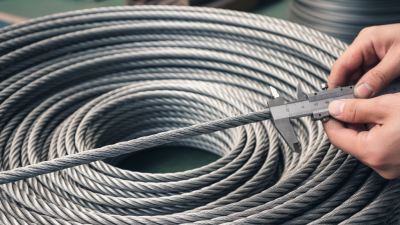
Ask for a material certificate, dimensional report, and breaking-load test record. Check whether the stated diameter matches the measured cable. A 6 mm cable should not quietly arrive at 5.7 mm. Traceability is equally important; batch numbers should connect the cable to production records. Packaging should prevent moisture, crushing, and wire deformation during long-distance transport.

Small details matter. A polished surface may look excellent but reveal little about internal quality. Buyers should also review lay direction, strand construction, end fittings, and inspection frequency. A certificate alone is not enough. This point is easy to overlook. Some specifications remain unclear until installation begins, creating avoidable delays and extra cost. Clear drawings and pre-shipment inspection can expose those gaps earlier.