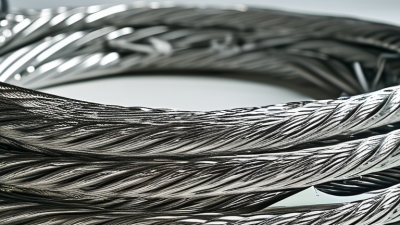
2026 Top Stainless Steel Wire Rope Suppliers
The 2026 stainless steel wire rope market is shaped by demanding applications, not simple price competition. Construction cranes, offshore platforms, elevators, suspension bridges, and marine winches require dependable performance under tension, corrosion, and repeated bending. Grand View Research’s Wire Rope Market analysis identifies construction, mining, oil and gas, and marine industries as major demand sectors. These findings show why supplier evaluation must extend beyond catalog size.
Material quality matters.
The International Stainless Steel Forum reported global stainless steel crude production of approximately 58.4 million tonnes in 2023. This figure describes the wider stainless steel industry, not wire rope alone. Still, it highlights the scale of the material supply chain behind rope manufacturing. Buyers should verify steel grades, tensile strength, lay construction, breaking load, and traceability. ISO 2408 and EN 12385 provide useful reference points for wire rope design, testing, and safety documentation. A credible supplier should also provide mill certificates, inspection records, and clear production tolerances.
Real projects reveal more.
A rope may appear polished and uniform under warehouse lighting. Its hidden risks can emerge after salt exposure, tight sheaves, or thousands of operating cycles. This 2026 supplier overview considers manufacturing experience, quality systems, export capability, technical support, and application knowledge. It also examines whether suppliers communicate limitations honestly. No ranking is perfect. A large factory can still provide unsuitable advice, while a smaller specialist may understand a difficult marine application better. That uncertainty deserves attention. The strongest suppliers combine documented standards with practical field experience, responsive engineering, and evidence that their stainless steel wire rope performs consistently beyond the sales brochure.
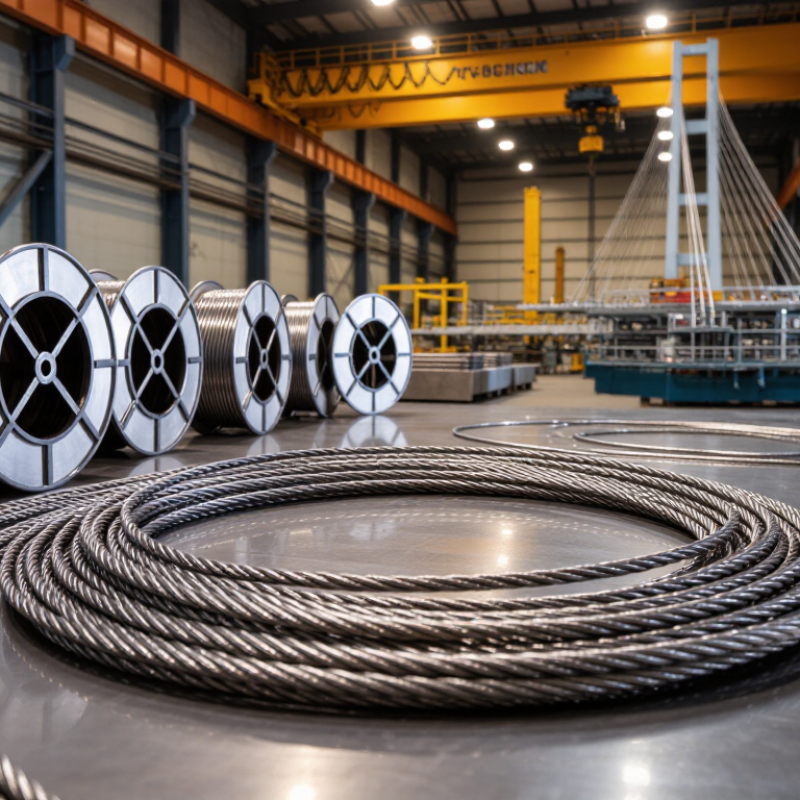
What Defines a Top Stainless Steel Wire Rope Supplier in 2026
A top supplier proves performance beyond a polished catalogue. The International Stainless Steel Forum reported global stainless steel production at 58.4 million tonnes in 2023, up 6.9% year on year. That growth increases material choices, but it also demands tighter traceability. Reliable suppliers should identify the steel grade, heat number, rope construction, coating, and production date. They should provide test records aligned with ISO 2408 and relevant ASTM requirements.
Ask for breaking-load results, not vague claims.
Field experience matters. A marine rope may face salt spray, bending fatigue, and hidden corrosion near terminals. A lifting rope needs controlled lay, dimensional consistency, and documented inspection intervals. Suppliers with technical engineers can recommend suitable constructions and explain minimum sheave diameters. They should also support failure analysis after installation. That response reveals their real expertise.
Certificates are not enough. A 2024 quality survey from the American Society for Quality found that organizations continue to rank supplier quality and process control among major operational concerns. The lesson is uncomfortable: paperwork can look complete while storage damage remains unnoticed. Top suppliers should show batch-level records, inspection methods, and corrective-action procedures. Independent testing adds confidence, though it cannot replace proper site inspection. In 2026, transparency, responsive engineering, and repeatable quality define the stronger supplier. Not the lowest quote.
Leading Supplier Types and Global Market Coverage
2026 Top Stainless Steel Wire Rope Suppliers
The 2026 supplier landscape includes steel mills, specialist manufacturers, distributors, and engineering service providers. Mills usually offer tighter control over alloy chemistry, tensile strength, and surface finish. Manufacturers convert stainless wire into ropes for lifting, marine, architectural, and industrial applications. Distributors provide faster access to standard diameters and common constructions. They often support smaller orders.
Global coverage varies widely. Suppliers serving North America and Europe commonly provide detailed certificates, batch traceability, and documented inspection procedures. Asian production centers may offer broader capacity and competitive lead times. Regional partners in the Middle East, Africa, and Latin America can simplify customs handling, storage, and local delivery. However, coverage claims need verification. A website map is not proof of reliable service.
Experienced buyers should compare rope construction, breaking load, corrosion resistance, and end-fitting quality. Ask for material certificates, test reports, inspection records, and clear tolerance data. Check whether technical staff understand saltwater exposure, repeated bending, and temperature changes. Small details matter. Packaging should prevent kinks, moisture damage, and contamination during long-distance transport.
No supplier covers every need perfectly. Even reputable sources may have uneven regional support or delayed documentation. That is why a trial order, sample inspection, and written delivery plan remain practical safeguards. Supplier evaluation should reflect the actual installation environment, not only the lowest quoted price.
2026 Top Stainless Steel Wire Rope Suppliers: Supplier Types and Global Market Coverage
The chart compares the main supplier categories serving the stainless steel wire rope market. Coverage is measured by the number of major geographic markets typically served through production, distribution, or export channels. Global manufacturers generally provide the broadest coverage, while specialist fabricators focus on selected marine, architectural, lifting, and industrial markets.
Stainless Steel Grades, Rope Designs, and Quality Standards
Choosing among the top stainless steel wire rope suppliers in 2026 requires more than comparing prices. Stainless steel grade, rope design, and documented testing often determine service life. Grade 304 suits many indoor and mildly humid applications. Grade 316 offers stronger resistance to chlorides and coastal exposure. Grade 316L can support cleaner fabrication and reduced sensitization risk during welding nearby. No grade fits every site.
Rope construction changes handling and performance. A 1x19 design provides low stretch and firm shape for architectural tensioning. A 7x7 rope balances flexibility with moderate strength. A 7x19 construction bends more easily around sheaves and drums. More wires usually improve flexibility, but they may reduce abrasion resistance. Small details matter, including lay direction, core type, diameter tolerance, and end termination quality.
Reliable suppliers should provide traceable mill certificates and test reports. Check tensile strength, minimum breaking force, dimensional accuracy, and surface condition. Relevant references may include ASTM A492, EN 12385, and ISO 2408, depending on the project and market. Independent inspection adds confidence when lifting, marine, or safety-related applications are involved. Look closely.
In practice, corrosion rarely appears alone. Salt deposits, poor drainage, tight bends, and incompatible fittings can accelerate damage. A supplier may recommend 316, yet the assembly can still fail through neglected cleaning or incorrect installation. That is an uncomfortable point. Good selection requires site evidence, not only a polished certificate. Ask how each lot is identified, tested, packed, and supported after delivery.
How to Compare Product Quality, Customization, and Delivery
2026 Top Stainless Steel Wire Rope Suppliers
Comparing suppliers starts with measurable product quality, not polished sales language. Ask for tensile strength, rope construction, diameter tolerance, and stainless steel grade. Numbers need context. A reliable supplier should provide mill certificates, batch traceability, and inspection records. Check whether test results match the exact rope delivered, not only a standard sample. Surface finish also matters, especially near saltwater, food equipment, or outdoor lifting systems. Small scratches can become serious corrosion points.
Customization should fit the application rather than simply add options. Discuss rope diameter, lay direction, core type, length tolerance, end fittings, and protective coating. Experienced engineers can recommend changes after reviewing load cycles, bending radius, and installation conditions. Request a sample or drawing before approving production. A perfect specification on paper may still fail during assembly. That is where my comparison process remains imperfect: I sometimes focus too heavily on tensile strength and overlook handling comfort or fitting access.
Delivery performance requires evidence over promises. Compare standard lead time, sample timing, production capacity, packaging quality, and inspection checkpoints. Ask how the supplier handles shortages, dimensional deviations, or rejected batches. Delivery needs evidence. A dependable shipment arrives labeled by batch, protected from moisture, and accompanied by clear documents. Also examine communication during changes. Fast replies are useful, but accurate updates are more valuable. The lowest quotation may hide longer approval cycles, weak packaging, or costly rework. A transparent supplier makes those risks visible before payment and production.
Choosing the Right Supplier for Different Industrial Applications
Choosing a stainless steel wire rope supplier starts with the application, not the catalogue. A crane near seawater needs corrosion resistance, stable lubrication, and traceable testing. An elevator demands consistent diameter, fatigue performance, and quiet operation. Mining equipment may prioritize abrasion resistance and high breaking force. The wrong construction can fail even when the steel grade looks impressive.
The International Stainless Steel Forum reported global stainless steel crude production at about 62 million tonnes in 2024. That scale shows strong material availability, but it does not guarantee rope quality. Suppliers should provide material certificates, rope construction details, breaking-load results, and batch traceability. ISO 2408 also defines important requirements for steel wire ropes, including manufacture, testing, and acceptance. Ask for current records.
Small details matter.
For marine lifting, compare AISI 316 and AISI 304 carefully. Chlorides can attack exposed components, especially around damaged coating or trapped moisture. For high-cycle systems, request fatigue data instead of relying on tensile strength alone. Grand View Research projects continued growth in the global wire rope market through the decade, driven by construction, transport, and industrial equipment. That growth may increase supplier choices, but it can also make comparisons harder. A low price sometimes hides shorter service life. I would still challenge every specification, because real loads rarely match clean laboratory conditions.
2026 Top Stainless Steel Wire Rope Suppliers - Choosing the Right Supplier for Different Industrial Applications
This comparison is organized by supplier capability and application focus rather than by company name or brand. Technical ranges are typical industry specifications and should be confirmed against the supplier’s current quotation, test certificate, and applicable standard.
| Supplier Capability Type | Best-Fit Industrial Applications | Common Stainless Grade | Typical Construction | Typical Diameter Range | Typical Finish or Core | Key Selection Criteria | Documents to Request |
|---|---|---|---|---|---|---|---|
| Marine and Offshore Specialist | Mooring accessories, davits, deck equipment, marine lifting, and offshore handling systems | AISI 316 / EN 1.4401; AISI 316L / EN 1.4404 for improved corrosion resistance and weldability | 6×19, 6×36, and compacted constructions; rotation-resistant designs where required | Approximately 3–32 mm for general equipment; larger sizes available for engineered systems | Bright, lubricated, or polymer-coated; fiber core or independent wire rope core depending on load requirements | Salt-spray exposure, corrosion allowance, minimum breaking force, bend fatigue, and termination compatibility | Material certificate, breaking-force test, dimensional report, coating details, and conformity statement to EN 12385 or ISO 2408 |
| Architectural and Structural Cable Supplier | Glass façades, canopy systems, cable railings, tensile structures, and architectural suspension assemblies | AISI 316 / EN 1.4401 or AISI 316L / EN 1.4404 | 1×19 rigid strand for straight tension members; 7×7 or 7×19 for greater flexibility | Approximately 1.5–16 mm for architectural cable systems | Exposed bright finish, often with swaged terminals, threaded studs, forks, or turnbuckles | Appearance, straightness, terminal tolerances, corrosion resistance, design load, and engineering support | Mill certificate, proof-load data, dimensional tolerances, terminal inspection records, and installation guidance |
| Lifting and Material-Handling Supplier | Winches, hoists, cranes, lifting slings, industrial elevators, and general load-handling equipment | AISI 304 / EN 1.4301 for moderate environments; AISI 316 / EN 1.4401 for higher chloride exposure | 6×19 or 6×36 for general lifting; 8×19 or rotation-resistant constructions for controlled reeving | Approximately 3–38 mm, subject to equipment design and rated capacity | Lubricated bright rope; fiber core for flexibility or IWRC for higher crushing resistance | Working load limit, design factor, drum and sheave dimensions, fatigue life, termination efficiency, and inspection support | Test certificate, minimum breaking force, rope construction, core type, batch traceability, and inspection recommendations |
| Food, Pharmaceutical, and Clean-Process Supplier | Food-processing conveyors, washdown equipment, pharmaceutical machinery, and hygienic production areas | AISI 316L / EN 1.4404 is commonly selected for chloride-containing cleaning environments | 1×19, 7×7, or 7×19, selected according to flexibility, cleanability, and load requirements | Approximately 1–12 mm for machinery and conveying applications | Smooth, clean bright surface; low-residue lubrication or application-specific coating | Surface condition, crevice-corrosion risk, cleaning chemicals, lubricant suitability, and hygienic design requirements | Material certificate, surface-finish specification, lubricant declaration, dimensional report, and batch traceability |
| Mining, Energy, and Heavy-Duty Equipment Supplier | Mining machinery, power-generation equipment, cable drums, heavy winches, and severe-duty handling systems | AISI 304 or AISI 316 depending on corrosion exposure; grade selection must follow the equipment specification | 6×36, 8×19, compacted, or rotation-resistant constructions for repeated bending and heavy service | Approximately 8–52 mm for heavy equipment, subject to drum, sheave, and load calculations | IWRC or compacted core for crushing resistance; specialized lubrication for repetitive cycling | Fatigue resistance, crushing resistance, minimum breaking force, operating temperature, drum spooling, and maintenance intervals | Factory test report, rope-length and diameter report, material certificate, construction details, and service-life recommendations |
| Custom Fabrication and Short-Lead-Time Supplier | OEM replacement parts, prototype equipment, maintenance orders, custom assemblies, and low-volume projects | AISI 304, AISI 316, and AISI 316L, subject to the application environment | 1×19, 7×7, 7×19, 6×19, and 6×36, with cut lengths and assembled terminations | Approximately 0.5–32 mm, depending on stock and fabrication capability | Bright, PVC-coated, nylon-coated, or custom-finished; swaged, looped, threaded, or socketed ends | Drawing review, repeatability, cut-length tolerance, terminal quality, minimum order quantity, and delivery reliability | Approval drawing, material certificate, assembly dimensions, proof-load report where applicable, and product traceability |
Recommended Supplier Evaluation Checklist
- Confirm stainless-steel grade, rope construction, nominal diameter, core type, and minimum breaking force.
- Check compliance with the relevant requirements of EN 12385, ISO 2408, ASTM A1023/A1023M, API Specification 9A, or the project specification.
- Request lot-level material certificates, test reports, dimensional records, and traceability information.
- Verify compatibility with the actual drum diameter, sheave diameter, fleet angle, bend frequency, working load, and operating environment.
- For lifting applications, obtain the rated working load and ensure that the complete assembly, including terminals, is assessed as a system.
Related Posts
-
How to Choose Stainless Steel Wire Rope?
-
China Top Stainless Steel Wire Rope Supplier How to Choose Quality
-
Why Stainless Steel Cable Is Your Best Choice for Durability and Strength
-
Top Stainless Cable Types for Global Buyers?
-
Top 10 Tips for Choosing the Right Stainless Steel Wire Rope for Your Projects
-
What is Stainless Steel Wire Rope and How is it Used?