What Is Stainless Steel Cable Used For?

Stainless steel cable supports far more than decorative railings. It carries, guides, suspends, and secures components in demanding environments. Marine handrails, architectural façades, bridge barriers, elevator systems, and industrial conveyors all use it. Its value comes from corrosion resistance, predictable strength, and compact construction. Small diameter. Serious responsibility.

Industry research supports this broad demand. Grand View Research’s wire rope market analysis identifies construction, transportation, marine, and industrial equipment as major application sectors. Fortune Business Insights also links market growth with infrastructure investment and expanding industrial automation. These reports discuss wire rope broadly, not every stainless steel cable grade. That distinction matters. Stainless steel products require more specific evaluation.

In practice, engineers often compare AISI 304 and 316 stainless steel. Grade 316 usually performs better near saltwater because of its molybdenum content. ASTM A492, ISO 2408, and EN 12385 provide useful references for wire rope materials, construction, and testing. However, a report or standard cannot replace a site inspection. Cable diameter, strand design, working load, bend radius, termination quality, and vibration all affect service life. A cable exposed to spray may look bright while hidden corrosion develops near fittings. That is an uncomfortable detail, but it is real. Proper selection also depends on temperature, chemicals, cleaning methods, and maintenance access. This article examines what stainless steel cable is used for, where its advantages are strongest, and where its limits deserve more attention. Expect practical examples, not a claim that one cable solves every engineering problem.
What Is Stainless Steel Cable Used For?

Stainless Steel Cable Basics: 304 and 316 Grades, 7×7 and 7×19 Constructions

Stainless steel cable appears in guardrails, marine rigging, architectural tension systems, and lifting assemblies. Its value comes from strength, clean appearance, and resistance to moisture. The International Stainless Steel Forum reported approximately 58.4 million metric tonnes of global stainless steel production in 2023. That scale reflects continuing demand for corrosion-resistant materials, although cable performance depends heavily on design and installation.

304 and 316 are common grades. Grade 304 suits indoor areas, dry environments, and general fabrication. Grade 316 contains molybdenum, which improves resistance to chlorides and coastal exposure. It is not invincible. Salt deposits can still stain or damage poorly maintained cable. In practical installations, rinsing and inspection matter more than many buyers expect.

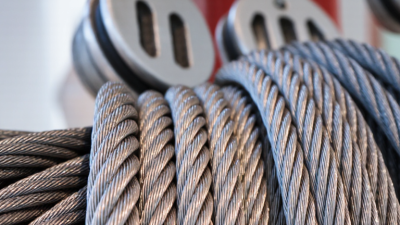
Construction changes handling. A 7×7 cable contains seven strands, each with seven wires. It offers a firmer feel and better resistance to crushing. A 7×19 cable uses seven strands of nineteen wires, creating greater flexibility around pulleys and curved fittings. More flexibility can mean less resistance to deformation. The choice is not simply “stronger is better.” Diameter, core design, breaking load, termination efficiency, and safety factors must match the application. EN 12385 and ASTM A492 provide useful reference points, but manufacturer test data should control final selection. Even experienced installers sometimes overlook the fitting. That small mistake can decide the system’s real strength.

Key Performance Data: Tensile Strength, Corrosion Resistance, and Flexibility

What Is Stainless Steel Cable Used For?

Stainless steel cable supports railings, marine fittings, architectural frames, lifting systems, and outdoor tension structures. Its value depends on three measurable properties: tensile strength, corrosion resistance, and flexibility. ASTM A580/A580M shows that stainless wire strength varies with grade, diameter, and cold-working condition. Therefore, one universal strength figure is unreliable.

A 6 mm cable with a 20 kN breaking load still needs a much lower working load. Designers must apply safety factors, inspect terminations, and consider shock loading. The cable may look strong. The fitting can fail first.

Corrosion resistance also needs careful interpretation. Grade 316 normally offers better chloride resistance than grade 304 because of its molybdenum content. The common PREN calculation gives 316 a value near 24, compared with roughly 18 for 304. However, ASTM G48 testing measures pitting behavior under severe laboratory conditions, not guaranteed service life.

Salt deposits, stagnant water, and damaged surfaces can still create localized corrosion. Cable flexibility depends on construction. A 1x19 cable holds a straight line well, while a 7x19 cable bends more easily around sheaves. ISO 2408 emphasizes construction, rope condition, and inspection requirements.

Field experience suggests flexibility is often underestimated. A tight bend may pass an initial check, then develop broken outer wires during repeated movement. I would not promise a service period without site data, load cycles, bend diameter, and maintenance records.

Architectural Uses: Railings, Suspended Structures, and 1×19 Cable Systems

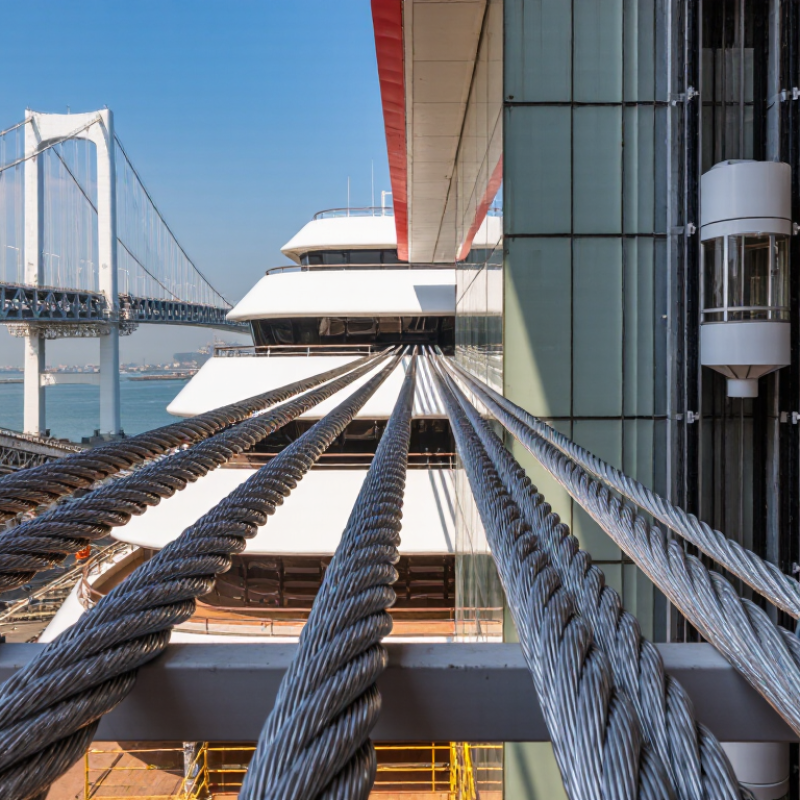
Stainless steel cable gives architects a slim way to define space without blocking light. In railings, it runs horizontally between posts and creates a clean, open boundary. The cable must remain tight, but excessive tension can stress posts, terminals, and deck connections. Strong design depends on the entire assembly, not the cable alone.

For many railing and façade projects, 1×19 cable is a practical choice. Its nineteen wires form a firm strand with high strength and limited stretch. That structure provides a straight visual line after installation. It is less flexible than 7×7 or 7×19 cable, so curved routes and sharp direction changes require careful planning. Swaged terminals, threaded studs, and tensioners must match the cable diameter and load requirements. Small alignment errors can become obvious across a long railing.

Suspended structures use stainless steel cable for canopies, signage, light features, and lightweight bridges. These systems transfer forces through anchors, plates, and tension points. Engineers should check wind movement, vibration, drainage, and access for future inspections. Coastal air can accelerate corrosion, even when the surface still looks bright. A suitable stainless grade may help, but it does not replace cleaning and inspection. I have seen attractive cable work lose its precision because installers rushed the final tensioning. That is worth reconsidering. Good architectural cablework should look effortless, while its hidden connections remain carefully measurable and serviceable.

Architectural Stainless Steel Cable Systems: Wire Count by Construction

Cable construction describes the number of strands and individual wires: 1×19 contains 19 wires, while 7×19 contains 133 wires. In architectural applications, 1×19 cable is commonly selected for straight, low-stretch railing runs and clean visual lines, whereas more flexible constructions can be useful where suspended structures require bending around fittings or curved layouts. Actual load capacity depends on cable diameter, stainless-steel grade, termination efficiency, and installation design.

Marine and Industrial Uses: 316 Cable, Lifting, Rigging, and Conveyor Systems

What Is Stainless Steel Cable Used For?

Marine and Industrial Uses: 316 Cable, Lifting, Rigging, and Conveyor Systems

Stainless steel cable is used where strength, flexibility, and corrosion resistance matter. Grade 316 cable performs well around seawater, salt spray, and humid processing areas. Its molybdenum content improves resistance to chloride corrosion. However, 316 is not magic. Long exposure to stagnant saltwater can still cause pitting.

Marine applications include railing systems, sailboat controls, dock barriers, and winch assemblies. Cable diameter, construction, and end fittings must match the working load. A cable may look bright while hidden wires suffer fatigue. Regular inspections should check broken strands, kinks, birdcaging, and damaged swage connections.

In industrial settings, stainless cable supports lifting and rigging tasks when clean surfaces are important. It can secure suspended equipment, guide movable components, or operate tensioned mechanisms. The cable itself does not determine safe lifting capacity. Engineers must evaluate the complete assembly, including fittings, angles, shock loads, and safety factors. Never confuse breaking strength with working load limit.

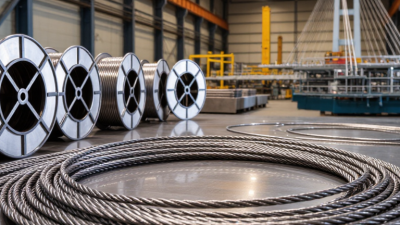
Conveyor systems also use stainless cable for controls, guards, positioning devices, and light-duty conveying functions. Food and chemical facilities often choose it for easier cleaning and reduced surface contamination. Still, poor alignment can create uneven wear. Maintenance teams should record inspection dates and replace questionable sections early. That choice may feel excessive, but corrosion rarely announces its worst stage.

Selection and Safety: Breaking Load, Safety Factors, ASTM A492, and EN 12385-10

Stainless steel cable supports guardrails, marine controls, architectural structures, and light lifting systems. Selection starts with breaking load, not diameter alone. The certified minimum breaking load must exceed the planned working load by the required safety factor. A 5:1 ratio is common for some lifting applications, but the project standard may require more.

ASTM A492 covers stainless steel wire used in rope production, including mechanical and dimensional requirements. It does not automatically approve every finished cable assembly. Check the material grade, construction, lay, corrosion exposure, and test certificate. EN 12385-10 addresses spiral strand ropes for structural applications, where end fittings, tension, fatigue, and installation geometry also affect performance. These standards should not be treated as interchangeable.

The formula looks clean. Field conditions are not. Salt deposits, tight bends, vibration, and damaged sockets can reduce usable capacity before visible failure. A 2023 U.S. Bureau of Labor Statistics report recorded 1,069 fatal injuries in construction and extraction occupations, reinforcing the need for documented inspection and controlled loads. I would never rate a cable from appearance alone. Use the manufacturer’s tested breaking load, divide it by the selected safety factor, and compare that result with the actual load, including shock and bending effects. A practical inspection should record broken wires, corrosion, kinks, abrasion, and fitting movement. Small errors matter.