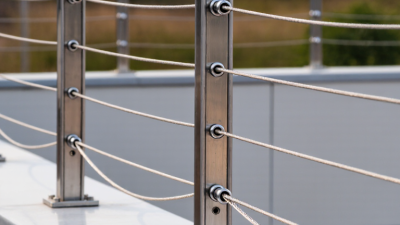
China Top Wire Deck Railing Suppliers for Global Buyers

Choosing China’s top wire deck railing suppliers requires more than comparing prices. Global buyers need verified materials, stable production, clear drawings, and dependable communication. A polished product image cannot reveal cable tension, weld quality, or salt-air resistance.

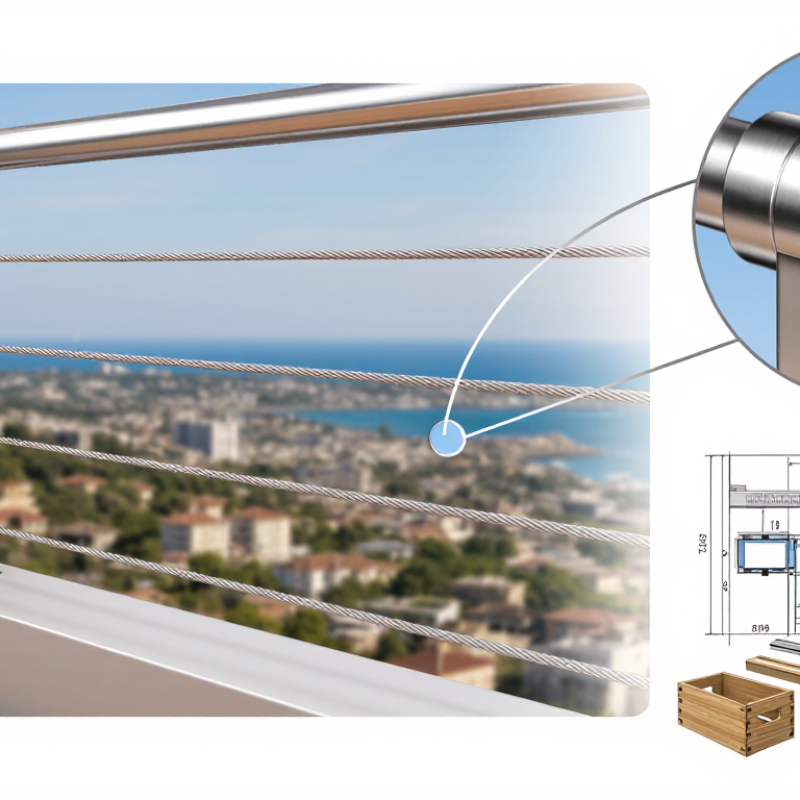
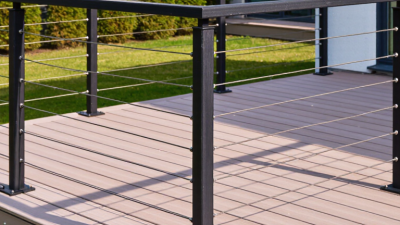
Bill Feeney, a recognized cable-railing specialist and founder of Feeney, Inc., offers a useful principle: “Good railing design should protect the view, not compete with it.” This idea explains why wire deck railing remains popular for balconies, terraces, hotels, and modern homes. Slim stainless-steel cables create open sightlines. Strong posts provide security. Proper tension keeps the system visually clean.

Details matter.

This guide examines Chinese suppliers through a practical buyer’s lens. It considers 316 stainless steel options, cable diameter, post thickness, surface finishing, and connector accuracy. It also reviews factory experience, export packaging, project support, and quality documentation. Reliable suppliers should explain their testing process clearly. They should also provide drawings before production begins.

Some comparisons may remain imperfect. Supplier capabilities can change. Catalog information may not reflect current factory performance. Buyers should request recent samples, inspection records, and references for similar projects. Coastal installations need extra attention. Chloride exposure can quickly reveal weak material choices or poor maintenance planning.

The strongest supplier is not always the cheapest. A better choice balances engineering, communication, lead time, and long-term service. For global buyers, that balance can prevent costly replacements and installation delays. This overview helps identify dependable China-based partners for wire deck railing projects with demanding performance expectations.

China Top Wire Deck Railing Suppliers for Global Buyers

China’s Wire Deck Railing Supply Landscape and Global Buyer Requirements

China’s wire deck railing supply landscape serves residential builders, hospitality projects, and large distributors. Manufacturers commonly offer stainless steel cables, posts, fittings, and complete railing kits. Production ranges from standard stock to made-to-order systems.

Global buyers usually require clear material grades, accurate dimensions, and stable surface finishes. Stainless steel grade should match the project’s climate, especially near saltwater or industrial areas. Cable tension, post spacing, anchor strength, and load performance need documented verification. Factory drawings should show hole positions, thread sizes, and installation tolerances. Small errors can delay an entire deck installation.

Reliable sourcing depends on more than a competitive quotation. Buyers should request material certificates, inspection records, sample assemblies, and packaging photos before production. A practical supplier can explain welding controls, polishing methods, batch traceability, and replacement procedures. Communication matters too. Confusing a metric fitting with an imperial fitting can create expensive rework. I have found that samples often look better than mass production, so random inspections remain necessary. That weakness deserves attention. Suppliers should also confirm export packaging, moisture protection, spare components, and realistic lead times. Requirements differ by destination, so buyers must verify local building expectations with qualified professionals rather than relying on a supplier’s general statement.

Stainless Steel Cable Grades: 304 vs. 316 for Outdoor Corrosion Resistance

For global buyers, stainless steel cable grade often matters more than railing appearance. Field inspections show 304 performs well in dry, inland settings. It resists routine moisture with basic maintenance. Salt air changes the risk. Coastal spray can leave chloride deposits around cable ends, swage fittings, and drilled posts. Small rust marks may appear there first. 304 is not a poor choice. It is simply less forgiving.

316 contains molybdenum, which improves resistance to chlorides and outdoor pollutants. It is usually safer for waterfront decks, humid regions, and exposed commercial terraces. However, grade alone cannot prevent corrosion. Poor crimping, trapped water, and carbon-steel tools can damage the result. When screening wire deck railing suppliers, request material certificates and cable diameter tolerances. Check fitting compatibility and surface-finish details. Ask for traceable batch information. Vague answers deserve caution.

Request samples and inspect them after salt exposure or repeated wet-dry cycles. These checks are practical, not decorative. Confirm whether cable, terminals, and fittings use compatible stainless grades. Some suppliers offer 316 cable with cheaper 304 terminals. That combination may create a weak corrosion point. Installation quality still matters greatly. Clean cut ends, correct tension, and freshwater rinsing extend service life. I have seen polished systems age badly when maintenance was ignored. That lesson is easy to miss. For coastal projects, 316 often justifies its extra cost. Inland buyers should calculate exposure, cleaning access, and replacement costs before choosing by habit.

Guardrail Safety Benchmarks: 42-Inch Heights and 4-Inch Opening Limits

For global buyers sourcing wire deck railing from China, safety benchmarks should guide every specification. A 42-inch guard height is a common reference for elevated decks, but local building codes may require different measurements. Confirm the finished height from the walking surface, not from the joist or mounting plate. Small errors matter.

The 4-inch opening limit is equally important. Test every space with a rigid 4-inch sphere, especially near posts, gates, corners, and cable crossings. Wire deflection can enlarge an opening after installation. Tight connections, accurate spacing, and strong end fittings help control movement. Stainless steel wire should resist corrosion, while the supporting frame must handle expected loads without excessive vibration.

Factory drawings are useful, but they are not proof of field performance. Request material certificates, load-test records, dimensional checks, and installation instructions. Inspect sample panels before approving volume production. A polished finish can hide weak welds or poorly aligned holes. We have found that small revisions often improve safety, even when a design already appears acceptable. That judgment should remain open to review. Always compare supplier documents with the project location’s current requirements.

Supplier Evaluation: ISO 9001, Load Testing, MOQ, Lead Time, and Export Data

For global buyers, evaluating wire deck railing suppliers requires more than comparing polished catalogs. A practical audit starts with ISO 9001 certificates, scope, issuing body, and renewal date. Ask whether procedures cover stainless wire, fittings, welding, surface finishing, and final inspection. Certificates alone prove little. During a factory visit or video audit, review batch records, calibration labels, and nonconformance reports. Details matter. These records show whether quality controls work during busy production periods.

Load testing should match the intended deck design and applicable building requirements. Request reports showing sample dimensions, cable tension, post spacing, applied force, deformation, and failure results. Independent laboratory testing is stronger than an undated internal spreadsheet. Still, test values can mislead when samples differ from supplied systems. Confirm material grades, cable diameter, anchor type, and installation method. Installation errors can weaken good hardware.

MOQ may influence total cost more than unit price. A low MOQ supports trial orders, while custom lengths may require higher production thresholds. Lead times need written milestones, including drawing approval, material booking, fabrication, inspection, packing, and vessel handover. Export data can reveal shipment frequency, destination markets, product descriptions, and port history. Treat it as supporting evidence, not proof of quality. Some records may be incomplete or outdated, so request recent commercial documents and customer references. A careful supplier may still miss a deadline, especially when drawings change late or raw materials arrive unevenly.

China Wire Deck Railing Supplier Evaluation Framework

Evidence-based screening criteria for global buyers. The 0–5 score reflects the availability and strength of verifiable supplier evidence, not the performance of any named company.

ISO 9001 should be confirmed through a valid certificate and certification scope. Load-test documentation should address applicable guard and railing requirements, including the commonly referenced 200 lbf concentrated top-load and 50 lbf/ft² infill-load criteria where relevant. MOQ, lead time, and export documentation should be verified from a current quotation, production schedule, and shipping records.

Global Purchasing Workflow: Drawings, ASTM Standards, Incoterms, and Inspection

Global buyers should begin with controlled drawings, not supplier quotations. Mark every railing panel, post, bracket, and wire diameter. Add material grade, surface finish, weld locations, hole sizes, and allowable tolerances. Revision numbers matter. A single outdated drawing can create hundreds of incorrect panels.

Ask suppliers to confirm the exact ASTM standard and edition. ASTM requirements may cover stainless steel, welded components, mechanical performance, or test methods. Do not accept “ASTM compliant” without certificates and traceable heat numbers. Request samples before production. They reveal rough welds, uneven spacing, and finish differences quickly. Small details expose large process problems.

Incoterms 2020 must match the real purchasing risk. Under FOB, buyers usually manage the main ocean freight and insurance. Under DAP, delivery responsibility extends closer to the project site. Confirm named ports, customs documents, packaging duties, and damage responsibility in writing. Inspection should include raw material records, dimensions, weld appearance, coating or passivation, assembly fit, and carton labels. A third-party inspector can check random quantities before shipment. Still, inspection is not magic. It may miss hidden corrosion or later transport damage. I would keep reserve samples, loading photos, and signed checklists. The workflow is dependable, but only when every document matches the physical product.

China Top Wire Deck Railing Suppliers for Global Buyers - Global Purchasing Workflow: Drawings, ASTM Standards, Incoterms, and Inspection

Procurement Stage Data Dimension Recommended Requirement or Benchmark Supplier Evidence to Request Buyer Verification Point
1. Technical Brief Application Exterior deck, balcony, terrace, stair, or rooftop guard; identify residential or commercial use. Completed technical questionnaire and project application statement. Confirm the intended building type, occupancy, exposure, and governing local code.
Railing layout Provide plan, elevation, section, stair geometry, post locations, gate locations, and fixing points. Dimensioned PDF and editable CAD drawings such as DWG or DXF. Check all dimensions against the latest approved architectural or structural drawings.
Design loads Specify required post, top-rail, infill, and connection loads according to the destination jurisdiction. Stamped calculations or engineering report where required by the project authority. Do not use a generic load value without confirming the applicable building code.
Safety openings Set wire spacing and guard geometry to meet the applicable local code; a common residential reference is a 4 in maximum opening, but requirements vary. Finished elevation drawing and opening calculation. Measure the largest finished opening, including deflection and installation tolerances.
2. Material Selection Wire rope material Common exterior options include 316 or 316L stainless steel for improved chloride and coastal corrosion resistance; 304 stainless steel may suit less aggressive environments. Material certificate identifying grade, heat or lot number, and mechanical or chemical results. Match the certificate grade with the purchase order and product markings.
Wire construction Typical architectural cable configurations include 1×19 or 7×7 stainless wire rope; select construction based on required flexibility and termination design. Cable construction, nominal diameter, breaking load, and tolerance data sheet. Verify diameter and construction by sampling before production release.
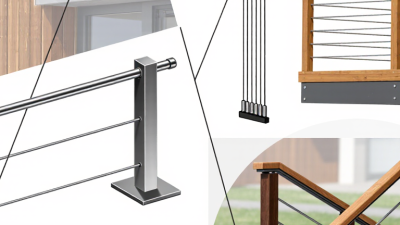
Posts and rails Define stainless steel, aluminum, or coated steel according to structural design, environment, finish, and galvanic compatibility. Material grade, wall thickness, profile dimensions, finish specification, and section properties. Check actual wall thickness, section size, weld quality, and finish consistency.
Fasteners and fittings Specify bolt grade, corrosion-resistant material, thread type, washer arrangement, anchors, and compatible terminals. Fastener certificates, anchor technical data, and installation torque requirements. Confirm that fasteners, anchors, base material, and edge distances are compatible.
Surface finish Define brushed, polished, anodized, powder-coated, or other finish with a measurable acceptance standard. Finish sample, color reference, gloss requirement, and surface-treatment process description. Inspect visible surfaces under consistent lighting and record defects with photographs.
3. Standards and Compliance Stainless steel wire ASTM A580/A580M covers stainless steel wire requirements; confirm the applicable edition and product scope. Declaration of conformity and corresponding material test report. Check grade, dimensions, tensile properties, and certificate traceability.
Stainless steel bars and shapes ASTM A276/A276M may be relevant to stainless bars and shapes used in posts, fittings, or machined components. Mill certificate and dimensional inspection report. Confirm that the standard applies to the actual product form and grade.
Passivation ASTM A967/A967M may be specified for chemical passivation of stainless steel parts where required. Treatment record, process specification, and test results where applicable. Confirm that welded or machined areas receive the required post-processing.
Building-code compliance ASTM material standards do not replace local guard, handrail, loading, opening, height, or accessibility requirements. Code compliance statement, calculations, test reports, and professional approval when required. Obtain confirmation from the project architect, engineer, or authority having jurisdiction.
4. Commercial Quotation Quotation basis Request a line-item quotation separating posts, rails, cable, terminals, fasteners, packaging, tooling, and installation accessories. Formal quotation with validity period, currency, tax status, and exclusions. Compare equivalent specifications rather than comparing only total prices.
Tooling and samples Clarify whether custom dies, jigs, molds, samples, or engineering fees are refundable or included. Tooling ownership terms, sample schedule, and approval procedure. Approve a representative sample before mass production.
Lead time Separate engineering, sample, production, inspection, and shipping time; project lead times vary with customization and quantity. Milestone schedule with a defined start point, normally drawing or deposit approval. Tie payment and shipment milestones to objective deliverables.
Warranty and claims Define coverage for material defects, finish defects, missing parts, dimensional errors, and corrosion-related exclusions. Written warranty, claim window, replacement policy, and spare-parts commitment. Ensure the contract identifies the governing law and claims documentation process.
5. Incoterms and Logistics Incoterms 2020 selection Common options include FCA for controlled handover, FOB for sea shipments, and DAP when the seller arranges delivery to a named place. Quotation showing the exact Incoterms rule, named place or port, and Incoterms version. Confirm when risk, cost, export clearance, import clearance, and duties transfer.
Shipping mode Select sea freight for larger shipments, air freight for urgent small consignments, or courier service for samples. Packing list, carton dimensions, gross and net weights, HS-code proposal, and shipping marks. Check chargeable weight, destination restrictions, and customs-document requirements.
Packaging Use moisture-resistant protection, separators for polished surfaces, reinforced cartons or crates, and protection for threaded fittings. Packaging specification, pallet or crate details, and loading photographs. Verify protection against scratching, bending, corrosion, and component loss.
Export documents Prepare commercial invoice, packing list, transport document, certificate of origin when required, and compliance documents. Draft documents for buyer review before shipment. Match descriptions, quantities, weights, values, and consignee details across all documents.
6. Quality Inspection Pre-production inspection Review approved drawings, bill of materials, material grades, control samples, and production capability before fabrication. Inspection and test plan, approved sample, and incoming-material records. Confirm that production uses the approved revision and traceable materials.
In-process inspection Check cutting, drilling, welding, machining, cable termination, surface treatment, and assembly fit. Process inspection records and corrective-action reports. Verify critical dimensions before parts become inaccessible or difficult to rework.
Final product inspection Inspect quantity, dimensions, appearance, cable length, fittings, hole positions, labels, and accessories against the approved specification. Final inspection report with photographs and measured results. Use an agreed sampling plan or 100% inspection for critical dimensions and customized parts.
Functional and load verification Perform specified tension, connection, or load tests only when required by the approved engineering design or destination code. Test method, calibrated equipment record, raw data, and signed test report. Confirm test direction, load value, duration, acceptance criteria, and test specimen configuration.
Container loading Protect long profiles from bending and separate finished surfaces; record carton or crate sequence for installation control. Loading photographs, seal number, final packing list, and container condition record. Confirm that the loaded quantity and package marks match the shipping documents.
7. Installation Handover Installation instructions Provide sequence drawings, drilling details, anchor instructions, cable-tensioning procedure, torque values, and maintenance guidance. Project-specific installation manual and illustrated parts list. Check that instructions match the shipped configuration and site substrate.
Site acceptance Inspect alignment, post plumb, rail level, cable tension, opening size, fastener tightness, and finish damage after installation. Site inspection checklist, punch list, and completion photographs. Obtain project engineer or authorized representative acceptance where required.
Maintenance schedule Specify routine cleaning, inspection of terminals and fasteners, cable-tension checks, and treatment of surface damage. Maintenance manual and recommended inspection frequency. Adapt maintenance frequency to coastal salt exposure, pollution, humidity, and public-use intensity.