What Are the Best Wire Railing Systems in 2026?
Choosing among the best wire railing systems in 2026 requires more than comparing cable thickness or finish options. Grand View Research’s railing market analysis identifies renovation, outdoor living, and modern residential construction as important demand drivers. MarketsandMarkets also reports continued interest in stainless-steel and architectural railing solutions. These trends explain the popularity of slim cable lines, matte-black posts, and nearly invisible views.
Performance matters more than appearance. A reliable system should resist corrosion, maintain cable tension, and support safe, code-compliant installation. The 2024 International Residential Code provides guard-height, opening, and load requirements that designers must review locally. ASTM guidance and manufacturer testing add useful evidence, but they do not replace site-specific engineering. A coastal deck is not a mountain balcony. Salt air changes the decision.
Building-code consultant Glenn Mathewson offers a practical warning: “A guard is not a handrail.” That distinction prevents a common mistake when selecting wire railing systems. A guard protects the edge, while a handrail supports movement. Buyers should examine post spacing, terminal hardware, tensioning access, wood movement, and maintenance instructions. Stainless steel can still stain. Cable can still loosen. The brochure rarely shows that part.
This guide compares leading systems through safety, durability, installation effort, visual clarity, and long-term value. It also questions attractive claims that lack independent testing. The best choice may not be the cheapest or thinnest option. Sometimes, the stronger system looks slightly heavier. That is worth remembering.
What Is a Wire Railing System and How Does It Work?
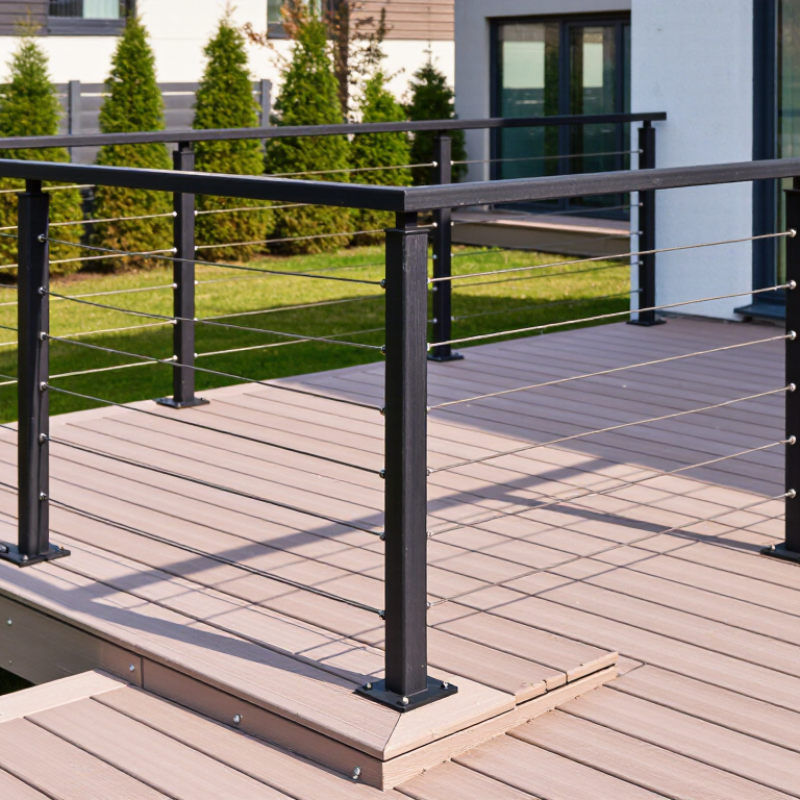
A wire railing system uses thin stainless-steel cables instead of solid balusters. Cables pass through drilled posts and connect to end fittings. A top rail adds hand support and helps stabilize the frame. The system works through controlled tension, not cable tightness alone. Too little tension creates visible sag. Too much tension can stress posts, fittings, and deck edges.
The 2024 International Residential Code generally limits guard openings to a 4-inch sphere. Local amendments may differ. Measure the finished spacing, not the empty post layout. Grand View Research’s 2024 railing-market analysis identifies metal as a leading material category, reflecting demand for durable, low-maintenance systems. Stainless steel performs well outdoors, but coastal air still demands regular cleaning and inspection.
On site, the weak point is often the structure beneath the railing. A cable cannot compensate for a flexible rim joist. Posts need solid blocking, accurate alignment, and compatible terminal hardware. ASTM A492 provides specifications for stainless-steel wire used in rope applications, but compliance alone does not guarantee a safe installation. Small errors matter. I would also question “maintenance-free” claims; every exposed system collects grime, and tension can change over time. Check fittings, corrosion, spacing, and deflection at least seasonally.
Which Wire Railing Materials and Designs Are Available in 2026?
In 2026, wire railing systems are less about one “best” material and more about matching exposure, structure, and maintenance habits. Marine-grade stainless steel cable suits coastal decks because it resists salt better than ordinary steel. It still needs rinsing. Galvanized steel costs less and works well inland, although its protective coating can wear around cut ends. Aluminum posts are lightweight and resist rust, but they may feel less rigid on long spans.
Cable designs usually combine horizontal wires with wood, metal, or composite posts. Thin black-coated cables create a softer visual line, while polished cable gives a brighter, more technical appearance. Mesh panels offer stronger visual containment and can be useful on balconies, stairs, or homes with children and pets. Hybrid systems pair cable infill with glass panels, but fingerprints and replacement costs deserve honest attention.
During installation, accurate post spacing matters more than attractive product photos. Each cable needs even tension, secure end fittings, and a frame that will not flex. Local building requirements should guide openings, height, stair layout, and load resistance. I have seen a neat system loosen after seasonal movement because the installer skipped a final tension check. That is an avoidable mistake. Wood posts add warmth, yet they demand sealing and inspection. Composite posts reduce repainting, but their long-term stiffness can vary. The practical choice is the design that remains safe, inspectable, and comfortable after years of weather.
How Do the Best Wire Railing Systems Compare for Safety and Durability?
The best wire railing systems in 2026 should be judged by safety before appearance. A secure system uses properly tensioned stainless-steel cables, rigid posts, and a continuous top rail. Cable spacing must prevent a child from slipping through. Small gaps matter. I have seen attractive installations feel flexible because the posts were spaced too far apart. That movement can weaken confidence and create maintenance problems over time.
Durability depends heavily on location and installation quality. Marine-grade stainless steel generally performs better near saltwater, while standard stainless steel may suit sheltered inland settings. Look for corrosion-resistant fittings, sealed fastener connections, and posts that drain rather than trap water. Powder-coated metal can resist weather, but scratches may expose the underlying material. Wood posts add warmth, although they require closer inspection for cracking, swelling, and loose hardware.
A reliable comparison should include engineering documentation, tested load performance, and clear installation instructions. The strongest cable is not enough if the end fittings are poorly crimped or the anchors sit in weak material. Check tension after seasonal temperature changes, especially on long runs. Cleaning salt and grime with mild soap also helps preserve the finish. My own preference is a system that feels slightly conservative: fewer decorative compromises, stronger posts, and accessible replacement parts. Yet no railing remains safe without regular inspection. Even a well-designed system can fail when installation is rushed.
What Are the Best Wire Railing Systems in 2026?
How Do the Best Wire Railing Systems Compare for Safety and Durability?
This comparison uses a 1–5 evidence-informed index based on cable construction, resistance to corrosion, rigidity, tension retention, inspection requirements, and the ability to limit openings. Higher scores indicate stronger overall potential when the system is correctly engineered and installed. All railing systems must still comply with applicable local building codes, including guard height, structural loading, and the commonly required 4-inch maximum opening rule.
The ratings are comparative guidance rather than laboratory certification. Actual performance depends on cable diameter, post spacing, fasteners, anchorage, environment, installation quality, and maintenance.
What Should You Consider When Choosing a Wire Railing System?
When choosing a wire railing system, start with the environment, not the appearance. Indoor stairways need different protection than exposed balconies near salt air. Stainless steel cables, especially 316 grade, usually resist coastal corrosion better. However, no metal stays maintenance-free. Inspect fittings for rust, staining, and loose tension.
The post design also deserves close attention. Look closely. Slim posts create a lighter view, while heavier posts can feel more secure. Check the spacing between posts, cable gaps, and the strength of the fixing surface. A qualified installer should verify the substrate, anchor depth, and local building requirements. Do not rely only on a product photograph.
Tension matters more than many homeowners expect. Overtightening can stress posts, damage fittings, or distort a long run. Undertightening may create unsafe cable movement. Ask for tested load information and a clear adjustment plan. Safety is not decorative. If children or pets use the space, consider whether cable openings and climbable features are appropriate. Walk beside the railing.
Maintenance should fit your routine. A simple freshwater rinse can help remove salt deposits, while harsh cleaners may damage polished surfaces. In practice, a beautiful system can still disappoint if access for cleaning was ignored. I would rather accept slightly wider posts than discover weak anchors after installation. Good decisions often involve that uncomfortable tradeoff.
What Are the Best Wire Railing Systems in 2026? – What Should You Consider When Choosing a Wire Railing System?
| System Type | Typical Cable Diameter | Common Cable Material | Typical Post Spacing | Installation Method | Best-Suited Locations | Main Advantages | Important Considerations |
|---|---|---|---|---|---|---|---|
| Stainless-Steel Cable Between Metal Posts | 1/8 in or 3/16 in (3.2 or 4.8 mm) | 304 stainless steel for many inland applications; 316 stainless steel for coastal or high-chloride exposure | Approximately 4–6 ft (1.2–1.8 m), depending on design loads and post stiffness | Through-post fittings with end and intermediate tensioning hardware | Decks, balconies, stairways, and elevated outdoor platforms | Open views, slim appearance, durable construction, and relatively low visual obstruction | Requires accurate alignment, adequate structural posts, and periodic cable-tension checks |
| Cable Railing with Wood Posts | Usually 1/8 in (3.2 mm); 3/16 in (4.8 mm) may be selected for longer or more demanding runs | Marine-grade stainless steel is commonly selected for exterior use | Approximately 4–6 ft (1.2–1.8 m); closer spacing may be needed for flexible wood posts | Cables pass through drilled wood posts or attach with surface-mounted fittings | Timber decks, porches, garden terraces, and renovation projects | Warm appearance, easy integration with wood decking, and broad finishing options | Wood movement, moisture protection, post strength, and hole alignment require careful planning |
| Cable Railing with Metal Frames | 1/8 in or 3/16 in (3.2 or 4.8 mm) | Stainless steel cable with powder-coated or stainless-steel structural frames | Often 4–6 ft (1.2–1.8 m), subject to frame engineering and local requirements | Factory-fabricated or site-assembled panels with integrated tensioning points | Modern homes, commercial terraces, rooftop areas, and large balcony runs | Consistent geometry, strong visual definition, and efficient installation on long straight sections | Frame connections, coating quality, drainage, and galvanic corrosion control should be reviewed |
| Surface-Mounted Cable Railing | Commonly 1/8 in (3.2 mm) | 304 or 316 stainless steel, selected according to exposure conditions | Approximately 4–6 ft (1.2–1.8 m), with engineered base plates and posts | Posts are bolted to the top surface of a deck, slab, or stair structure | Existing decks, concrete balconies, and installations where edge access is limited | Simpler access to fasteners and less dependence on the side edge of the structure | Fasteners must connect to adequate structural material; waterproofing and trip clearance are important |
| Fascia-Mounted Cable Railing | Commonly 1/8 in or 3/16 in (3.2 or 4.8 mm) | 316 stainless steel is often preferred in exposed or coastal environments | Approximately 4–6 ft (1.2–1.8 m), based on the supporting rim or structural edge | Posts or brackets are attached to the vertical face of a beam, rim joist, or slab edge | Narrow decks, balconies, stairs, and areas where maximum walking space is desired | Preserves usable deck width and creates a clean, space-efficient edge detail | Requires verified edge strength, careful waterproofing, and sufficient clearance from adjacent surfaces |
Key Selection Criteria for 2026
- Verify local requirements for guard height, opening size, handrails, loads, stairs, and structural attachment. Many residential codes use a 4 in maximum opening rule, but requirements vary by jurisdiction and application.
- Choose 316 stainless steel for marine, poolside, de-icing-salt, or otherwise high-chloride environments; 304 stainless steel is commonly used in less aggressive inland conditions.
- Use rigid, properly anchored posts. Cable tension can place significant loads on end posts, corners, stair transitions, and the supporting deck or slab.
- Plan for tension adjustment because temperature changes, structural movement, and long cable runs can affect cable deflection.
- Check compatibility between stainless steel, aluminum, coated steel, fasteners, and treated wood to reduce galvanic corrosion and staining.
- Inspect cables, fittings, coatings, fasteners, and waterproofing periodically, especially in coastal or high-traffic locations.
How Are Wire Railing Systems Installed, Maintained, and Upgraded?
Installing a wire railing system starts with the structure, not the cables. Inspect the deck, stairs, and fixing points for movement or rot. Posts must be firmly anchored to sound framing. Measure cable runs carefully, because small errors become visible after tensioning. Use corrosion-resistant fittings suited to the local climate. Cable spacing must follow applicable building requirements, especially where children may be present. A qualified installer should verify the final layout and load stability.
Tension the wires gradually and alternate between runs. This reduces twisting and prevents uneven pressure on the posts. Do not overtighten them. Excessive tension can distort frames or damage fittings. After installation, wipe the cables with mild soap and fresh water. Coastal homes need more frequent cleaning because salt residue accelerates corrosion. Check terminals, turnbuckles, and post connections every few months. Look for rust spots, loose cables, sharp edges, or unusual movement.
Maintenance is rarely difficult, but it is easy to postpone. That is where problems begin. Temperature changes can make cables feel tighter or looser, so seasonal adjustments may be necessary. If a cable is frayed, replace it rather than trimming the damaged section. Upgrades can include stronger posts, safer handrails, improved lighting, or extra intermediate supports on longer spans. Some older systems cannot accept new components without modification. Measure twice. A professional assessment is cheaper than correcting a weak or poorly aligned railing later.
Related Posts
-
Transform Your Space with Stylish Cable Railing Kits for Modern Home Designs
-
Top 10 Cable Railing Parts for Global Buyers to Consider?
-
Top 10 Benefits of Cable Railing for Decks: Enhance Safety and Style
-
Top Cable Railing Trends for 2025 You Need to Know
-
Top 10 Cable Handrail Suppliers in China You Must Know?
-
7 Tips for Choosing the Right Cable Handrail System?