What Are the Top Types of Cable Handrail?

A cable handrail can make a deck, stair, or balcony feel open while still defining a clear edge. But “cable railing” describes several different configurations, not one standard product. The main choices include horizontal or vertical cable layouts, post-and-frame systems, and combinations using stainless-steel cables with wood or metal posts. Each changes the view, upkeep, installation details, and overall appearance.

The scale of residential construction helps explain why railing choices matter. The U.S. Census Bureau reported 1,413,800 privately owned housing starts in 2023. That figure is not a measure of cable-handrail demand, but it shows the size of the residential building landscape where guard systems are selected. The International Residential Code also sets guard requirements, while local rules and project conditions can differ. Check the applicable requirements before choosing cable spacing or hardware. Details matter.

This guide compares the top types of cable handrail by layout, frame material, and typical use. It will consider where each system works well, what maintenance it may need, and which trade-offs can be easy to miss. A slim profile is appealing. Yet cable tension, post strength, corrosion resistance, and child-safety considerations deserve equal attention. The best-looking option is not automatically the right one; selection depends on the site, exposure, budget, and installation quality.
What Are the Top Types of Cable Handrail?

How Are Cable-Railing Systems Classified by Post Material and Mounting?

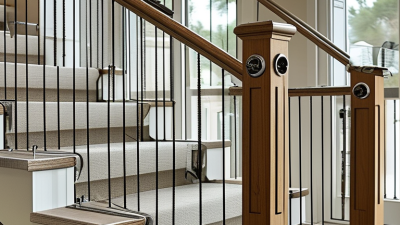
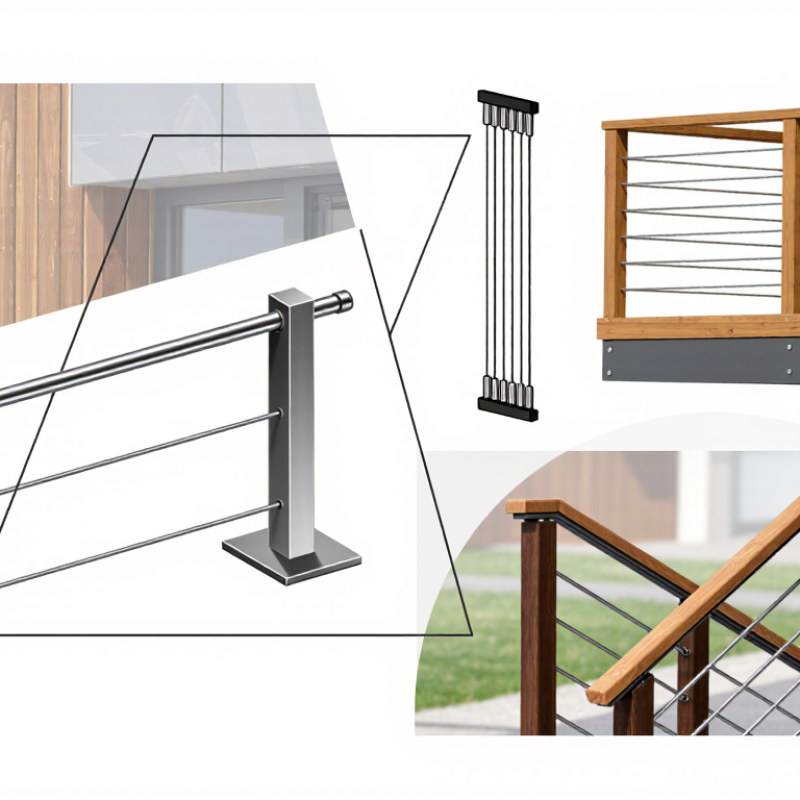
Cable handrail systems can be classified by the material used for their posts. Stainless steel posts offer a clean, durable look and suit exposed locations when the grade and finish match the environment. Aluminum posts are lighter and easier to handle, though their stiffness and connection details matter when cables are tensioned. Wood posts bring warmth to decks and interiors, but they need suitable hardware and careful inspection for splitting or movement. Details matter. Cable tension puts repeated force on end posts, so the post and its fixings must work as a system.

Mounting method is another useful distinction. Top-mounted posts sit on the deck or stair surface, with base plates fixed to sound structural framing. This arrangement is straightforward to inspect, but it can use up some walking space. Side-mounted posts attach to the outer face of a deck or landing, leaving more clear floor area. They require a strong edge beam and enough space for secure fasteners. On stairs, post placement must follow the rail’s slope while keeping cable runs properly supported. There is no universally neat choice; the best fit depends on the structure, available space, and desired appearance. Before installation, check the substrate, hardware compatibility, and applicable local requirements. A small detail can change the whole result.

How Do Common 1/8-Inch and 3/16-Inch Cables Differ in Use?

Cable handrails commonly use 1/8-inch or 3/16-inch stainless-steel cable, often in 1x19 or 7x7 construction. The smaller cable looks lighter and leaves more open sightlines. The larger cable appears more substantial. Construction matters, too: 1x19 cable is relatively stiff, while 7x7 bends more easily around hardware.

In comparable materials and constructions, 3/16-inch cable generally offers greater breaking strength and less stretch than 1/8-inch cable. That can help on longer runs or where posts are spaced farther apart. But thicker cable needs compatible fittings and may require more effort to tension. A slim cable can work well on shorter residential spans, provided the complete assembly is designed for its loads. Diameter alone does not prove safety.

The 2021 International Building Code specifies a 200-pound concentrated load for guard top rails, a useful reminder that cable is only one part of the system. Posts, end fittings, anchors, and installation all matter. The code also limits openings in many guards to prevent passage of a 4-inch sphere. Cable spacing can change under load, so check the assembly’s tested data and local requirements. In the field, a neat-looking cable can still feel loose. That detail is easy to miss.

What Are the Top Types of Cable Handrail? - How Do Common 1/8-Inch and 3/16-Inch Cables Differ in Use?

Cable type Nominal diameter Typical characteristics Common use considerations Installation notes
1/8-inch, 1×19 stainless-steel cable 1/8 in (3.175 mm) A common railing configuration. The 1×19 construction uses 19 wires in one strand and is relatively stiff compared with more flexible constructions. Often chosen for residential deck and stair infill where a visually slim cable is desired and the run and fittings are designed for this size. Use fittings specified for the cable’s diameter and construction. Longer runs, post spacing, and cable tension affect deflection and must be planned together.
3/16-inch, 1×19 stainless-steel cable 3/16 in (4.7625 mm) Has a larger visible diameter than 1/8-inch cable. Its suitability and capacity depend on the cable material, construction, fittings, and complete railing design. May be considered for designs that call for a heavier-looking cable or a particular engineered system; it is not automatically a better choice for every railing. Confirm that terminals, tensioners, and drilled-post details accommodate the larger diameter. Do not assume it can use fittings intended for 1/8-inch cable.
1/8-inch, 7×7 stainless-steel cable 1/8 in (3.175 mm) Seven strands, each made of seven wires, generally make this construction more flexible than 1×19 cable of the same nominal diameter. Can suit applications where flexibility is useful, but flexibility, stretch, and fitting compatibility should be evaluated for the specific railing design. Check that the chosen railing fittings explicitly accept 7×7 construction; terminal requirements can differ from those for 1×19 cable.
3/16-inch, 7×7 stainless-steel cable 3/16 in (4.7625 mm) Combines a larger nominal diameter with a more flexible construction than 1×19 cable of the same diameter; actual behavior varies by product. Consider only when the railing design and compatible hardware are specified for this cable size and construction. Verify the cable’s published specifications and the complete system’s design requirements rather than comparing diameter alone.
Stainless-steel grade and finish Not a diameter category Cable and fittings may be offered in different stainless-steel grades and finishes. Corrosion performance depends on the grade, environment, maintenance, and contact with other metals. For exposed or coastal locations, review the specified material and environmental suitability with the system documentation or a qualified installer. Use compatible cable and hardware, and follow the manufacturer’s cleaning and inspection guidance.

Key difference: 3/16-inch cable is 50% larger in nominal diameter than 1/8-inch cable. The best choice depends on the railing layout, cable construction, compatible fittings, and applicable design requirements—not diameter alone. Check local building codes and the complete railing system’s specifications; cable spacing and tension can affect opening sizes and deflection.

How Do Horizontal and Vertical Cable Layouts Affect Safety and Views?

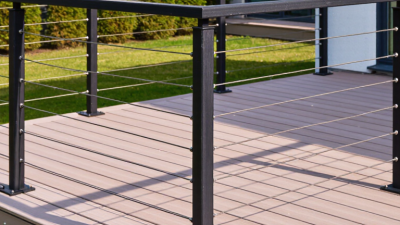
Horizontal cable layouts create long, uninterrupted sightlines across decks and stairs. Their slim wires can keep a garden, shoreline, or room visible. But horizontal runs may also resemble footholds to children, especially when cables are widely spaced. Tension matters. Loose wires can deflect and widen openings under pressure, so installers should verify spacing and tension after installation.

Vertical layouts interrupt the view with repeated lines, yet they offer fewer horizontal footholds. Neither orientation is automatically safe. The 2021 International Building Code, Section 1015.4, generally requires guards to prevent a 4-inch-diameter sphere from passing through openings. This is a useful dimensional check, not proof that every cable system meets local requirements. Confirm the applicable code, post strength, cable tension, and connection details with a qualified professional.

For clearer views, horizontal systems often feel less visually busy from a seated position; vertical cables may frame the landscape more strongly. The difference can be subtle. Stand where people will actually sit, then inspect the view at eye level. One detail is easy to overlook: a design that looks open in a drawing may feel crowded once posts and fittings are installed. Check the finished layout, not just the render.

How Does the IBC 4-Inch Sphere Test Apply to Cable-Railing Openings?

Cable handrails often use horizontal or vertical stainless-steel cables, with posts made from metal or wood. Horizontal layouts offer clear views, while vertical cables can make climbing less tempting. Either way, the cable infill must work as part of a complete guard system.

The IBC’s 4-inch sphere test checks whether a sphere can pass through openings in a guard where the code requires one. A gap between cables may look small on a drawing but widen when cables flex under pressure. Posts, end fittings, cable spacing, and installation tension all affect the finished opening. Check the adopted IBC edition and local amendments, since requirements and exceptions can vary, especially around stairs. A ruler alone may not tell the whole story. Testing a representative installed section can reveal movement that plans miss.

Tips: Measure clear gaps after installation, not only before cable tensioning. Push gently on the cables and recheck the widest opening. Keep fitting instructions and inspection notes; they help explain how the assembly was installed. If the result is close to four inches, ask a qualified building professional or local official to review it. The margin can be easy to underestimate.

What IBC Guard Loads Apply: 200-lb Concentrated or 50-lb/ft Uniform?

For many cable handrails, the key IBC guard-load check is the top rail: 200 pounds concentrated, or 50 pounds per linear foot distributed along it. The load may act in any direction. These are alternative load cases, not loads to add together. The governing case depends on the rail, posts, connections, and span.

Picture someone leaning hard on a short section of rail. The 200-pound force can expose a weak post connection. A continuous 50-pound-per-foot load may control a longer run. Both checks matter. Cable infill has its own requirements; do not assume a passing top-rail calculation proves the cables and their attachments are adequate. Cable tension can also pull posts inward and increase deflection. That detail is easy to underestimate.

Check the adopted IBC edition and local amendments before setting design loads. Confirm whether the project has special occupancy conditions, and have the full guard assembly evaluated—not just the rail profile. I would avoid treating a simple load number as a complete design. It is only one part. Real cable systems can move more than expected, especially when posts are widely spaced. A qualified design professional should verify member sizes, anchors, and installation details for the actual project.