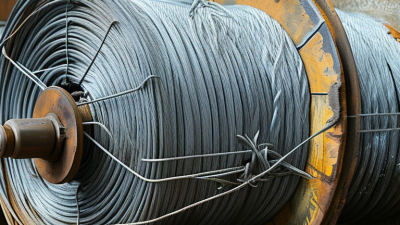
China Top 10 Wire Rope Manufacturers
China is a major source of wire rope for construction, mining, marine work, lifting, and industrial equipment. Yet a “top 10” list should be a starting point, not a guarantee of quality. A polished catalog is not proof. Buyers need to compare rope construction, strength ratings, diameter tolerances, coating options, test documents, and suitability for the intended equipment. Small differences matter: a rope running over a sheave may need different construction from one exposed to seawater or repeated bending. The right choice depends on actual working conditions.
Wire-rope specialist Dr. Jörg Verreet has written extensively about rope construction, behavior, and inspection. The following is a paraphrase of a practical lesson reflected in his technical work, not a verbatim quotation: “Choose the rope for its real duty, then inspect it as carefully as you specify it.” This guide to China’s top 10 wire rope manufacturers uses that principle to frame the comparison. It considers product range, manufacturing capability, quality controls, documentation, export experience, and technical support. Company claims should still be checked against current certificates, test reports, and project requirements. Availability and specifications can change. No ranking can replace a careful supplier review. That part takes time. And sometimes the information buyers need is simply not easy to verify.
Wire Rope Fundamentals: Cores, Strands, Lay, and Common 6×19 or 6×36 Constructions
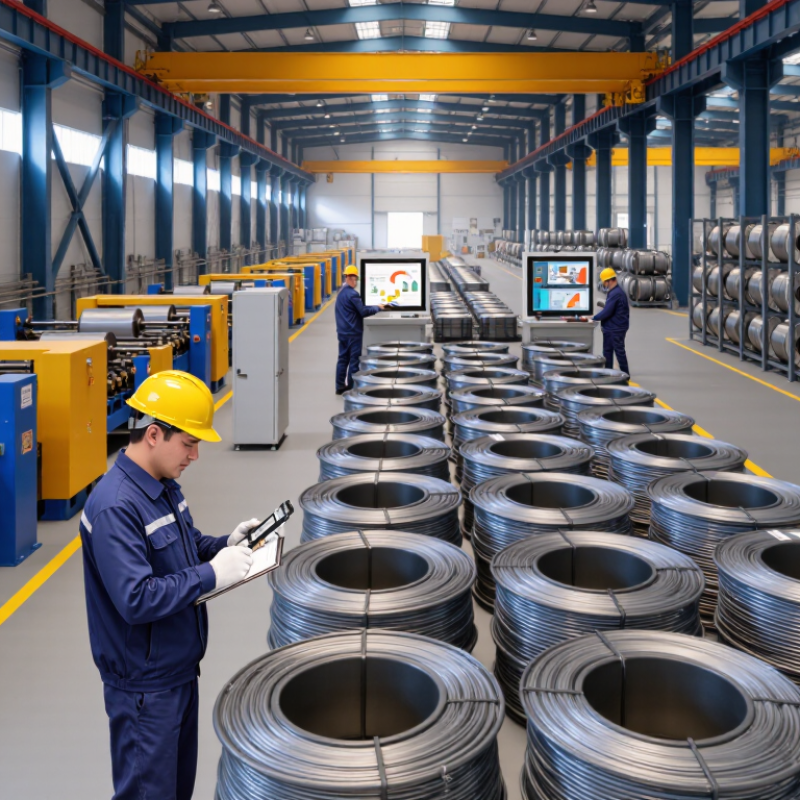
Wire rope is built from wires twisted into strands, then laid around a core. The core supports the strands and helps maintain the rope’s shape under load. Fiber cores offer cushioning and flexibility; independent wire rope cores add strength and resist crushing better. Neither is universally superior. A drum with tight, repeated wraps may demand more crush resistance than a simple lifting arrangement.
The Wire Rope Technical Board’s Wire Rope Users Manual classifies 6×19 ropes as having 15–26 wires per strand, and 6×36 ropes as having 27–49. These are construction classes, not exact wire counts. In practice, 6×19 constructions often use thicker outer wires for abrasion resistance, while 6×36 constructions generally bend more easily because they contain more, finer wires. That trade-off matters. I still find it easy to oversimplify: actual performance also depends on wire grade, core, and operating conditions.
Lay describes the direction and pattern in which wires and strands spiral. Regular lay places wires opposite to the strands’ direction; lang lay places them in the same direction. Lang lay can spread wear along the rope, but it needs suitable handling and reeving. Check the rope’s specification, not just its label. Even two ropes marked 6×36 may differ in strand pattern and performance.
Strength Grades and Standards: ISO 2408 Grades from 1,770 to 2,160 MPa
For buyers comparing China’s wire rope manufacturers, strength grade is an important starting point, not a complete specification. ISO 2408 includes nominal rope grades such as 1,770, 1,960, and 2,160 MPa. These grades help determine minimum breaking force; they do not state the rope’s safe working load. Important distinction.
Ropes with the same grade can differ in construction, core, lay, diameter, and termination. A 2,160 MPa grade may provide a higher minimum breaking force in a comparable design, but it does not automatically mean better service life. Bending fatigue, sheave size, and handling conditions matter. That detail is easy to overlook.
When reviewing a manufacturer’s offer, check the grade marking, rope construction, stated minimum breaking force, and test documents. Match them to the equipment’s duty cycle, sheave diameter, corrosion exposure, and required safety factor. A rope can meet a tensile requirement yet wear quickly on a small, rough sheave. Real installations are rarely perfect. Record inspection findings, and follow the equipment maker’s maintenance guidance.
How to Compare China’s Top 10 Manufacturers: Products, Capacity, and Quality Control
China Top 10 Wire Rope Manufacturers
Comparing China’s leading wire rope manufacturers takes more than reviewing catalogues. Match each supplier’s product range to your operating conditions: rope construction, diameter, core type, coating, and required breaking force. A rope shown in a product sheet may not suit repeated bending over a small sheave. Ask for specifications tied to the exact rope configuration, not a general capacity claim.
Check whether production capacity refers to monthly output, available stock, or a particular rope type. These figures are not always comparable.
Tips: Request sample inspection records and a recent test report for the same construction and diameter you plan to buy. Ask how the manufacturer controls wire diameter, lay length, lubrication, and batch traceability. A factory visit can reveal winding equipment, storage conditions, and how finished coils are protected from moisture. Still, one visit cannot prove consistent quality across every production run.
Compare quality systems through evidence, not labels alone. Review inspection procedures, calibration records, and how rejected material is handled. Clarify lead times, packaging, and the documents supplied with each shipment.
If test values vary slightly between batches, ask why and whether the variation affects your application. It is easy to focus on price; I would also check how clearly the supplier answers specific technical questions.
Industry Applications: Matching Rope Construction to Lifting, Mining, and Marine Use
Wire rope construction should follow the job, not just the rated breaking strength. For lifting, a flexible rope such as a 6×36 construction can bend smoothly over sheaves during repeated hoisting. A denser 6×19 construction may better tolerate surface wear in some setups. The right choice still depends on sheave diameter, drum design, load, and reeving. Rotation-resistant ropes can help control twisting on long lifts, but require compatible handling and installation. Details matter.
In mining, ropes face abrasive dust, heavy loads, and repeated bending across drums and sheaves. A compacted strand construction may offer a harder-wearing surface, while core selection affects strength and flexibility. Hoist duty cycles matter too. A rope that performs well in a short trial may fatigue under constant operation. Inspection intervals and lubrication should reflect actual site conditions, not assumptions.
Marine applications bring salt spray, moisture, and changing loads. Galvanized rope is often considered where corrosion resistance is needed, while stainless steel may suit particular environments and equipment requirements. Neither option removes the need for inspection. Check for broken wires, corrosion, and changes in rope diameter near terminations. A specification sheet helps, but it cannot capture every detail of a vessel’s winch, sheaves, and working conditions. That choice is rarely tidy.
Buyer Verification: Breaking Force, Diameter Tolerance, Certification, and Traceability
When evaluating China’s wire rope manufacturers, treat breaking force as a measured result, not a catalog promise. Ask for a recent test report tied to the exact rope construction, diameter, and production batch. Confirm whether the figure is minimum breaking force or an individual test result; neither should be confused with working load. Request the test method and sample identification. Keep it simple. A report without matching identifiers is weak evidence.
Check diameter tolerance against the agreed specification. Measure over the outer strand crowns, under consistent light tension, at several points along the rope. Use a calibrated instrument and record the readings, rather than relying on a single measurement. One reading is insufficient. Differences can affect fit on sheaves and drums, especially in equipment designed for a narrow size range.
Verify each certificate’s issuer, validity, and product or site scope. A quality-system certificate alone does not prove that every rope meets its required strength. Traceability should connect the delivery tag to a production batch and its inspection records. Ask the supplier to demonstrate that link using an actual sample document. Paper trails can still contain gaps; a checklist helps, but it cannot replace independent verification for critical applications.
China Top 10 Wire Rope Manufacturers — Buyer Verification: Breaking Force, Diameter Tolerance, Certification, and Traceability
This chart is a unit-conversion reference, not manufacturer test data or a wire-rope acceptance table. Values are converted using 1 metric tonne-force = 9.80665 kN. When verifying a rope, compare its certified minimum breaking force with the requirement for its exact construction and grade; confirm diameter tolerance against the applicable product standard, and check certification and traceability records.
Related Posts
-
What Is Wire Rope and What Are the Main Types?
-
Exploring the Versatility of Wire Rope: Applications, Benefits, and Care Tips
-
How to Choose the Right Steel Cable for Your Needs?
-
Top Uses and Benefits of Stainless Cable in Various Industries
-
2026 How to Choose the Best Stainless Cable for Your Projects?
-

2026 Top Stainless Steel Cable Railing Trends for Buyers?