Top Stainless Steel Cable Railing Systems for Global Buyers
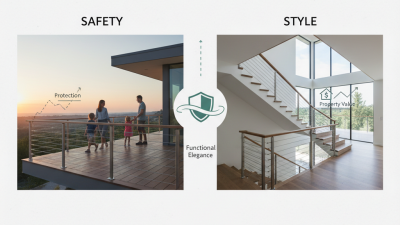
Stainless steel cable railing systems promise open views, clean lines, and dependable edge protection. For global buyers, appearance is only part of the decision. Cable diameter, post spacing, terminal fittings, alloy grade, and installation access all affect performance. A bright coastal balcony and an indoor mezzanine do not face the same conditions. Small details matter.
Grand View Research’s Railing Market Size, Share & Trends Analysis Report tracks demand across residential and commercial construction. Its broad market scope offers useful context, but it does not isolate cable railing systems. Buyers should therefore compare product-specific evidence, including material certificates, load-test documentation, finish details, and clear installation instructions. The International Building Code and applicable local requirements also shape project specifications; requirements vary by location. Mies van der Rohe’s well-known design maxim, “Less is more,” offers a useful architectural lens for cable rails, though it is not a technical recommendation. A clear view still needs sound engineering. This guide examines leading stainless steel cable railing systems for global buyers, comparing materials, configurations, durability, and supplier support. Some product claims deserve a closer look. A polished finish alone cannot prove long-term corrosion resistance, and even a strong system can disappoint when installation guidance is vague.
Stainless Cable Railing Systems: Cables, Posts, Terminals, and Top Rails
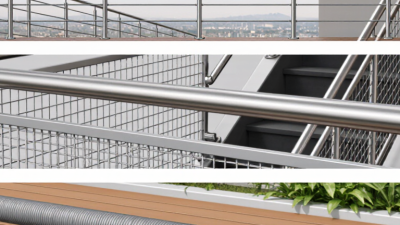
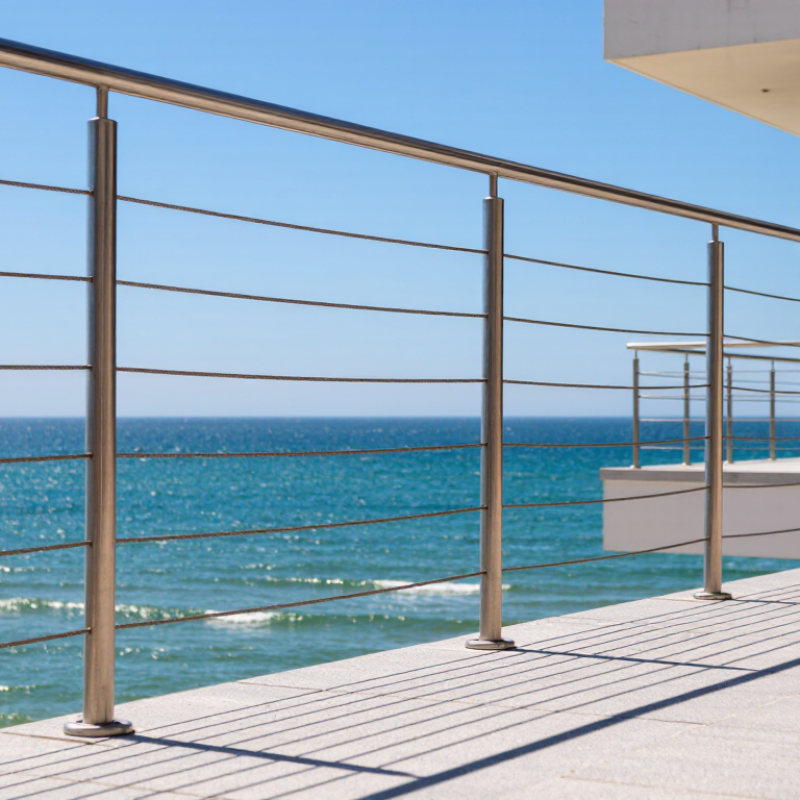
Stainless cable railing systems depend on how four parts work together: cables, posts, terminals, and top rails. Cables create a slim visual line, but their diameter and spacing should suit the span and intended use. Posts carry the loads; sturdy end and corner posts matter especially on long runs. Terminals must match the cable construction and post material, or fitting and tensioning can become difficult. Small details matter. On exposed coastal sites, suitable stainless steel grades and compatible hardware help reduce corrosion risk, though no material is maintenance-free.
A top rail can provide a comfortable handhold and help steady the assembly, but its connections need careful detailing. Installers should tension cables evenly with an appropriate tool, then check alignment and movement across the full run. Too much tension can stress posts; too little may leave visible sag. That trade-off is real. Buyers comparing systems across regions should confirm cable, terminal, post, and rail dimensions together, not just compare catalogue photos. Ask for clear installation instructions and material specifications, and check that the design suits the project’s local requirements. Even a well-made system can disappoint when site measurements or terminal clearances are guessed.
Stainless Steel Cable Railing: Common Nominal Cable Diameters
A quick size comparison for cable railing system planning.
The metric values are inch-to-millimeter conversions: 1/8 in = 3.175 mm, 3/16 in = 4.7625 mm, and 1/4 in = 6.35 mm. These are common nominal sizes; confirm cable, post, and terminal compatibility with the system specifications and applicable local requirements.
Stainless Grades: 304 vs 316, with 316 Containing 2–3% Molybdenum
For global buyers, the key difference between 304 and 316 is molybdenum. ASTM A240/A240M’s chemical-composition tables specify 2–3% molybdenum for grade 316; grade 304 has no required molybdenum range. That addition helps 316 resist chloride-related pitting, making it a stronger choice for coastal railings, salt-sprayed balconies, and exposed waterfront walkways. A small detail, with real consequences.
Grade 304 can suit many inland projects with lower salt exposure and regular cleaning. But neither grade is immune to corrosion. Salt can collect around cable terminals, swage fittings, and posts, where moisture remains trapped. ASTM material chemistry is useful evidence, not a complete service-life prediction. I would also check the cable, fittings, fasteners, and cleaning plan; specifying 316 for only one component may leave a weak point.
Tips: Ask for mill test certificates confirming the supplied grade and chemistry. Rinse salt deposits from fittings, especially after storms. For severe marine exposure, 316 is often the prudent starting point, but local conditions still matter. Check the details, not just the label.
Cable Construction: Comparing 1×19 and 7×7 Wire Rope Configurations
For stainless steel cable railing, the choice between 1×19 and 7×7 wire rope affects installation, feel, and maintenance. The first number describes the strand count; the second describes the wires in each strand. A 1×19 construction uses one strand of 19 wires. It feels firm and resists bending. That matters.
On long, straight railing runs, 1×19 can hold a clean, taut line when paired with compatible fittings and properly tensioned. Its stiffness can make corners and tight turns difficult, so the post layout needs careful planning. A neat drawing is not enough; check the cable path on site.
A 7×7 cable has seven strands, each made from seven wires. It bends more easily around gentle curves and can be simpler to handle during installation. The trade-off is a more flexible feel, and the line may need closer tension checks as the system settles. Not always. Actual movement depends on cable diameter, span, fittings, and installation quality. For a crisp, straight appearance, 1×19 is often considered; for curved layouts, 7×7 may be more practical. Compare the cable with the chosen terminals before ordering, and confirm that the railing design meets the project’s applicable safety requirements.
U.S. IBC Benchmarks: 4-in (102-mm) Sphere Rule and 200-lb Guard Load
For U.S. projects, two IBC benchmarks often shape stainless steel cable railing design: a 4-inch (102-mm) sphere rule and a 200-pound guard load. In many applications, a sphere of that size must not pass through the guard’s openings. Stair conditions and adopted code editions can differ, so confirm the local requirements before selecting cable spacing.
The 200-pound load is generally applied at a point along the top rail, in the direction specified by the applicable code. That force affects more than the rail itself. Posts, anchors, end fittings, and the supporting structure all need a sound load path. Cable tension matters, too. Over-tensioning can stress posts or fittings; loose cables may leave openings too large under pressure.
A practical check.
Measure the clear gaps after installation, not just on the drawing. Then inspect the assembly for cable sag, secure terminations, and movement at the post bases. A rigid-looking rail can still deflect. This is easy to overlook. Cable systems may need intermediate supports, depending on span and design. These benchmarks are useful starting points, not proof of compliance; verify project-specific calculations and inspection requirements with a qualified design professional and the local building authority.
Global Sourcing: ASTM A580 Wire, EN 10088 Grades, and Mill Certificates
For global cable railing procurement, compare the material standard, grade, and certificate—not just the product description. ASTM A580/A580M covers stainless steel wire, while EN 10088 identifies stainless steel grades and delivery requirements. A familiar match is 316 and EN 1.4401, but matching names alone does not prove identical chemistry or performance. Check the specified grade against the project’s exposure and design requirements.
The World Stainless Association reported global stainless crude steel production of 58.4 million tonnes in 2023. That scale supports broad sourcing, but it also makes traceability important. Ask suppliers for mill test certificates, preferably EN 10204 Type 3.1 where required, and verify heat numbers against wire coils and packing labels. Review chemical composition, tensile properties, diameter tolerances, and surface condition. Small discrepancies matter.
A certificate is useful, not magical. It may not confirm that the finished cable assembly meets railing load requirements. Request test records for the assembled system separately, and confirm the cited standard edition and product form. One detail is easy to miss: polished wire can look uniform while coming from different heats. Keep the paperwork with the project record. Check it before installation.