7 Cable Handrail Buying Tips for Global Buyers
Choosing a cable handrail for an international project involves more than comparing prices. Buyers must check cable grade, post spacing, fittings, finish, packaging, and supplier communication. A sample can look flawless under showroom lights. The real test comes after shipping, when parts meet the site conditions and installation plan. Small details matter: thread compatibility, cable tensioning access, and clear assembly instructions can save time later.
Cable handrail consultant Alex Morgan puts it this way: “A reliable system is measured not only by its steel, but by how clearly every part is specified.” Use that principle when comparing quotes. Ask for material details, dimensional drawings, installation guidance, and confirmation of what each package includes. Clarify whether the quoted price covers cables, terminals, posts, and compatible tools. Check how the supplier protects polished components from scratches during transit. Then review the proposed finish against the project’s exposure to moisture, salt, or frequent handling.
Details add up. Still, no checklist removes every risk. Drawings may leave questions, and supplier answers can sound precise while missing a site-specific constraint. Pause when specifications are vague. Request written clarification before approving production, and have a qualified professional review the design for your project. These seven buying tips offer a practical starting point for global buyers. They cannot replace careful verification. They can help you ask sharper questions, compare suppliers more consistently, and spot avoidable gaps before a cable handrail reaches the jobsite.
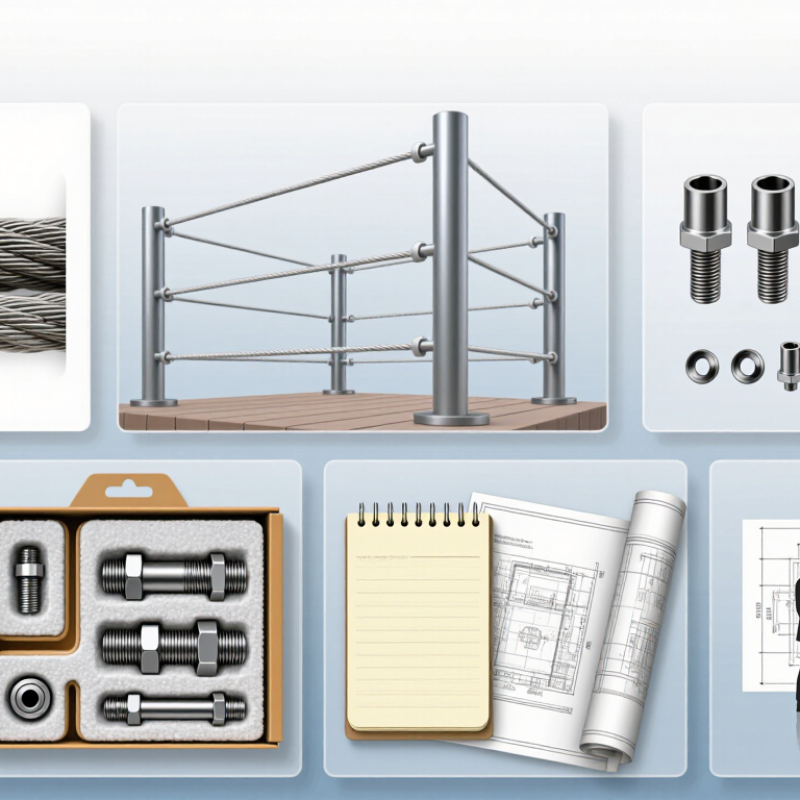
Define Project Requirements, Site Conditions, and Design Goals
Before requesting cable handrail quotes, define the span, fixing points, user needs, and finish. Measure each run, including corners, stairs, and changes in level. A sketch with post locations and substrate notes can prevent costly surprises. Is the base concrete, timber, or a steel frame? Each needs compatible anchors and different installation checks. Record coastal salt, winter icing, wind exposure, and cleaning access. Small details matter.
Design for real hands, not just photographs. The World Health Organization’s 2020 Decade of Healthy Ageing baseline report notes that by 2030, one in six people worldwide will be aged 60 or older.
Consider comfortable grasp, continuous support, and clear visibility; cable spacing and rail height must also meet applicable local requirements.
The 2023 Global Status Report for Buildings and Construction attributes 37% of global energy- and process-related CO₂ emissions to the buildings and construction sector. That figure is not a railing footprint, but it makes durability and replacement planning worth discussing.
Ask suppliers for material grades, finish details, maintenance guidance, and documented load performance. I have seen buyers focus on cable appearance and overlook end fittings. That is an easy miss. A beautiful sample cannot reveal a poor anchor detail.
Choose Cable, Posts, and Hardware for Durability
Start with the installation environment. Salt air, pool chemicals, and road spray can corrode metal faster than a sheltered porch. Choose cable material and finish for the actual exposure, not just the product photo. Check the stated alloy grade and care instructions. “Stainless” alone is not enough detail. Cable diameter also affects appearance and feel, but must match the posts and fittings specified for the system.
Posts need enough stiffness to resist cable tension. A slender post may look clean, yet flex when several cable runs are tightened. Ask for post dimensions, wall thickness, and recommended spacing before ordering. Wood posts can move with moisture changes, so their fasteners and cable tension may need periodic attention. That is easy to overlook. For long runs or unusual layouts, have a qualified professional confirm the post and anchoring design.
Match every fitting to the cable diameter and material. Mismatched parts can cause poor grip, visible staining, or difficult adjustment. Compare swaged and field-adjustable terminals, and confirm that the tools required for installation are available. Small details matter. In coastal settings, compatible metals and regular rinsing can help reduce corrosion. One buying mistake is focusing only on the cable price; posts, end fittings, and replacement parts can change the real cost considerably. Before purchase, request a complete component list and installation guidance.
Check Safety Codes, Load Ratings, and Certifications
For global buyers, a cable handrail’s appearance says little about its safety performance. The 2021 International Building Code, Section 1607.8.1, specifies guard loads of 50 pounds per linear foot or a 200-pound concentrated load, applied separately. It also specifies a 50-pound load on a one-square-foot area for infill components. These are model-code values, not universal approval; local editions, occupancy, and amendments can change requirements. Check the project jurisdiction before comparing supplier claims.
Ask for test reports identifying the tested assembly, load direction, cable spacing, post spacing, and anchorage. ASTM E935 provides test methods for permanent metal railing systems, but a reference to the standard alone does not prove a specific design passed. Look for reports from a competent, preferably ISO/IEC 17025-accredited laboratory, and match the tested configuration to the quotation. Small detail. A cable may meet a load target on paper yet deflect between posts, or loosen if fittings are installed inconsistently. Check the gaps. Confirm allowable deflection, end-post details, and inspection needs in writing. I would treat a tidy rating table with caution when it omits test setup or installation conditions.
7 Cable Handrail Buying Tips for Global Buyers: Check Safety Codes, Load Ratings, and Certifications
Illustrative 2021 International Building Code (IBC) guard and handrail load criteria. These are code design loads—not cable-system capacity ratings.
The 2021 IBC specifies a 200 lbf concentrated load for guards and handrails, and a 50 lbf load applied to a 1 ft² area for guard infill. Load cases have different application conditions and are not necessarily applied simultaneously. Before buying, confirm the locally adopted code edition, required cable spacing and system-specific engineering, and request applicable test reports and certifications. Requirements vary by jurisdiction.
Evaluate Suppliers, Customization, and Quality Control
7 Cable Handrail Buying Tips for Global Buyers
A cable handrail supplier should explain materials, production capacity, and inspection methods clearly. Ask for cable grade, diameter, fitting materials, and finish details in writing. Request a recent sample and compare it with the drawings. A polished sample is useful, but it cannot show how every production batch will perform. Details matter. Check how the supplier handles questions, changes, and delays before placing a large order.
Tip: Send a drawing with post spacing, cable layout, and end-fitting requirements. Ask which dimensions can be customized and which affect lead time or cost. Confirm that proposed fittings suit the intended installation and cable size. Small changes can matter. Keep approvals, revisions, and sample comments in one record; scattered emails are easy to misread.
Quality control should cover more than a final visual check. Request documented checks for dimensions, surface finish, fitting alignment, and cable tension where applicable. Ask how defects are recorded and corrected, and whether inspection reports match the shipped batch. Ask for evidence. If testing is relevant to your project, agree on the method and acceptance criteria before production starts. One point is easy to overlook: inspection photos may show selected pieces, not the whole order, so clarify the sampling plan.
Compare Total Costs, Shipping, and Installation Support
A cable handrail quote is only a starting point. Compare the full delivered cost, not just the price per metre. Check whether posts, cables, tensioners, end fittings, and spare parts are included. Small parts matter. Ask how the goods will be packed and whether the quoted freight includes insurance, customs charges, and delivery to your site. A low shipping rate can exclude unloading or final-mile transport, leaving a surprise when the truck arrives.
Shipping details affect more than the invoice. Confirm package dimensions, estimated transit time, and how exposed metal components are protected from moisture and scratches. Ask which documents come with the shipment, especially installation drawings and a clear parts list. Even a careful schedule cannot predict every delay. Build some flexibility into the project timeline rather than promising an exact handover date too early.
Installation support can reduce costly rework. Before ordering, request post spacing guidance, cable-routing details, and the recommended tensioning sequence. Clarify whether support is available remotely and what measurements your installer must provide. A short call may catch a mismatch between site dimensions and the supplied layout. That said, drawings do not replace a site check. Compare labor, tools, and any local inspection requirements alongside product costs. A spreadsheet helps, but it can still create false confidence if estimates are incomplete.