7 Cable Handrail System Buying Tips for Global Buyers
A cable handrail system can make a deck, balcony, or stairway feel open, but the right choice depends on more than appearance. Buyers need to compare cable grade, post strength, fittings, finish, and installation support. Small details matter. A cable that looks slim in a product photo may require stronger posts and careful tensioning to stay stable over time.
For this introduction, the expert line is an editorially drafted placeholder, not a verified quotation: cable-railing specialist Alex Morgan says, “Choose the complete system, not just the cable.” Replace this line with a verified quotation before publication. It captures a practical buying concern: cables, terminals, posts, and mounting surfaces must work together. A polished sample tells only part of the story.
These seven buying tips help global buyers ask clearer questions before requesting quotes. They cover material specifications, compatible components, project measurements, finish options, documentation, lead times, and supplier communication. Ask for drawings and product data, then check whether the proposed system suits your actual site conditions. A coastal location, for example, may call for a different finish than a sheltered indoor stair. Details can be missed. I would not treat the lowest quote as the best value without checking what it includes. Compare the scope carefully, and confirm unclear specifications in writing before placing an order.
Understanding Cable Handrail Systems and Their Main Components
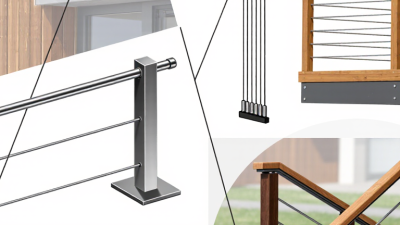
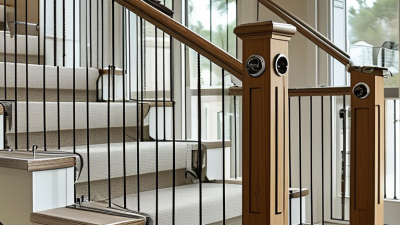
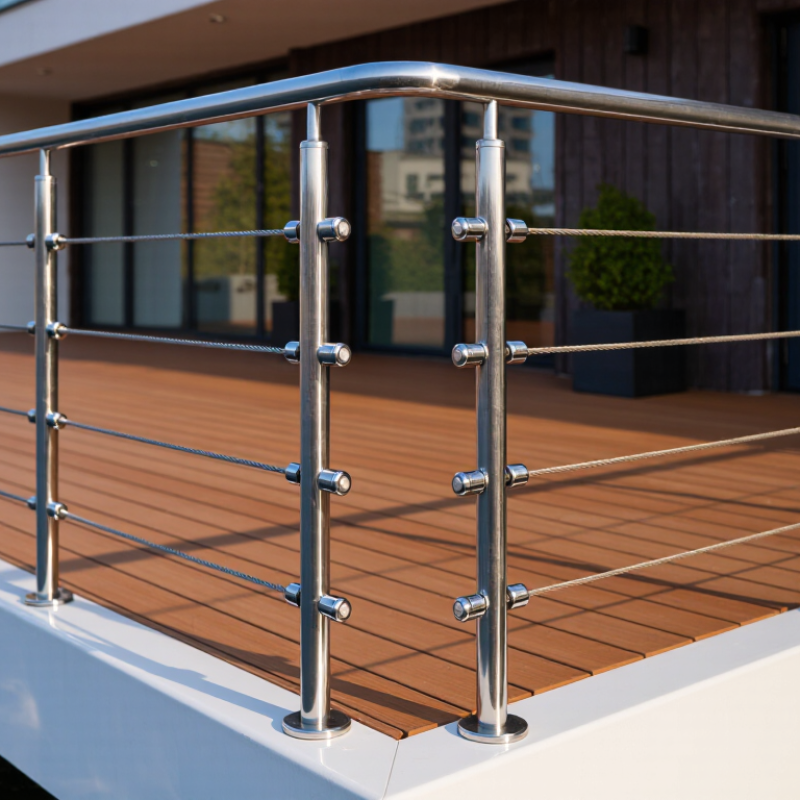
A cable handrail system is more than stainless-steel wires stretched between posts. Its main parts are the cable infill, end fittings, tensioners, posts, top rail, and structural anchors. Cable diameter and spacing affect stiffness, while terminal fittings transfer tension into the posts. Small parts matter. A polished cable can still perform poorly if its end fitting is mismatched or its anchor is fixed into weak material.
Material choice also needs context. The World Stainless Association’s Stainless Steel in Figures 2024 reports 58.4 million tonnes of stainless-steel production in 2023, but broad supply figures do not confirm a specific alloy’s suitability. Ask for the grade, finish, and corrosion guidance for the installation environment. The International Building Code 2021 lists guard loads of 200 pounds concentrated or 50 pounds per linear foot, with separate infill-load provisions. These are useful design references, not universal project requirements. Confirm applicable local criteria with the project’s qualified designer. Cable tension can also loosen or change with use and temperature; inspection access should be planned, not improvised. A neat elevation drawing may hide the weak point: the end connection.
Defining Project Requirements, Dimensions, and Design Conditions
Before requesting cable handrail quotes, define the use, location, and governing project code. Record the clear opening, stair angle, finished floor height, and mounting surface. A 10-millimeter error at a corner can shift post positions and complicate cable alignment. Measure twice. Check the substrate, too: timber, steel, and concrete need different fixing details.
For many U.S. projects, the 2021 International Building Code sets 42 inches as a common guard-height benchmark and generally limits openings so a 4-inch sphere cannot pass through. Exceptions apply, and local requirements may differ. Cable loads and deflection also depend on span, post stiffness, and tension. The project engineer should confirm loads using the applicable code, including ASCE/SEI 7 where required. Do not treat a catalogue dimension as a structural design.
Tip: Send a marked-up plan with post locations, cable direction, end conditions, and site photos. Note coastal exposure, wind conditions, and whether the system sits beside stairs or a level deck. Ask for a dimensioned shop drawing before production. It sounds obvious, but buyers sometimes approve layouts before checking the actual slab edge. That mistake is easy to make.
Comparing Materials, Finishes, and Safety Standards
Material selection depends on climate, maintenance plans, and the structure supporting the cables. Stainless steel is common for cables and fittings, but buyers should compare suitable grades for inland, humid, or coastal exposure. Aluminum posts can reduce weight, while steel posts may suit projects needing greater stiffness. Confirm that metals and fasteners are compatible; mixed materials can corrode where moisture collects.
Finishes affect both appearance and upkeep. Brushed metal can hide light marks better than a mirror polish, while powder coating offers color choices for posts. Ask how edges, drilled holes, and cut ends are protected. A finish that looks smooth on a sample may wear differently outdoors. Small details matter. Request samples and inspect them in natural light, not only under a showroom lamp.
Safety requirements vary by location and building type, so compare documentation against the project’s applicable codes. Check guard height, opening limits, design loads, and required test reports with a qualified local professional. Cable tension also matters: long runs and flexible posts may allow noticeable movement. Ask for installation guidance, maximum spans, and inspection procedures. Looks are not enough. I would not approve a system from a catalog image alone; real site conditions can expose gaps in the specification.
Assessing Suppliers, Product Quality, and Customization Options
7 Cable Handrail System Buying Tips for Global Buyers
A supplier’s catalog is only a starting point. Ask for cable grade, steel certificates, fitting material, and inspection records. Check whether sample assemblies show clean crimps and consistent cable tension. Details matter. The 2016 IMPACT corrosion study estimated corrosion costs at $2.5 trillion worldwide, or 3.4% of global GDP. That figure makes material selection more than a finish decision. Ask how the supplier controls corrosion risks at cable ends, posts, and mixed-metal connections. Request clear documentation, not just verbal assurances.
Customization should solve site conditions, not merely change appearance. Share post spacing, corner locations, stair angles, and project drawings before production. Ask for shop drawings and a sample fitting, then compare them with actual site measurements. A polished catalog can still hide a weak process. The 2017 Reinventing Construction report found construction labor productivity had risen about 1% annually over two decades, compared with 2.8% across the economy. Clear fabrication details can help limit avoidable rework, though they cannot fix poor installation planning. Confirm lead times, replacement-part availability, packaging, and who approves drawing revisions. A small detail gets missed. Make responsibilities explicit.
Cable Handrail Buying: Guard-System Design Load Benchmarks
Use these IBC 2021 benchmarks when asking suppliers for engineering documentation, test reports, and confirmation that cable spacing and custom configurations preserve system performance. The values represent different load cases and are not directly equivalent; requirements vary by jurisdiction, so verify the locally adopted code.
Reference: 2021 International Building Code, Section 1607.8.1 and Table 1607.8.1.
Evaluating Total Costs, Shipping, and Long-Term Maintenance
7 Cable Handrail System Buying Tips for Global Buyers
Evaluating Total Costs, Shipping, and Long-Term Maintenance
A low unit price can hide expensive extras. Compare the full package: posts, cables, fittings, tools, packing, and delivery to your site. Ask whether quoted measurements include spare cable and installation hardware. Small omissions can create delays and additional freight charges. Check the required cable spacing and post layout against your project drawings before ordering; changing them later may mean replacing parts.
Tip: Request a landed-cost estimate. It should separate product price, packaging, freight, insurance, and any destination charges you must verify locally. Confirm crate dimensions and gross weight, not just the shipment’s total weight. Oversized packages can affect handling costs. Build in time for transit and inspection, especially when a project has a fixed installation window. A cheap shipment is not always a dependable one.
Maintenance costs depend on material, exposure, and access. Coastal air, frequent rain, or winter salts may call for more regular cleaning and inspection. Ask how to check cable tension, identify worn fittings, and source compatible replacement parts. Get those instructions in writing. Also consider whether a crew can reach every connection safely. One imperfect assumption is easy to make: a system that looks simple on a drawing may need more adjustment after installation. Keep a modest allowance for that work.