2026 Top Types of SS Cable Railing for Global Buyers
In 2026, ss cable railing continues to attract global buyers seeking open views, clean lines, and durable edge protection. It appears on coastal decks, rooftop terraces, balconies, stairways, and modern commercial projects. Yet the best system is not chosen by appearance alone. Cable diameter, stainless steel grade, post spacing, fittings, surface finish, and installation conditions all affect long-term performance.
This guide examines the main types of ss cable railing available to international buyers. It compares 304 and 316 stainless steel, horizontal and vertical cable layouts, metal and wood post systems, and swaged and swage-free fittings. A 1/8-inch cable may suit lighter residential designs, while 3/16-inch cable often provides a stronger visual and structural balance. Coastal projects usually demand 316 stainless steel because salt exposure can accelerate corrosion. Still, grade selection cannot replace proper cleaning and installation.
Small details matter. A cable that feels tight during installation may loosen after temperature changes or post movement. Incorrect spacing can also reduce safety and create inspection problems. The choice is not always obvious. Buyers should request material certificates, load information, installation drawings, and warranty terms from qualified suppliers. Regional building requirements may differ, so professional review remains important.
This overview is designed for architects, contractors, distributors, and property owners comparing global options. It focuses on practical experience, transparent specifications, and realistic maintenance needs. Some systems look nearly identical in photographs. Their performance may not be identical in service.
Stainless Steel Cable Railing: Definition and Core Components
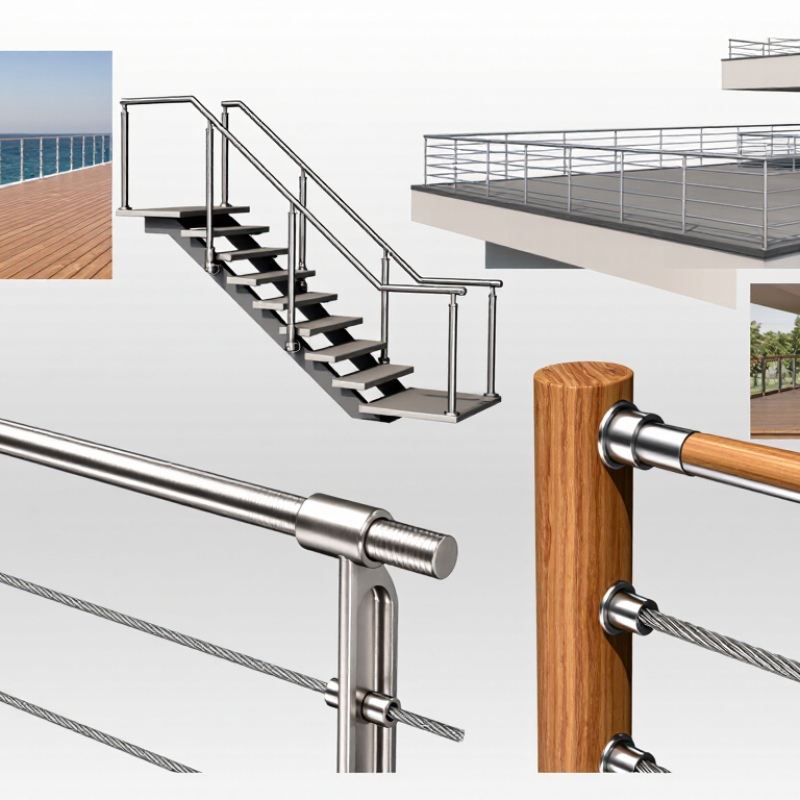
Stainless steel cable railing is a guard system that uses thin metal cables instead of solid panels or vertical bars. It creates an open view while helping define edges on balconies, stairs, decks, and terraces. The cables usually run horizontally between structural posts. Stainless steel resists moisture, staining, and daily handling, but it is not maintenance-free.
The core structure includes posts, cable infill, a top rail, terminal fittings, and tensioning devices. Posts carry the main load and may be fixed to a deck, stair stringer, or concrete surface. The top rail gives users a stable handhold. Cable terminals connect each cable to the posts, while tensioners remove slack. Proper anchors matter. A beautiful system can still fail when the supporting surface is weak.
During installation checks, I look for straight post alignment, clean cable cuts, and even tension across each span. Small details matter. Cables should feel firm, not guitar-string tight. Excessive tension can stress fittings or deform posts. Dust, salt, and water marks also collect around terminals, especially outdoors. Regular inspection helps reveal loose connections before they become serious concerns. One practical weakness is visual judgment: a cable may look level while holding uneven tension. A tension gauge and careful measurement provide more reliable results than appearance alone. Local building requirements should guide spacing, height, load, and anchoring decisions.
2026 Top Types of SS Cable Railing for Global Buyers - Stainless Steel Cable Railing: Definition and Core Components
Stainless steel cable railing is a guard or balustrade system that uses tensioned stainless steel cables as infill instead of solid panels or closely spaced bars. The final design must be selected and installed according to the applicable local building, structural, fire, and accessibility requirements.
| Railing Type | Definition and Typical Structure | Core Components | Common Cable Arrangement | Typical Installation Locations | Main Advantages | Key Limitations and Buyer Checks | Typical Material Selection |
|---|---|---|---|---|---|---|---|
| Horizontal Cable Railing | Posts support multiple parallel cables running horizontally between end or corner posts. It is the most widely used cable-railing layout for open views. | Posts Top rail Cable End fittings Tensioners | Usually 3.2 mm or 4.0 mm cable; spacing is commonly designed near 75–100 mm, subject to local code and load requirements. | Decks, balconies, terraces, stair runs, rooftops, and waterfront residential projects. | Minimal visual obstruction, strong airflow, modern appearance, and good compatibility with timber, metal, or composite top rails. | Horizontal cables may create a climbing risk in some jurisdictions. Verify opening limits, guard height, load resistance, cable deflection, and tensioning access. | Marine-grade stainless steel is preferred for exposed or coastal environments; a more corrosion-resistant grade may be required in severe salt or chemical conditions. |
| Vertical Cable Railing | Vertical stainless steel cables or slender rods run from the lower rail or deck surface to the top rail, creating a more ladder-resistant infill pattern. | Top rail Bottom rail Vertical cables Crimp fittings Anchors | Vertical elements are normally placed at code-compliant intervals; the exact spacing depends on the guard design and jurisdiction. | Stairs, mezzanines, balconies, porches, raised walkways, and family-oriented outdoor areas. | Provides a clean contemporary appearance and can reduce the ladder effect associated with horizontal infill. | Requires accurate alignment and reliable upper and lower anchorage. Cable movement, corrosion at concealed fittings, and cleaning access should be reviewed. | Stainless steel cable with compatible stainless steel terminals, brackets, and structural posts. |
| Post-and-Cable Railing | A modular system in which structural posts carry the tensioned cable infill. Posts may be surface-mounted, fascia-mounted, or embedded into a supporting structure. | Intermediate posts End posts Corner posts Base plates Cable hardware | Horizontal or vertical cables can be used; intermediate post spacing is determined by cable span, rail stiffness, wind exposure, and design loads. | New decks, balcony edges, staircases, commercial terraces, and retrofit projects. | Flexible layout, straightforward replacement of individual parts, and good adaptability to straight or segmented runs. | Post anchorage is critical. Buyers should confirm substrate thickness, fastener type, edge distance, drainage, and engineering responsibility. | Stainless steel posts and fittings; structural steel or aluminum may be used only when properly isolated and protected against galvanic corrosion. |
| Frame-Mounted Cable Railing | Cables are tensioned within a prefabricated frame or panel, which is then installed between larger structural posts or fixed to a supporting opening. | Perimeter frame Cable grid Frame brackets Top and bottom rails | Often supplied as a rectangular panel with evenly spaced horizontal or vertical cables. | Balcony renovations, apartment projects, commercial buildings, modular construction, and replacement guard panels. | Faster site installation, consistent factory alignment, and reduced field fabrication. | Panel dimensions may limit design flexibility. Confirm frame rigidity, lifting requirements, drainage, tolerance allowances, and attachment capacity. | Stainless steel cable with stainless steel or suitably coated structural frames; finish compatibility is important in outdoor installations. |
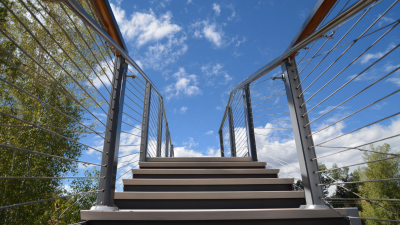
| Stair Cable Railing | A cable railing adapted to sloped stair geometry, with posts, handrails, and cable runs following the stair pitch or landing transitions. | Stair posts Handrail Angled fittings Tensioners Landing posts | Parallel cable runs are aligned with the stair slope; spacing must remain compliant at both the stair flight and landings. | Interior stairs, exterior stairs, split-level homes, public access stairs, and industrial walkways. | Maintains sightlines on stairs and can be coordinated with wood, metal, or concrete stair construction. | More complex measuring and tensioning than level runs. Check handrail continuity, guard geometry, pitch transitions, anchorage, and opening dimensions. | Stainless steel cable and fittings selected for the project exposure; handrails may be timber, stainless steel, aluminum, or coated steel. |
| Fascia-Mounted Cable Railing | Posts are fixed to the vertical side face of a deck, balcony, or stair structure, leaving more usable surface area on the walking deck. | Fascia brackets Side-mounted posts Structural bolts Cable hardware | Most commonly horizontal cable infill, with cable lines positioned between side-mounted posts. | Space-limited balconies, narrow decks, rooftop edges, exterior stairs, and retrofit applications. | Preserves deck width, creates a floating appearance, and can simplify edge drainage when properly detailed. | Requires a structurally sound rim board or edge beam. Check substrate strength, waterproofing, bolt access, edge distances, and local corrosion exposure. | Stainless steel posts, brackets, fasteners, cables, and tensioners should be selected as a compatible system. |
| Surface-Mounted Cable Railing | Posts are attached directly to the top surface of a deck, floor, slab, or stair tread using base plates and structural anchors. | Base plates Anchor bolts Posts Top rail Tensioners | Horizontal or vertical cable infill, depending on the post and rail configuration. | Concrete balconies, timber decks, rooftop terraces, interior mezzanines, and finished floor surfaces. | Simple layout, accessible installation, and suitability for many new-build and retrofit conditions. | Base plates occupy floor area and may complicate waterproofing. Verify anchor embedment, slab reinforcement, substrate condition, and trip-hazard control. | Stainless steel posts and fittings with anchors chosen for concrete, timber, or steel substrates. |
| Mixed-Material Cable Railing | Stainless steel cables are combined with another primary material, such as timber, aluminum, glass, or coated steel, for structural or aesthetic purposes. | Cable infill Posts Handrail Isolation washers End fittings | Usually horizontal cables, although vertical layouts are also possible. | Residential decks, hospitality terraces, coastal properties, garden structures, and contemporary interior spaces. | Offers broad design flexibility and allows the handrail or posts to match the surrounding architecture. | Dissimilar metals can cause galvanic corrosion if moisture and electrical contact are not controlled. Confirm finish compatibility, drainage, fasteners, and maintenance needs. | Stainless steel cable and terminals paired with compatible timber, aluminum, glass-support hardware, or protected steel components. |
Buyer note: Cable diameter, spacing, post size, anchorage, handrail height, guard loading, corrosion resistance, and component compatibility should be confirmed against the project location and applicable building standards before procurement.
Related Posts
-
What Are the Top Stainless Steel Cable Railing Suppliers?
-

How to Install Cable Railing for Your Deck or Balcony Like a Pro
-
Why Choosing the Right Cable Stair Railing is Essential for Your Home Safety
-
How to Choose the Best Cable Railing for Your Home Design Needs?
-
Exploring the Benefits and Design Options of Modern Cable Railing Systems for Homes
-

Why Choose Cable Railing Kits for Your Home Improvement Project?