What Are the Top Stainless Steel Cable Railing Suppliers?
Choosing the right stainless steel cable railing supplier involves more than comparing catalog prices. The best suppliers combine consistent material quality, dependable fabrication, clear technical guidance, and responsive service. This guide examines companies that provide stainless steel cable railing systems for balconies, stairways, decks, and commercial spaces.
Material selection matters. Marine-grade 316 stainless steel usually offers stronger corrosion resistance than 304 steel, especially near coastlines or swimming pools. Reliable suppliers should identify steel grades, cable diameters, fitting materials, and surface finishes clearly. They should also provide installation drawings, load information, maintenance instructions, and product testing documents where available.
Details reveal quality.
A useful supplier comparison considers manufacturing experience, customization options, lead times, warranty terms, and customer support. Photos can help, but they do not replace documentation or verified project experience. Look for suppliers that explain tensioning methods, corner solutions, post spacing, and compatibility between cables and fittings. Poorly matched components may create installation problems later.
No supplier fits every project. A budget-friendly option may provide limited customization, while a premium manufacturer may justify higher costs through tighter tolerances and better support. Regional building requirements can also influence the final choice, so buyers should confirm technical suitability with qualified local professionals. This article highlights leading suppliers and the practical differences between them, while recognizing that product claims deserve careful checking. Even experienced buyers can overlook small fitting details. That is where thoughtful comparison becomes valuable.
What Is Stainless Steel Cable Railing?
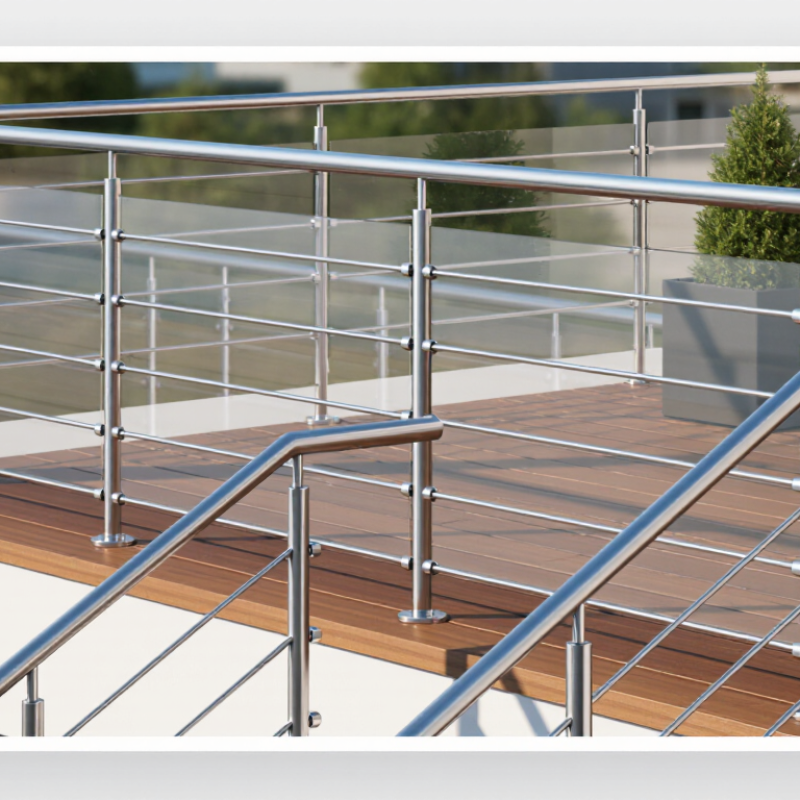
Stainless steel cable railing is a safety barrier made with metal posts, horizontal cables, and tension fittings. The cables replace traditional solid balusters or glass panels. They create a slim, open appearance while preserving views across decks, balconies, and stairways. The system still needs correct spacing, structural support, and secure end connections.
Outdoor systems commonly use marine-grade stainless steel because rain, salt air, and temperature changes can accelerate corrosion. A sheltered interior installation may use another grade, but the choice should match the environment. Cable diameter, post thickness, and fitting quality also affect stability. A reliable supplier should provide clear material specifications, installation guidance, load information, and testing documents. Local building requirements remain essential.
Cable railing is not maintenance-free. Cables can loosen slightly after installation, and coastal air may leave surface deposits. Regular washing with mild soap helps preserve the finish. In practical installations, small alignment errors become obvious when sunlight crosses the cables. That detail is easy to underestimate. I would also question suppliers that promise permanent perfection. Even quality stainless steel needs inspection, especially around swaged fittings, corners, and stair transitions. A careful supplier explains these limits instead of hiding them.
What Is Stainless Steel Cable Railing?
Stainless steel cable railing is a guardrail system that uses tensioned stainless steel cables instead of solid infill panels or vertical balusters. Suppliers commonly specify 304 stainless steel for general indoor and mild outdoor use, while 316 stainless steel is preferred for coastal or high-chloride environments because it contains molybdenum.
The chart shows representative minimum or nominal alloying values commonly used to identify stainless steel grades in ASTM A240 and EN 10088 material specifications. Exact chemical limits can vary by standard, product form, and supplier. Higher molybdenum content in 316 and duplex 2205 generally supports better resistance to chloride-related corrosion than 304.
How to Evaluate Cable Railing Suppliers
Evaluating a stainless steel cable railing supplier starts with the material, not the glossy catalog.
Ask for the exact steel grade, cable diameter, surface finish, and test documentation. Marine or coastal projects usually need stronger corrosion resistance. A supplier should explain why, not simply recommend the most expensive option.
Request physical samples. Check whether the cable feels smooth and whether fittings align cleanly. Small defects become visible under bright stair lighting.
Experience matters here. Installers can often identify weak threading before a project begins.
Review engineering support carefully. Reliable suppliers provide load data, span guidance, post spacing limits, and installation drawings. They should clarify which tests produced those figures.
Vague phrases such as “heavy duty” are not evidence. Ask about tensioning tools, replacement parts, and troubleshooting support.
A clear warranty should state coverage, exclusions, and response times. I have seen attractive quotations hide shipping, drilling, or custom fabrication charges. Request an itemized quote. It makes comparison less emotional.
Sometimes the cheapest system becomes expensive after one missing fitting delays installation.
Communication is another practical test. Send the same technical questions to several suppliers and compare their answers.
Do they ask about the building location, exposure, layout, and installer skill? Good advice should fit the site.
Check recent project references, trade credentials, and customer feedback from comparable applications. Do not accept polished testimonials alone. Call one reference if possible.
A supplier may have excellent products but weak after-sales service. I have also trusted a confident salesperson too quickly; that was a mistake.
Allow time for a second review before approving drawings, finishes, and quantities.
What Services Do Leading Suppliers Provide?
Leading stainless steel cable railing suppliers provide more than polished cable and posts. They help customers choose suitable grades, fittings, and mounting methods. Experienced teams review drawings, opening sizes, edge distances, and expected loads. They may also arrange site measurements before fabrication. Small errors matter here. A few millimetres can affect cable tension and alignment.
Strong suppliers offer custom design support for stairs, balconies, terraces, and complex corners. Their engineers can prepare shop drawings and cutting schedules. They explain how posts connect to concrete, timber, or steel structures. Many provide pre-cut cable kits, installation guides, and tensioning instructions. Some also offer on-site assistance through trained installers. This service can reduce rework, although it may not replace a local structural review.
Reliable suppliers should provide material certificates, test data, maintenance guidance, and clear warranty terms. They should explain surface finishes for coastal, humid, or industrial environments. Traceable batches and consistent fitting dimensions show better process control. After-sales support is equally important. Replacement parts should be easy to identify and order. A polished catalogue can still hide weak technical service. Buyers should ask direct questions about corrosion resistance, load testing, delivery tolerances, and installation responsibility. Suppliers that answer with precise documents usually inspire greater confidence than those offering vague promises.
Which Suppliers Serve Different Project Needs?
What Are the Top Stainless Steel Cable Railing Suppliers?
The best supplier depends on your project, not only on product appearance. Residential balconies often need clean profiles, simple installation, and flexible order quantities. Commercial stairways require tested assemblies, accurate load data, and dependable replacement parts. A supplier serving contractors should provide shop drawings, cut lists, and responsive technical support.
Coastal projects need careful material selection. Marine-grade stainless steel can resist salt exposure better, but design and maintenance still affect service life. For large developments, suppliers should offer consistent cable tensioning hardware, coordinated finishes, and realistic production schedules. Custom projects may require field measurements, unusual post spacing, or engineered corner details. Ask for installation guidance and documented test results. A polished catalog is not enough.
Tips: Compare suppliers using the same checklist. Review alloy grades, cable diameter, post thickness, warranty limits, testing documents, and delivery times. Request samples before approving a full order. Check whether replacement components remain available after installation. Site conditions can change the decision. I would also confirm local building requirements with a qualified professional, because a visually strong railing can still fail practical inspection. One overlooked detail is drainage around post bases. Water trapped there may create problems sooner than expected.
How to Compare Quality, Pricing, and Compliance
Comparing stainless steel cable railing suppliers requires more than checking the lowest quote. Request material certificates that identify the stainless steel grade, surface treatment, and manufacturing batch. A reliable supplier should explain cable diameter, fitting strength, post thickness, and corrosion resistance in practical terms. If the answers sound vague, pause.
Ask for independent test reports, load ratings, installation instructions, and project references. Compliance depends on the project location and railing application, so confirm local requirements with a qualified professional. Documents should match the products supplied, not just display general laboratory claims. Traceable records matter when inspections or future repairs become necessary.
Pricing should include posts, cables, terminals, fasteners, shipping, and replacement parts. Compare the complete system, not a tempting price per meter. During inspection, check for clean welds, smooth edges, accurate holes, and fittings that tighten without slipping. Outdoor systems need suitable corrosion protection, especially near saltwater or industrial areas. I once assumed a polished surface meant better durability; that was an incomplete judgment. Finish quality helps, but alloy selection and maintenance conditions matter more. Suppliers should provide care guidance, warranty terms, and realistic lead times. Vague warranties are a warning. A small sample installation can reveal cable deflection, awkward tensioning, or poor alignment before the full order is placed.
| Comparison Dimension | Practical Benchmark | Indicative Pricing or Cost Impact | Compliance and Quality Evidence to Request | How to Compare Supplier Quotes |
|---|---|---|---|---|
| Stainless Steel Grade | Use Type 316 or 316L for exterior, humid, poolside, or coastal installations. Type 304 is generally more suitable for sheltered inland locations with lower chloride exposure. | 316/316L commonly carries a premium of approximately 10%–30% over comparable 304 components, depending on form, finish, and order volume. | Request the material grade, heat or batch identification, and a mill test certificate. Confirm that the cable, posts, terminals, and fasteners are specified separately. | Do not compare a 304 system with a 316 system as if they were equivalent. Normalize the grade across every exposed component. |
| Cable Construction and Diameter | 1×19 stainless steel cable is widely used for rigid railing infill. Common nominal diameters include 1/8 inch and 3/16 inch, subject to the engineered system design. | Material cost increases with diameter, alloy, finish, cable length, and the number of fittings required. Cable and fittings are usually a smaller cost than posts and labor. | Request cable construction, nominal diameter, rated breaking strength, corrosion-resistant finish, and applicable stainless wire-rope documentation such as ASTM A492 information where relevant. | Compare the complete cable assembly, not only the cable price. Include swage terminals, tensioners, washers, nuts, and replacement allowance. |
| Post and Frame Spacing | A 3–4 ft spacing range is common in many residential systems, but the final spacing depends on post section, cable tension, rail loads, substrate, and the approved engineering design. | Closer spacing increases the number of posts, bases, fasteners, and installation hours. Wider spacing may require heavier or more expensive structural members. | Request structural calculations, allowable spans, post section dimensions, base-plate details, and the substrate requirements for wood, concrete, or steel. | Compare the quote using the same total linear footage, post spacing, corner count, stair geometry, and mounting surface. |
| Opening and Infill Safety | Where adopted by the local code, guard openings are commonly evaluated using a 4-inch sphere test. Stair and walking-surface rules may include additional requirements. | Systems with tighter spacing, more complex stair layouts, or supplemental frames may increase material and labor costs. | Request installation drawings showing cable spacing, stair treatment, termination details, and any code evaluation, test report, or project-specific approval. | Reject quotes that provide only a product photo or generic dimensions without a layout showing actual cable spacing and openings. |
| Guard and Handrail Load Capacity | Many building-code frameworks reference a 200 lbf concentrated load at the top of a guard and a 50 lbf load applied to the infill, but the adopted local code and occupancy type control. | Higher design loads, commercial occupancy, elevated decks, and unusual geometry may require engineered posts, rails, anchors, or custom fabrication. | Request stamped calculations where required, load-test data, anchor specifications, and confirmation of the governing building code edition. | Compare the stated design loads and test method rather than relying on terms such as “heavy duty” or “commercial grade.” |
| Surface Finish and Corrosion Resistance | Common finishes include mill finish, polished, satin, and powder-coated components. For coastal exposure, 316/316L plus suitable passivation and compatible fasteners are important. | Polishing, passivation, color coating, and special coastal specifications can add approximately 5%–25% to component costs. | Request finish specifications, passivation details where applicable, coating data, maintenance instructions, and confirmation that dissimilar-metal contact is controlled. | Compare finish consistency, visible weld quality, edge treatment, and the maintenance requirements—not just the stated alloy. |
| Complete Material Cost | For planning purposes in the United States, complete stainless cable-railing materials commonly fall around US$40–US$150 per linear foot, depending on grade, post design, corners, stairs, and accessories. | Installation, demolition, engineering, permits, freight, taxes, and difficult access are often excluded from material-only ranges and can materially increase the project total. | Request a line-item bill of materials with quantities, unit prices, freight, taxes, engineering, accessories, and exclusions. | Convert every quote to an installed or material-only price per linear foot using the same scope. Do not compare a basic straight run with a stair or corner package. |
| Lead Time and Supply Continuity | Stocked standard components may ship in approximately 1–3 weeks. Custom finishes, fabricated frames, engineering review, or non-standard stairs may require approximately 4–8 weeks or longer. | Expedited production and partial shipments can add freight and handling costs. Delays may also increase installation labor or project downtime. | Request written availability, production lead time, shipping terms, back-order policy, and the validity period of the quotation. | Compare the lead time for the complete order, not only the cable. One unavailable post or tensioner can delay the entire installation. |
| Warranty and Replacement Support | A credible supplier should state separate coverage for stainless components, coatings, workmanship, and installation. Warranty periods vary and should not be assumed to be interchangeable. | Lower-priced systems may have limited coverage for finish, corrosion, labor, or coastal exposure. Replacement compatibility can affect long-term ownership cost. | Request the full written warranty, exclusions, maintenance obligations, replacement-part availability, and claims procedure. | Score warranty clarity and serviceability. A longer warranty with broad exclusions may provide less value than a shorter, clearly defined warranty. |
| Supplier Documentation and Technical Support | A professional supplier should provide shop drawings, installation instructions, tensioning procedures, anchor details, and a complete parts schedule before purchase. | Engineering review or stamped drawings may be included, charged separately, or required only for specific jurisdictions and project types. | Check for product data sheets, installation manuals, test reports, material certificates, code references, and named technical support contacts. | Give higher scores to suppliers that can document performance and provide project-specific guidance instead of supplying generic catalog dimensions. |
| Quote Normalization Formula | Comparable installed cost per linear foot = (materials + engineering + freight + permits + installation + applicable taxes − clearly excluded items) ÷ installed linear feet. | Use the same currency, tax treatment, measurement method, and scope for every quotation. | Keep a written assumptions sheet covering grade, finish, cable diameter, post spacing, corners, stairs, substrate, and code requirements. | Rank suppliers only after all quotes are normalized. A low headline price may exclude engineering, anchors, stair components, or installation. |
Related Posts
-
Exploring Cable Railing Innovations at the 138th Canton Fair 2025 in China
-
Why Choosing the Right Cable Stair Railing is Essential for Your Home Safety
-
Top 10 Cable Railing Tips for a Stunning and Safe Deck or Balcony Design
-
How to Choose the Best Cable Railing for Your Home Design Needs?
-

China Top Cable Railing Solutions for Global Buyers?
-
7 Tips for Choosing the Right Cable Handrail System?