Who Are the Top Drilling Rig Manufacturers in China?
China has become a major force in the global Drilling Rig industry. Its manufacturers now serve infrastructure, mining, energy, and foundation-engineering projects worldwide. However, “top” should not mean the largest logo alone. Buyers should examine production scale, reliability, after-sales support, export experience, and verified project performance.
Industry data provides useful context. The China Construction Machinery Industry Association reported continued structural change in China’s construction-equipment market during 2023, with overseas demand becoming increasingly important. Reports from Off-Highway Research also identify China as a critical manufacturing base for global construction machinery. Meanwhile, Grand View Research projects steady long-term growth for the global drilling-equipment market, driven by urban development, transport projects, and resource investment. These reports support a closer look at companies such as XCMG, SANY, Zoomlion, Sunward, China Railway Engineering Equipment Group, and Beijing Jintai. Their strengths differ. Some emphasize large rotary drilling rigs. Others focus on compact units, tunneling systems, or export packages.
Numbers alone can mislead.
A strong manufacturer must perform beside an active foundation site, not only in a brochure. Operators notice fuel consumption, mast stability, vibration control, and how quickly a service team arrives. Annual reports, certification records, dealer networks, and customer case studies should therefore be reviewed together. Available market data is valuable, but it is not perfectly comparable across manufacturers. Product categories, regional sales, and reporting methods often vary. This article compares leading Chinese Drilling Rig manufacturers through practical capability, technical depth, market presence, and long-term support. It also recognizes an uncomfortable point: the best choice may not be the most famous brand, but the one that fits the soil, workload, regulations, and service conditions of a specific project.
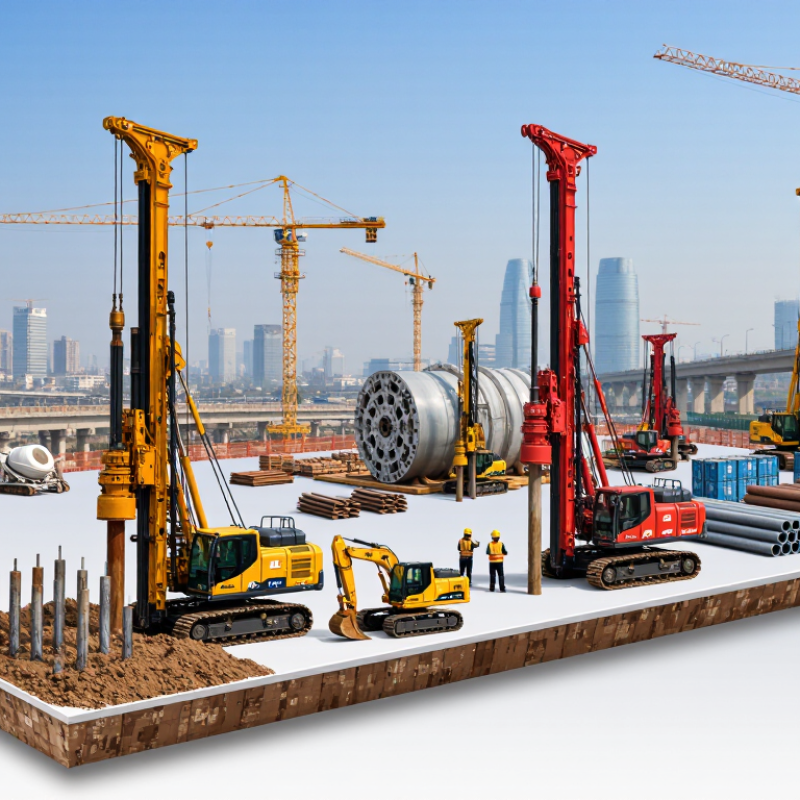
Overview of China’s Drilling Rig Manufacturing Industry
China’s drilling rig manufacturing industry has grown from a domestic equipment base into a broad export supply chain. The China Construction Machinery Industry Association reported construction machinery exports of about US$44 billion in 2023. Drilling rigs formed only part of this figure, so the number should not be treated as a direct rig-market estimate.
Manufacturers now cover rotary, crawler, down-the-hole, water-well, and foundation drilling equipment. Their factories often combine welded steel frames, hydraulic systems, electronic controls, and automated monitoring. On a production floor, quality is visible in small details: straight mast alignment, clean hose routing, and consistent weld penetration. China Customs data also shows strong construction equipment export activity, but export value alone cannot measure technical reliability.
Independent buyers should examine operating hours, failure records, spare-part availability, and local service response. Certification matters, especially for machines entering regulated markets. Industry reports from Off-Highway Research indicate that China remains a major global construction equipment manufacturing base, supported by scale and supplier density. However, drilling rigs face uneven quality across product tiers. Some specifications look impressive on paper but weaken under abrasive soil, cold weather, or continuous piling work. That gap deserves more testing. A serious evaluation should include field trials, maintenance logs, and verified production capacity, not only catalogue claims.
Who Are the Top Drilling Rig Manufacturers in China? - Overview of China’s Drilling Rig Manufacturing Industry
| Manufacturing Segment | Main Rig Type | Typical Drilling Method | Typical Depth Range | Typical Hole Diameter | Common Applications | Common Export Markets |
|---|---|---|---|---|---|---|
| Water-Well and Geothermal Equipment | Crawler-Mounted Rotary Rig | Rotary air drilling, mud rotary drilling, or down-the-hole hammer drilling | 100–600 m | 150–450 mm | Water wells, geothermal systems, irrigation, and rural infrastructure | Africa, Southeast Asia, Central Asia, the Middle East, and Latin America |
| Mining Exploration Equipment | Core Drilling Rig | Diamond core drilling | 500–3,000 m | 48–122 mm core sizes | Mineral exploration, geological sampling, and mine-resource evaluation | Australia, Africa, South America, Central Asia, and Southeast Asia |
| Foundation Construction Equipment | Rotary Piling Rig | Kelly-bar rotary drilling, casing drilling, or continuous-flight auger drilling | 20–100 m | 600–3,000 mm | High-rise buildings, bridges, ports, railways, and urban foundations | Southeast Asia, the Middle East, Africa, Europe, and Latin America |
| Diaphragm Wall and Underground Engineering | Hydraulic Grab or Trench-Cutting Rig | Hydraulic trench excavation with slurry-supported wall construction | 20–80 m trench depth | 600–1,500 mm wall thickness | Subway stations, basements, retaining walls, and cut-and-cover tunnels | Asia, the Middle East, Europe, and major infrastructure markets |
| Tunnel and Underground Mining Equipment | Jumbo Drilling or Face Drilling Rig | Hydraulic percussive drilling | Typically 5–30 m per blast hole | 38–115 mm | Road tunnels, railway tunnels, hydropower projects, and underground mines | Asia, Africa, South America, and the Middle East |
| Oil and Gas Drilling Equipment | Land Drilling Rig | Rotary drilling with mud circulation | 1,500–7,000 m | 133–444 mm surface-hole range, depending on well design | Oil and gas exploration, production wells, and workover operations | Central Asia, the Middle East, Africa, South America, and domestic markets |
| Directional and Utility Construction | Horizontal Directional Drilling Rig | Pilot boring, reaming, and pipe or cable installation | 30–1,500 m bore length | 50–1,200 mm reamed diameter | Water pipelines, gas pipelines, power cables, and telecommunications networks | Southeast Asia, the Middle East, Africa, Europe, and Latin America |
| Micro-Piling and Ground Improvement | Compact Anchor or Micro-Pile Rig | Rotary-percussive drilling, casing drilling, or anchor drilling | 10–60 m | 90–300 mm | Slope stabilization, underpinning, soil reinforcement, and restricted-access construction | Asia, Europe, the Middle East, Africa, and Latin America |