Top Photoelectric Sensors Types and Their Applications?
Photoelectric Sensors are crucial components in various industrial applications. According to a recent report by MarketsandMarkets, the photoelectric sensor market is projected to grow from $2.4 billion in 2023 to $3.3 billion by 2028. This growth reflects the increasing demand for automation in industries such as manufacturing, packaging, and logistics.
These sensors work by detecting the presence or absence of objects using light. They offer high precision and versatility compared to traditional sensors. Industries adopt photoelectric sensors for tasks like object detection, counting, and level measurement. An example includes their use in conveyor systems, where accuracy is essential. However, challenges exist in harsh environments. Dust, moisture, or extreme temperatures can affect sensor performance.
Despite these obstacles, the adoption of photoelectric sensors is on the rise. Their adaptability in various sectors speaks to their effectiveness. As technology advances, photoelectric sensors are becoming more sophisticated, integrating IoT capabilities. This evolution raises questions about their role in the future of industrial automation.
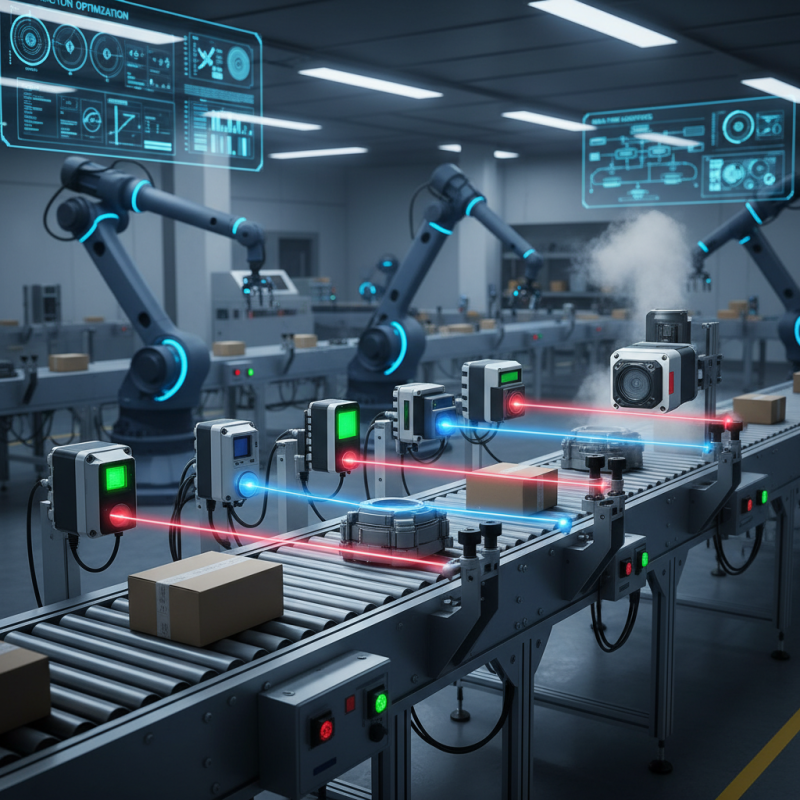
Overview of Photoelectric Sensors and Their Functions
Photoelectric sensors are crucial in various industrial applications. They detect changes in light and convert them into electrical signals. This enables many systems to operate without direct contact with objects. Their functionality lies in emitting a beam of light, typically infrared, to sense nearby objects. When the beam is interrupted, the sensor generates a response. This process is fast and reliable, essential in automation.
According to a report by Research and Markets, the global photoelectric sensor market is expected to grow significantly, reaching over $1 billion by 2026. Industries are increasingly adopting these sensors for tasks like object detection, counting, and measurement. Sensors can be classified into several types, including opposed mode, retro-reflective, and through-beam sensors. Each type serves a specific purpose, yet users occasionally struggle to choose the right one for a certain environment.
Despite their advantages, challenges persist. Environmental factors like dust and light interference can affect performance. An incorrect installation can lead to malfunction. Regular maintenance is also critical yet often overlooked. As technology advances, improving the adaptability of photoelectric sensors will be vital. Understanding their applications and limitations is essential for maximizing efficiency in any operational setup.
Types of Photoelectric Sensors: A Comprehensive Breakdown
Photoelectric sensors play a crucial role in automation and safety across various industries. There are three main types: through-beam, retro-reflective, and diffuse. Each type has specific use cases that align with different environments and applications. According to recent industry reports, the demand for photoelectric sensors is projected to grow by 8% annually. This growth is driven by automation trends in manufacturing and warehousing.
Through-beam sensors excel in long-range detections. They provide high accuracy in detecting objects and are less prone to interference. However, their installation can be complex due to alignment issues. Retro-reflective sensors offer versatility. They work well in confined spaces but can struggle with reflective surfaces. Diffuse sensors are the easiest to install and are commonly used in packaging. Yet, they can deliver false positives if not properly calibrated.
The choice of sensor can impact overall system efficiency. Workers must understand each sensor’s strengths and weaknesses. Companies may overlook these details, leading to larger operational issues. Maintaining optimal sensor performance is vital, yet often neglected. Continuous training on sensor usage could minimize these mistakes. Addressing these shortcomings can lead to better productivity and safety levels in industrial settings.
Applications of Photoelectric Sensors in Various Industries
Photoelectric sensors are crucial in various industries. They enable automatic detection and measurement without needing physical contact. These sensors use light beams to trigger responses. In manufacturing, they ensure precision and efficiency. For example, they assist in count products on assembly lines. This speeds up the process and reduces human error.
In the packaging industry, photoelectric sensors play a vital role. They detect the presence of objects, ensuring safe operation of machines. If a product is missing, the system can notify operators to check the line. This improves productivity but can lead to over-reliance on technology. Operators might overlook potential manual checks.
Tips: Regular maintenance is essential for photoelectric sensors. Dust and dirt can hinder performance. Keep sensors clean and calibrated. It ensures they function optimally. Also, consider training staff on sensor limitations. Understanding these can prevent mishaps in operations, which often go unnoticed until issues arise.
Top Photoelectric Sensors Types and Their Applications
| Type of Photoelectric Sensor | Working Principle | Applications | Industry |
| Through-beam Sensors | Utilizes an emitter and receiver; detects objects when the beam is interrupted. | Object detection, counting items on conveyor belts. | Manufacturing, logistics. |
| Reflective Sensors | Emits a beam that reflects off an object back to the sensor. | Proximity sensing, presence detection. | Automotive, packaging. |
| Diffuse Sensors | Senses reflected light from the target; no need for a separate reflector. | Positioning, quality control. | Electronics, food and beverage. |
| Fiber Optic Sensors | Uses optical fibers to transmit light to and from the sensor. | Measurement of object distance and alignment. | Medical, aerospace. |
| Laser Sensors | Emits laser beams and measures time taken for reflection. | Distance measurement, precise object detection. | Robotics, construction. |
Advantages of Using Photoelectric Sensors in Automation
Photoelectric sensors are widely used in automation. They convert light signals into electrical signals. These sensors can detect the presence or absence of objects. Their rapid response times enhance system efficiency.
One key advantage is their versatility. Photoelectric sensors work in various environments. They handle dust, dirt, and moisture well. This resilience makes them ideal for manufacturing and packaging industries. Another benefit is their non-contact detection. This reduces wear and tear on the equipment. It promotes a longer lifespan for machines.
Despite their many advantages, challenges exist. Proper alignment of sensors is crucial. Misalignment can lead to false readings. Additionally, ambient light interference may affect performance. Regular maintenance is essential to minimize these issues. Understanding these potential pitfalls can lead to better implementation.
Top Photoelectric Sensors Types and Their Applications
This chart illustrates the different types of photoelectric sensors and their applications in automation. The data represents the number of applications for each type of sensor in various industries.
Future Trends in Photoelectric Sensor Technology and Development
The future of photoelectric sensor technology is bright and evolving. Advancements in materials and design enhance their reliability. As the demand for automation rises, so does the innovation in sensor applications. Industries are adopting smarter solutions to increase productivity and efficiency. The integration of artificial intelligence could enable these sensors to learn and adapt to different environments. Such technology would enhance real-time data processing.
Tips: Consider using sensors that can interface with existing systems. This integration often leads to better performance. Monitor the development of sensor types closely. Choosing the right type can be crucial for your operations.
Additionally, the trend towards miniaturization may change the landscape of photoelectric sensors. Smaller designs can fit into tighter spaces and provide more versatile applications. However, precision might be a concern. Smaller parts can complicate installation and maintenance. Regular training for staff could help mitigate these challenges and ensure smooth operation.
Tips: Look for training programs focusing on new technologies. Continuous learning helps teams stay updated. Encourage feedback to improve sensor applications in your workplace. This collaborative approach can reveal new insights and foster innovation.