What Are the Top Types of Insulated Terminals?
Insulated Terminals may look like minor components, yet they shape how safely wires connect in vehicles, control panels, and appliances. A loose crimp can heat up. A poor fit can interrupt a circuit. Choosing a terminal is therefore more than matching wire color or price; it means considering conductor size, current, vibration, moisture, and installation method.
Industry data helps explain why dependable connections matter. The International Energy Agency’s Global EV Outlook 2024 reports nearly 14 million electric cars sold worldwide in 2023, about 18% of new car sales. Its Electricity 2024 report projects average global electricity-demand growth of 3.4% annually from 2024 to 2026. These reports do not measure terminal demand directly. They do, however, describe expanding electrical systems where small connection failures can have outsized effects.
This guide compares common types, including ring, fork, quick-disconnect, pin, and butt-splice terminals. Each suits different layouts and service needs. Ring terminals resist accidental pull-off when secured beneath a stud or screw. Fork terminals allow quicker removal, while insulated quick-disconnects support repeatable servicing. Butt splices join wire ends in-line. Simple distinctions, but easy to overlook.
There is no universal “top” terminal. The right choice depends on the equipment, environment, and verified ratings—not appearance alone. We’ll cover practical selection points and common trade-offs, while noting where product specifications vary. In practice, crimp quality matters just as much as terminal type. That deserves closer attention.
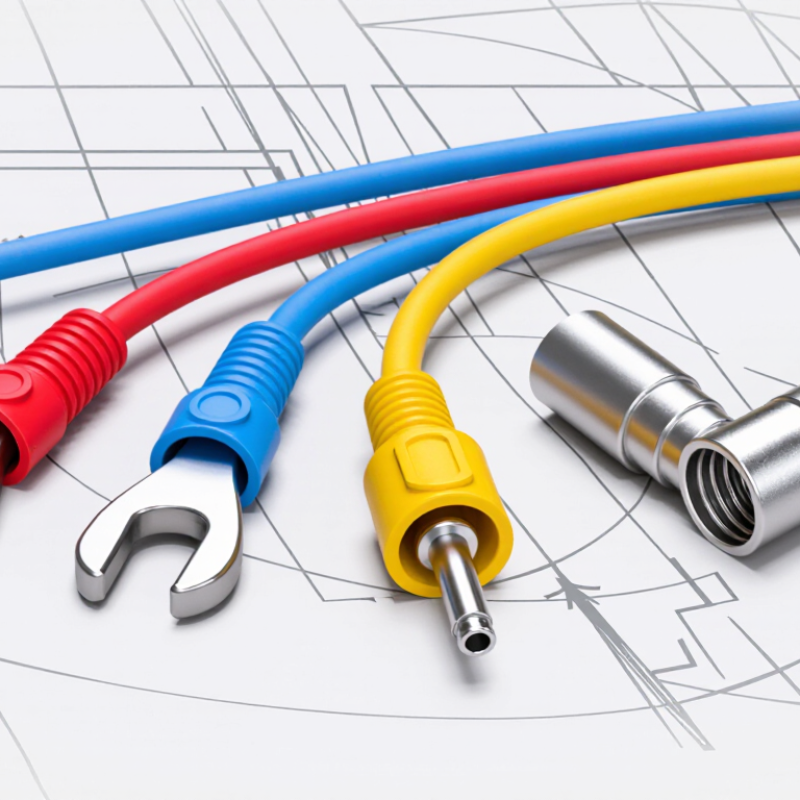
How Insulated Terminals Connect and Protect Electrical Conductors
Insulated terminals make an electrical connection while covering the exposed metal around it. The metal barrel grips the stripped conductor; the colored sleeve helps reduce accidental contact and shields the wire near the joint. A sleeve is not a substitute for correct installation. Loose strands or damaged insulation can still cause trouble.
Common types include ring, fork, pin, and butt terminals. A ring terminal fits around a screw or stud and resists slipping off when secured. A fork terminal can be removed without fully taking out the screw, but it needs a suitable clamping surface. Pin terminals gather fine strands for insertion into compatible screw-clamp blocks. Butt connectors join two wire ends inside a covered metal tube. Each shape serves a different connection, so choosing by appearance alone is a poor shortcut.
For a dependable crimp, match the terminal to the conductor’s gauge and insulation, then use a crimping tool suited to that terminal. Strip only the length specified by the terminal; too much bare copper can remain exposed, while too little may leave a weak grip. Check that no strands are cut or folded back. Give the wire a gentle pull after crimping. That matters. A tidy sleeve can hide a poor connection, so inspect the metal barrel and confirm the conductor stays firmly in place. I would still pause over a crimp that looks uneven, even if it passes a quick tug test.
Top Types of Insulated Terminals
Ring, fork, pin, and quick-disconnect terminals typically crimp onto one conductor and provide an insulated connection point. A butt splice is designed to join two conductor ends inside one insulated sleeve. Exact designs and capacities vary by product.
Ring and Spade Terminals for Secure Stud Connections
Ring and spade terminals make reliable connections to threaded studs when the terminal, wire, and fastener are properly matched. A ring terminal forms a closed loop around the stud, so it cannot lift off unless the nut is removed. This makes it useful in equipment exposed to vibration or occasional cable movement. The connection still depends on a clean contact surface and a securely tightened nut.
A spade terminal has an open, fork-shaped end that slides beneath a loosened nut. It can save time when servicing a crowded panel, since the nut usually does not need to come off completely. That convenience has a trade-off: if the nut is loose or the fork is poorly seated, the terminal may shift. Check the fit. The fork should sit flat against the conductive surface, not catch on a washer edge.
Choose a terminal sized for both the stud and the conductor. A barrel that is too large may grip the wire poorly; one that is too small can damage strands during assembly. Use a crimping tool suited to the terminal, then inspect the joint for exposed strands or movement. Insulation helps limit accidental contact, but it does not replace correct spacing or careful installation. Even a neat crimp deserves a second look.
Butt and Bullet Terminals for Joining or Disconnecting Wires
Butt terminals join two wire ends inside one insulated sleeve. They suit repairs, control panels, and harness branches where a continuous path is needed. Strip each wire to the terminal’s specified length, then crimp with a die matched to its size. A loose crimp can heat under load. Too much force can damage strands. Small details matter.
Bullet terminals create a separable connection: a male pin slides into a female socket. They are useful where a switch, sensor, or panel section may need service. Choose the wire range and insulation temperature rating from the terminal’s specification, not color alone. IPC/WHMA-A-620 provides workmanship and inspection criteria for wire-harness assemblies, including crimp quality. UL 486A-486B also evaluates connector performance through tests such as pullout and temperature exposure. These references do not replace the manufacturer’s installation instructions. A practical check is a firm pull on each finished wire, followed by inspection for exposed strands or cracked insulation. I would still verify the connection under the actual circuit load; a neat-looking crimp can hide a weak one.
Pin, Blade, and Ferrule Terminals for Specialized Connections
What Are the Top Types of Insulated Terminals?
Pin, Blade, and Ferrule Terminals for Specialized Connections
Pin, blade, and ferrule terminals solve different connection problems. Pin terminals have a narrow, solid end that fits many spring-clamp or screw terminal blocks. They can help when a stranded wire would otherwise spread apart during insertion. Blade terminals use a flat tab, making them useful for compatible push-on connections where quick access matters. Check the tab dimensions before choosing; a close fit is not always a secure fit.
Ferrules are metal sleeves crimped onto stranded wire ends, often before the wire enters a clamp terminal. They keep strands together and help create a tidy termination. Strip only the length specified for the connector, and use a crimp tool suited to the ferrule size. After crimping, inspect for loose strands or damaged insulation, then confirm the connection is secure. Fit matters. In practice, the neatest-looking option is not always the easiest to service later, so consider access and maintenance too.
Tips: Match the terminal to the wire gauge, terminal design, and equipment requirements. Don’t force a pin or blade into an incompatible opening. A gentle pull check can reveal a weak crimp, but it does not replace the equipment maker’s installation guidance. Small details count.
How to Choose an Insulated Terminal for the Wire and Application
Insulated terminals come in several forms, including ring, fork, quick-disconnect, and butt-splice types. Choose the shape to match the connection: a ring terminal stays secured beneath a fastener, while a fork terminal can be removed without fully removing the screw. Quick-disconnect terminals suit connections that need occasional separation. Butt splices join two wire ends. Shape matters, but the wire and working conditions matter just as much.
Check the wire’s gauge against the terminal’s marked range. A terminal that is too large may crimp loosely; one that is too small can damage strands. Match the barrel material to the conductor and follow the terminal maker’s temperature and voltage ratings. Consider moisture, vibration, and available clearance, too. A cramped enclosure can make a wide disconnect awkward to fit. Use a compatible crimping tool, then inspect the joint for exposed strands, cracked insulation, or movement. Even a neat-looking crimp can be unreliable if the tool is wrong.
Tips: Strip only the specified insulation length, and avoid nicking the copper. Tug gently after crimping. For an unfamiliar wire or harsh environment, check the product data sheet rather than guessing. I have seen selection reduced to color alone; that shortcut misses important details. Small details matter.
| Terminal Type | Connection Style | Common Wire-Size Range | Typical Insulation | Common Applications | Selection Considerations |
|---|---|---|---|---|---|
| Ring terminal | Closed ring secured under a screw, stud, or bolt | Commonly 22–10 AWG (0.33–5.3 mm²); ranges vary by stud size and terminal series | PVC or nylon sleeve | Ground points, battery connections, control panels, and other bolted connections | Match the ring’s stud-hole size to the fastener and the barrel to the conductor size. A closed ring resists slipping off a loosened fastener. |
| Fork (spade) terminal | Open-ended fork fits beneath a screw or stud | Commonly 22–10 AWG (0.33–5.3 mm²) | PVC or nylon sleeve | Removable connections in terminal blocks and equipment that may need frequent servicing | Choose the fork width and thickness for the terminal screw. Unlike a ring, a fork can be removed without completely taking out the fastener. |
| Female quick-disconnect terminal | Receptacle slides onto a compatible male tab | Commonly 22–10 AWG (0.33–5.3 mm²) | PVC or nylon sleeve; some designs include a fully insulated receptacle body | Appliances, automotive wiring, relays, and control equipment | Match the receptacle width and thickness to the male tab. Check fit and current rating; tab dimensions and ratings are not interchangeable across all series. |
| Male quick-disconnect terminal | Flat tab mates with a compatible female receptacle | Commonly 22–10 AWG (0.33–5.3 mm²) | PVC or nylon sleeve | Wiring harnesses, switches, relays, and appliance connections | Verify tab width, thickness, and mating-terminal compatibility. Use a matching female receptacle for a secure electrical and mechanical connection. |
| Butt splice connector | Joins two wire ends in a straight-line splice | Available in ranges from small control wires to larger power conductors; select the marked range for the specific connector | PVC or nylon; heat-shrink versions are also available | Wire-harness repairs, extensions, and in-line conductor connections | Both conductors must fit the connector’s specified wire range. For moisture exposure, choose a correctly installed sealed heat-shrink type rated for the environment. |
| Bullet terminal | Round male bullet mates with a matching female socket | Commonly used with automotive and small-equipment wire; available ranges depend on the terminal series | PVC or nylon sleeves are common | Compact harnesses, motorcycles, small equipment, and detachable wiring connections | Match bullet diameter and connector series. Confirm that the connection provides adequate retention and protection for vibration and the operating environment. |
| Pin terminal | Crimped pin inserts into a compatible screw-clamp or spring-clamp terminal | Commonly available for approximately 22–10 AWG (0.33–5.3 mm²), with other sizes available | Insulated collar, often made from nylon or similar insulating material | Control panels, terminal blocks, and stranded wires connected to clamp terminals | Match the pin diameter and length to the terminal block. The collar helps prevent stray strands but does not replace the terminal block’s required wire-size limits. |
| Insulated wire ferrule | Metal sleeve compresses stranded wire into a compact pin-shaped end | Available in metric conductor sizes, commonly from about 0.14 mm² upward; the exact range depends on the ferrule series | Plastic insulating collar, commonly nylon | Fine-stranded wires inserted into screw-clamp or spring-clamp terminals | Select by conductor cross-section and the terminal’s permitted wire size. Use a compatible ferrule crimper; ferrules are not substitutes for ring or quick-disconnect terminals. |
| Choosing tip: Confirm conductor material and size, terminal mating dimensions, current and voltage ratings, temperature limits, insulation material, and environmental requirements in the terminal manufacturer’s datasheet. Use the specified crimping tool and die; wire-size ranges and ratings vary by product. | |||||