Top 10 Photovoltaic Bracket Types for Solar Panel Installation?
The solar energy industry is rapidly expanding, with Photovoltaic Brackets playing a crucial role in system efficiency. According to a recent report by the International Energy Agency, solar energy capacity grew by 22% in 2020 alone. This surge in demand highlights the importance of effective mounting solutions for solar panels. As Brad Thompson, a leading expert in solar installations, states, "The choice of a photovoltaic bracket can significantly impact installation time and system performance."
There are various types of photovoltaic brackets, each designed for specific applications. Some are ideal for flat roofs, while others cater to ground-mounted systems. Understanding the strengths and weaknesses of each type helps installers maximize their projects' potential. However, many still overlook this critical aspect. Poor bracket selection can lead to increased costs and suboptimal energy output, prompting a need for better education and training in the industry.
Despite advancements in technology, the selection of the right photovoltaic bracket remains an area in need of improvement. Ongoing research and user feedback can lead to better designs. Installers who prioritize this aspect can find greater success. It's essential to reflect on past choices and embrace more effective solutions for future installations.
Overview of Photovoltaic Brackets in Solar Panel Installation
Photovoltaic brackets play a crucial role in solar panel installation. They provide support and stability, ensuring panels capture sunlight effectively. Choosing the right type of bracket is essential. There are multiple designs available, each suitable for different environments and panel types. Some brackets are designed for rooftops, while others are meant for ground-mounted systems.
One important consideration is the material used in brackets. Stainless steel and aluminum are popular choices due to their durability. However, improper installation can lead to issues over time. Always ensure brackets are anchored securely. This prevents damage during storms or high winds.
Tips: Always check for compatibility with your specific solar panel type. It’s vital to know if a particular bracket will support the weight and design of your panels. Regular maintenance is also important. Inspect brackets periodically for rust or wear. This helps avoid costly repairs later.
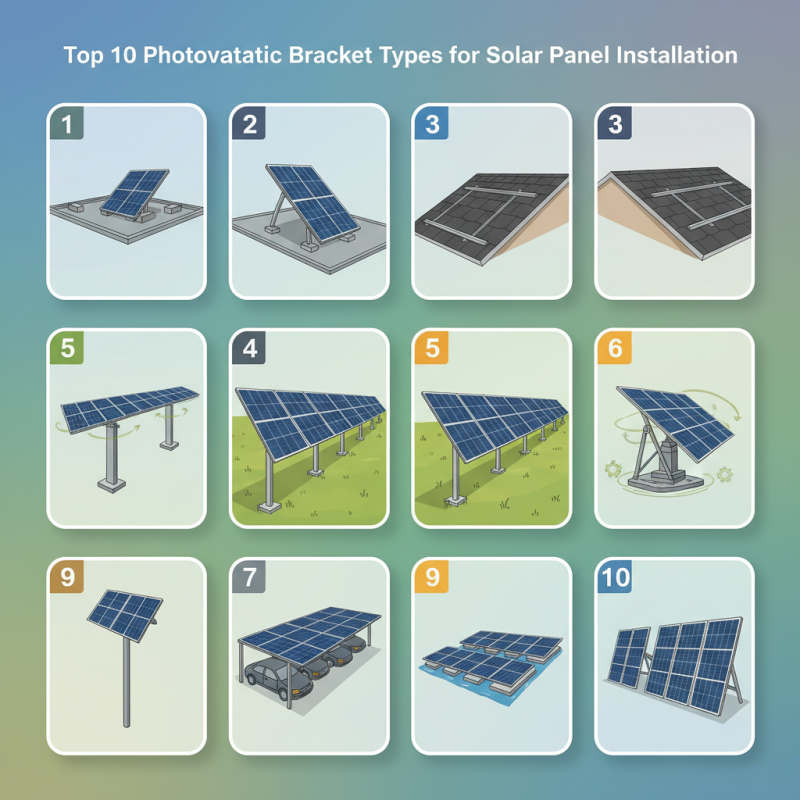
Top 10 Photovoltaic Bracket Types for Solar Panel Installation
| Bracket Type | Material | Mounting Style | Tilt Angle | Load Capacity |
| Fixed Roof Mount | Aluminum | Roof | 0° | 100 lbs |
| Adjustable Roof Mount | Steel | Roof | 0-45° | 150 lbs |
| Ground Mount | Aluminum | Ground | Fixed 20° | 200 lbs |
| Pole Mount | Steel | Pole | Adjustable 10-30° | 300 lbs |
| Ballasted Mount | Aluminum | Flat Roof | 0-15° | 250 lbs |
| Solar Tracking Mount | Steel | Ground | Automatic | 400 lbs |
| Solar Carport Mount | Aluminum | Carport | Fixed 15° | 500 lbs |
| Flexible Mount | Plastic | Versatile | 0-30° | 100 lbs |
| Flush Mount | Aluminum | Roof | 0° | 120 lbs |
| Hybrid Mount | Aluminum/Steel | Combination | Variable | 250 lbs |
Types of Fixed Mounting Systems for Solar Panel Brackets
When it comes to solar panel installation, fixed mounting systems are a popular choice. These brackets provide a stable base for solar panels, ensuring they capture sunlight efficiently. There are several types of fixed mounting systems available, each suited to different environments and needs.
One common type is the tilt mount. This system allows panels to be angled towards the sun, maximizing their exposure. A ground mount is another option, which supports panels directly on the ground. This is ideal for areas with limited roof space. Roof mounts are also widely used, attaching directly to building roofs for residential and commercial solar setups.
**Tip:** Consider the installation location before choosing a mounting system. Soil type and roof structure can significantly influence the choice of bracket.
Additionally, pole mounts offer height adjustment, which can be beneficial for uneven terrain. It's worth noting that fixed mounts lack the flexibility of rotating systems; they can’t adjust with the sun’s path. This could limit performance during specific times of the year.
**Tip:** Regularly inspect the mounting brackets for wear and tear. Many overlook this, but it’s critical for long-term performance.
Top 10 Photovoltaic Bracket Types for Solar Panel Installation
Exploring Adjustable and Tracking Bracket Options
Adjustable brackets are becoming increasingly popular in solar panel installation. These brackets allow users to change the tilt angle based on the season. This flexibility can maximize solar energy capture throughout the year. However, finding the right adjustments can be challenging. Users may need to experiment with angles to find optimal positions.
Tracking brackets offer a more advanced solution. They follow the sun's movement throughout the day. This type can significantly increase energy efficiency. Nonetheless, they often come with higher installation and maintenance costs. Some users report that tracking systems can be more complex. Installing these may require a steep learning curve.
Both adjustable and tracking options provide unique benefits. However, they might not suit every installation. Some regions may not need the extra efficiency, making simpler brackets sufficient. Each installation must consider local climate and energy needs. It's essential for users to weigh these factors carefully during their planning.
The Benefits of Ground-Mounted Versus Roof-Mounted Brackets
Ground-mounted solar panel brackets are gaining popularity for their versatility. These systems can be installed on different terrains and allow for optimal tilt angles. A study by the National Renewable Energy Laboratory shows that ground-mounted systems can increase solar energy capture by up to 20% compared to roof-mounted systems. This is significant for maximizing energy production, especially in large-scale installations.
Roof-mounted brackets, while common, come with limitations. Installation can depend heavily on roof orientation and material. In some instances, this can lead to less efficient energy capture. However, roof systems benefit from reduced land use. They keep solar panels out of view and can offer aesthetic advantages. In a survey, 68% of homeowners preferred solar systems that blend seamlessly with their property.
Yet, both options have downsides. Ground mounts can be expensive and require more land. Roof mounts may not be feasible for every building type. Users need to weigh these factors carefully. Choosing the right mounting system is essential for the system's long-term performance and energy output. Realizing the pros and cons can guide better decision-making.
Key Considerations for Selecting Photovoltaic Brackets
When selecting photovoltaic brackets for solar panel installation, several key considerations come into play. The type of mounting system affects both installation and overall performance. Different environments, such as residential rooftops versus open fields, require diverse bracket styles to maximize efficiency.
Tip: Think about the weather conditions in your area. High wind areas may need heavy-duty brackets. Coastal regions may require corrosion-resistant materials. Always ensure the chosen brackets can withstand these challenges.
The orientation of the solar panels influences energy capture. Fixed brackets may suit some setups, while adjustable brackets provide flexibility. However, they can complicate installation. Be mindful of the trade-offs involved in each choice.
Tip: Research local code requirements. Sometimes these can dictate which bracket styles are permissible. Not complying could lead to issues down the line. Understanding regulations upfront saves headaches later.
Considering aesthetics may also be important, especially in residential applications. Discreet brackets can enhance the visual appeal. Yet, they may lack strength. Balancing form and function is crucial in making your selection. Make choices that align with your priorities.