Top 10 Polyolefin Heat Shrink Sleeve Manufacturers?
Choosing the right Polyolefin Heat Shrink Sleeve manufacturer is rarely a simple price comparison. Film quality, shrink performance, print adhesion, sealing behavior, and technical support all affect the final package. A sleeve may look attractive on a sample bottle, yet wrinkle badly on a production line. Small details matter.
Polymer specialist Dr. George Wypych offers a useful perspective: “Shrinkage is a property to control, not merely a problem to avoid.” This principle guides our review of the top ten manufacturers. The best suppliers do not simply sell film. They understand resin selection, extrusion stability, controlled orientation, perforation, ink compatibility, and tunnel conditions. Their teams can also explain how a sleeve behaves around curved shoulders, sharp transitions, and recycled-content containers.
Our comparison considers more than company size. We examine manufacturing experience, product consistency, customization capability, quality systems, regional service, and evidence from real packaging applications. Public certifications and technical documents will be treated as useful evidence, not automatic proof of superiority. Claims still need context.
Some rankings remain debatable. That is normal. A supplier serving high-speed beverage lines may not suit pharmaceutical labeling or small-batch cosmetics. Equipment, climate, container geometry, and application speed can change the result. Even an excellent Polyolefin Heat Shrink Sleeve can fail when the heat profile is poorly adjusted.
This guide aims to support practical decisions. It does not pretend that one manufacturer fits every project. Sample testing remains essential. A careful buyer should request trial rolls, inspect shrink uniformity, and measure performance under actual line conditions before committing.
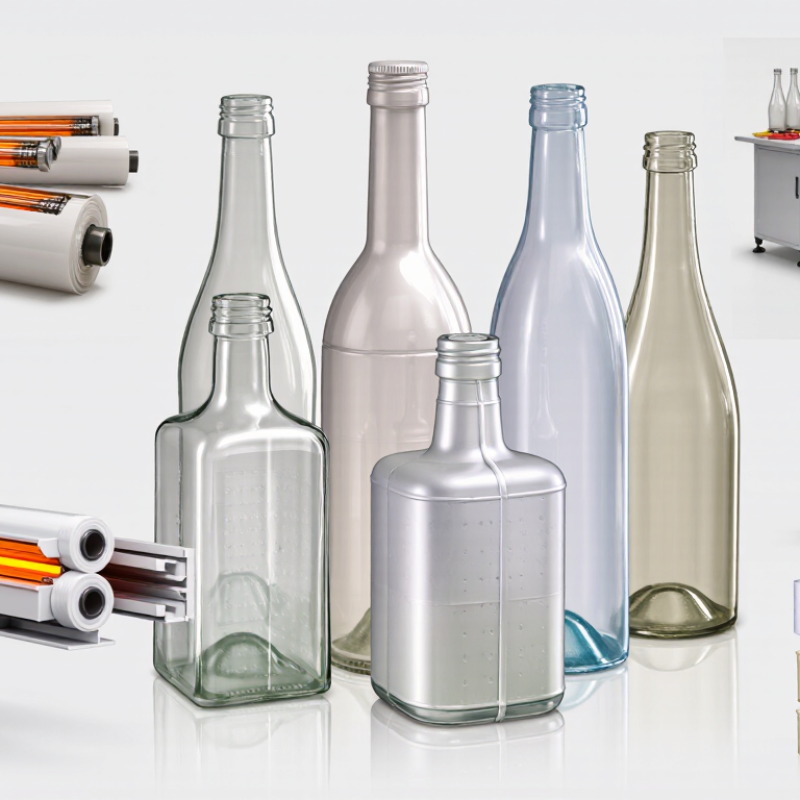
Polyolefin Heat Shrink Sleeves: 2:1 and 3:1 Shrink-Ratio Fundamentals
Top 10 Polyolefin Heat Shrink Sleeve Manufacturers?
Polyolefin heat shrink sleeves are commonly specified with 2:1 or 3:1 shrink ratios. A 2:1 sleeve suits consistent cable diameters and clean, predictable assemblies. A 3:1 sleeve handles larger diameter changes, irregular connectors, and uneven transitions. The ratio describes maximum recovery, not guaranteed final coverage. That distinction is often missed.
MarketsandMarkets’ 2024 heat-shrink tubing market report projects steady growth through 2029, supported by electrical, automotive, and telecommunications demand. Grand View Research also identifies electrical applications as a major market segment. These findings support continued interest in polyolefin materials, but they do not replace application testing. Wall thickness, recovery temperature, adhesive compatibility, and environmental exposure still affect performance.
In production trials, a 3:1 sleeve can look safer because it covers more variation. It may also recover unevenly around sharp edges. A 2:1 sleeve usually gives tighter dimensional control on uniform cables. Both ratios need verified recovery temperatures and mandrel testing. ASTM D2671 provides recognized methods for evaluating heat-shrinkable tubing dimensions and recovery behavior. Field records should include initial diameter, recovered diameter, heating method, and shrink time. Data matters more than attractive catalog claims. I would not choose by ratio alone. That shortcut can fail. Manufacturers entering a top-ten comparison should disclose tolerance ranges, test conditions, batch consistency, and technical support quality.
How to Rank the Top 10 Manufacturers Using ASTM D2671 Performance Data
Ranking the Top 10 polyolefin heat shrink sleeve manufacturers requires more than comparing catalog claims. ASTM D2671 performance data provides a practical starting point. Review each manufacturer’s reported longitudinal shrinkage, tensile strength, elongation, heat aging, and dimensional recovery. These figures reveal how sleeves may perform around cables, splices, and irregular surfaces.
Use a weighted score for every manufacturer. Give higher value to independently verified results, consistent batch data, and complete test conditions. Check the recovery temperature, specimen thickness, conditioning time, and oven settings. A sleeve shrinking evenly on a 25-millimeter mandrel deserves attention. So does one that maintains strong elongation after heat exposure. Missing test details should reduce confidence, even when the headline numbers appear impressive.
ASTM D2671 data is useful, but it does not measure every installation risk. It may not reflect outdoor moisture, chemical contact, abrasion, or poor field preparation. I would separate laboratory performance from documented production experience. That distinction matters. A manufacturer with slightly lower peak tensile strength may still rank higher if its results remain stable across lots. However, public test reports can be incomplete, and scoring may involve judgment. Rechecking unusual results is necessary. A transparent ranking should show the test date, laboratory status, sample description, and calculation method behind each position.
Top 10 Polyolefin Heat Shrink Sleeve Manufacturers? — How to Rank Them Using ASTM D2671 Performance Data
This chart presents a transparent scoring framework for comparing manufacturers without displaying company or brand names. The weighting emphasizes ASTM D2671-related performance dimensions commonly used for heat-shrinkable tubing evaluation: longitudinal shrinkage, tensile strength, elongation, heat shock resistance, and low-temperature flexibility. The percentages are editorial evaluation weights, not manufacturer test results or ASTM acceptance limits.
Technical Comparison: Wall Thickness, Tensile Strength, and UL 224 Compliance
Selecting the top ten polyolefin heat shrink sleeve manufacturers requires more than comparing catalogs. Wall thickness is the first practical checkpoint. After shrinking, a 2:1 sleeve may not retain its printed nominal wall. Measure it. Use a calibrated micrometer at several points around the sleeve, especially near the transition area. Uneven thickness can expose wiring during bending or abrasion. A thicker wall often improves mechanical protection, but it may reduce flexibility around tight terminals.
Tensile strength reveals how the material behaves during installation and service. Compare results from the same test method, temperature, and conditioning period. A high value looks impressive, yet it does not guarantee better performance in a cramped harness. Elongation, recovery force, and shrink temperature also matter. In practical trials, I would pull samples over a rounded mandrel, then inspect whitening, splits, and permanent deformation. Our early comparisons focused too heavily on peak tensile values. That was a mistake.
UL 224 compliance demands careful verification. Request documentation for the exact sleeve construction, size range, color, and temperature rating. Check whether the record covers the intended application, not merely a similar product family. Flame behavior, dielectric properties, dimensional stability, and aging performance should match the project requirements. Keep lot numbers and test reports with purchasing records. Small documentation gaps can create large qualification delays. Manufacturer rankings should reflect repeatable test data, traceability, and responsive technical support, not marketing claims alone.
Applications and Certification: IEC 60684, RoHS, REACH, and Flame Ratings
When comparing the top 10 polyolefin heat shrink sleeve manufacturers, certification evidence should guide the shortlist. Polyolefin sleeves protect wire joints, busbars, sensors, and battery connections from abrasion and moisture. IEC 60684 testing helps verify insulation performance, dimensional stability, and temperature behavior. However, the applicable section matters. A supplier should identify the exact standard, revision, and product construction.
RoHS documentation confirms restricted substances remain within permitted limits. REACH information should address substances of very high concern and supply-chain updates. Flame ratings need equal care. A sleeve passing a flame test at one wall thickness may perform differently at another.
Ask for test reports, not only catalog claims. Check production lots, colorants, adhesive layers, and shrink ratios. These details can change electrical and fire performance.
Tips: Match the sleeve to the installation environment. For engine compartments, review continuous temperature, fluids, vibration, and flame exposure. For indoor control cabinets, dielectric strength and smoke behavior may matter more.
Request samples and test them on the actual cable diameter. In field evaluations, I have seen attractive sleeves fail because installers overheated the material or used an unsuitable recovery temperature. That is an uncomfortable reminder: certification supports a decision, but it does not replace application testing. Select manufacturers with traceable records, clear technical files, and responsive engineering support.