China Top 10 Cable Railing for Decks Suppliers?

Choosing among China’s top 10 cable railing for decks suppliers requires more than comparing attractive product photos. A coastal deck may face salt spray, strong wind, and constant moisture. An inland balcony may need different protection. The right supplier should explain these differences clearly.

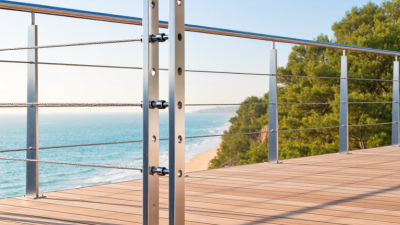
James D’Ambrosio, a stainless-steel railing specialist, says, “A railing should protect the edge without becoming the view.” That principle fits cable railing for decks. Thin stainless-steel cables can preserve open scenery, while sturdy posts create a firm visual rhythm. Still, appearance is only one part of the decision.

This guide examines Chinese suppliers through practical criteria. These include 316 stainless steel options, cable diameter, post strength, tensioning hardware, surface finish, testing support, customization, and warranty terms. Installation guidance also matters. A beautiful system can fail when cable spacing, corner angles, or end fittings are poorly planned.

Look closely at coastal performance.

Supplier communication reveals much. Can the team provide clear drawings? Do they answer technical questions? Are replacement parts available? Do they understand deck movement and seasonal expansion? These details often separate a dependable manufacturer from a low-cost listing.

The selection is not perfect. Some suppliers publish limited test data. Others offer impressive catalogs but vague delivery promises. That uncertainty deserves attention. Therefore, this overview balances factory capability, product consistency, export experience, and real installation concerns. It aims to help homeowners, builders, and designers choose cable railing for decks with clearer expectations, fewer surprises, and safer long-term results.

China Top 10 Cable Railing for Decks Suppliers?

What Makes a Reliable Chinese Cable Railing Supplier?

A reliable Chinese cable railing supplier should prove quality through daily production habits, not polished promises. Request factory photos showing cutting, welding, polishing, and packing areas. Ask how workers control cable tension, post spacing, and surface finish. Details matter.

Experienced suppliers can explain material grades, cable diameters, fitting tolerances, and installation limits without avoiding technical questions. They should provide clear drawings, load information, inspection records, and relevant test reports. Documents must match the actual product, including steel grade and coating method. Ask for evidence. A small sample order can reveal more than a sales presentation. Check thread smoothness, post alignment, edge finishing, and packaging protection. On arrival, measure several parts instead of trusting one perfect sample.

Reliable communication is equally important. The supplier should confirm revisions, production dates, inspection points, and replacement procedures in writing. A dedicated engineer can prevent mistakes when deck layouts change. No factory is perfect. A missed drawing revision can still happen, but responsible teams identify it quickly and correct the process. They also welcome third-party inspections before shipment. This reflects accountability rather than confidence alone. Look for stable lead times, traceable batch records, and packaging that protects fittings from scratches and moisture. Chinese manufacturing offers strong customization, but low prices may hide weaker inspection or inconsistent finishing. Compare complete specifications, not quotations alone.

China’s Top 10 Cable Railing Suppliers for Decks

China’s top 10 cable railing suppliers for decks should be judged by more than product photos. A practical shortlist examines stainless steel grades, cable tension systems, post machining, and installation support. Strong suppliers often offer 316 stainless steel for coastal decks and 304 for milder environments. They can provide cable diameters, fitting dimensions, load data, and drawings before quoting. Some also produce posts, handrails, gates, and custom corner assemblies. That reduces mismatched parts. It matters on site.

When comparing ten suppliers, request samples from each shortlisted factory. Check thread quality, polished surfaces, swage accuracy, and cable movement after tensioning. Ask how batches are inspected. Reliable factories explain raw-material tracing, salt-spray limits, packing methods, and replacement procedures. They should clarify minimum order quantities, tooling fees, lead times, and export documents. A factory visit or live video inspection adds useful evidence. Still, a certificate alone proves little. One overlooked issue is deck movement. Suppliers should recommend spacing, end-post reinforcement, and tension adjustments for local conditions. I would also test a small section before placing a full order. It may expose weak fittings early. This list is not perfect, because price, region, and project scale change the best choice. Yet careful comparison makes China’s top 10 cable railing suppliers more dependable for real deck work.

Supplier Comparison: Materials, Designs, and Manufacturing Capabilities

China’s cable railing suppliers vary widely in material control, design flexibility, and factory execution. For deck projects, serious comparison starts with stainless steel grade. Marine-grade 316 resists salt exposure better than 304, while powder-coated aluminum can reduce weight and installation effort. Ask for mill certificates, coating thickness records, and corrosion-test results. A polished sample is not enough.

Design capability affects both safety and appearance. Experienced suppliers can produce slim posts, concealed tensioners, corner modules, and mixed systems for stairs or curved decks. They should provide accurate CAD drawings and check cable deflection before production. Small details matter. A 100-millimeter post adjustment can prevent awkward cuts on site. Some suppliers promise custom work too easily. That deserves caution.

Manufacturing strength appears in less visible areas. Look for laser cutting, CNC drilling, controlled welding, passivation, and final dimensional inspection. Batch traceability helps when replacement parts arrive months later. Export experience also matters, especially for packaging, installation guides, and consistent hardware labeling. Request a prototype or trial assembly before approving a large order. It may reveal loose fittings, uneven brushing, or unclear instructions. No supplier is perfect, and low pricing can hide costly rework. A reliable partner explains limitations, documents changes, and responds with measurable evidence rather than attractive promises.

China Cable Railing for Decks: Supplier Capability Comparison

Anonymous benchmark of commonly available cable-railing options from Chinese manufacturers, comparing material selection, design flexibility, and manufacturing capability. Scores use a 1–10 capability scale and do not represent individual company or brand data.

Stainless steel systems generally provide the strongest corrosion resistance, especially when 316-grade components are specified for coastal environments. Custom post profiles, surface finishes, OEM fabrication, and complete engineering support are key differentiators when comparing suppliers.

How to Evaluate Pricing, Certifications, Customization, and Lead Times

When comparing China’s top ten cable railing suppliers for decks, price alone can mislead. Request a line-item quotation covering posts, cables, fittings, packaging, and shipping. Confirm whether the price is based on sample quantities or full-container orders. Some quotes look attractive. That detail matters. Ask for material specifications, stainless steel grades, surface treatments, and replacement-part costs. A supplier offering unusually low pricing may reduce thickness or omit installation components.

Certifications should match your project’s location and building requirements. Request current quality-management certificates, material test reports, corrosion-resistance data, and structural load-test records. Check certificate numbers and issuing organizations independently. Do not accept scanned documents without verification. For customization, share drawings showing post spacing, corner layouts, stair angles, cable diameter, finish, and mounting surfaces. Experienced suppliers should identify conflicts before production, not after delivery. Sample sections can reveal sharp edges, uneven polishing, or difficult tensioning.

Lead time needs more than one number. Separate engineering approval, sample production, bulk manufacturing, inspection, and shipping. Ask what happens when drawings change or a component fails inspection. A realistic schedule is more valuable than a confident promise. Build buffer time for port delays and seasonal factory pressure. I would still inspect a pre-shipment sample, even after a successful first order. Specifications can drift. Supplier performance should be judged through documented evidence, responsive communication, and consistent production quality.

Steps to Select the Best Cable Railing Supplier for Your Project

Selecting a Chinese cable-railing supplier starts with the project brief, not a search ranking. Record span lengths, post layout, coastal exposure, stair angles, and local guard rules. The 2023 BLS Census reported 885 fatal work injuries involving falls, slips, and trips. That figure is not deck-specific, but it shows why load evidence matters. Ask for engineering calculations and independent test reports for the complete assembly, not cable alone.

Check material traceability. Request heat numbers, stainless grade, cable diameter, fitting composition, and surface finish. For salt air, compare documented corrosion performance; do not accept “marine grade” as proof. The International Stainless Steel Forum’s 2024 statistics reported about 62.6 million tonnes of global stainless crude-steel production. Plenty of material exists. Consistent processing still separates a dependable factory. Audit welding, swaging, torque control, and final inspection. A video tour helps, but an on-site or third-party audit is stronger.

Order a small sample kit before signing volume terms. Measure cable tension, post deflection, fitting movement, and packing damage. Confirm drawings, tolerances, replacement parts, lead time, and warranty exclusions in writing. Match the supplier’s test scope with the International Residential Code, relevant ASTM methods, or local rules. One weakness remains easy to miss: a polished sample cannot reveal poor batch control. Review three production lots, and keep photos and inspection records. The cheapest quotation may become expensive after rework, delays, or rust complaints.