How to Identify Quality Cold Rolled Coils for Your Projects?
Identifying quality Cold Rolled Coils is essential for successful projects in many industries. Expert Sarah Williams, a lead engineer at Steel Innovations, emphasizes, "The right Cold Rolled Coil can make or break your project." Understanding what distinguishes high-quality coils can be quite challenging.
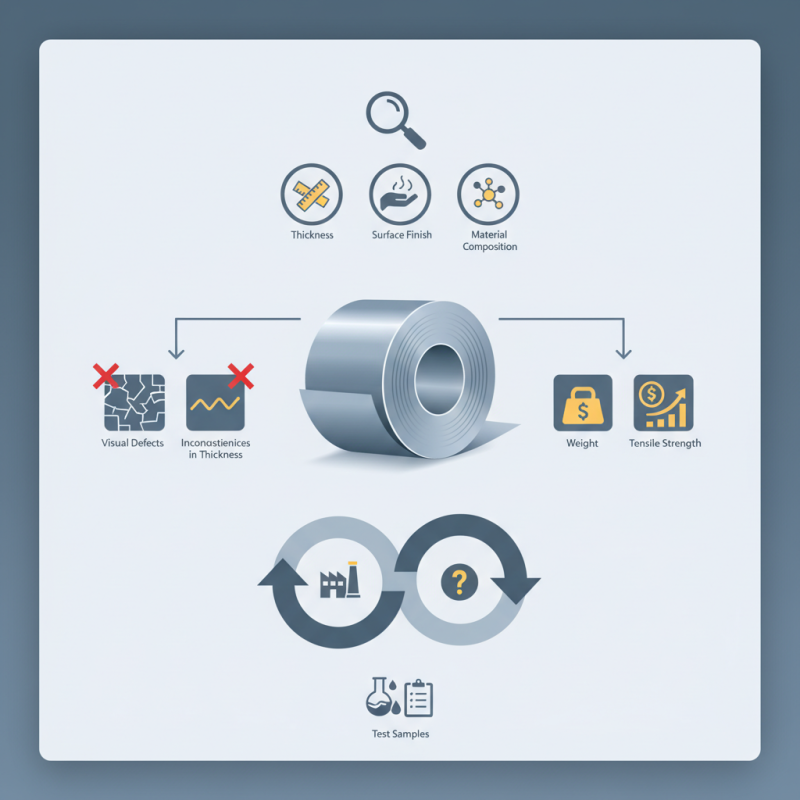
Manufacturers often vary in their production techniques. Factors like thickness, surface finish, and material composition play critical roles. A buyer must inspect these aspects closely. Visual defects can signal poor quality, while inconsistencies in thickness can lead to project failures. The weight and tensile strength of Cold Rolled Coils also invite scrutiny.
Furthermore, relying solely on brand reputation can be misleading. Not all well-known brands guarantee premium quality. Sometimes, lesser-known suppliers provide superior products. It's crucial to test samples before committing to large orders. Balancing quality and cost remains a constant challenge for procurement teams. Exploring and questioning one's choices can yield better results in sourcing quality Cold Rolled Coils.
Understanding Cold Rolled Coils: Definition and Manufacturing Process
Cold rolled coils are widely used in various industries. Understanding their definition and manufacturing process is crucial for any project. Cold rolling involves processing hot rolled sheets. The process significantly improves the surface finish and dimensional accuracy.
During cold rolling, the metal is passed through rollers at room temperature. This results in reduced thickness and enhanced strength. A study by the World Steel Association indicates that cold rolled products account for approximately 10% of the global steel production. Many industries rely on this process due to the superior properties it imparts.
When selecting cold rolled coils, look for key indicators. Surface quality and thickness tolerance are critical. However, there can be inconsistencies based on manufacturing methods. Checking certifications can help assess quality, but the presence of defects needs careful evaluation. The right choice can make a substantial difference in project outcomes.
How to Identify Quality Cold Rolled Coils for Your Projects?
| Attribute | Description | Importance |
| Thickness | Typically ranges from 0.1mm to 3mm | Affects strength and suitability for applications |
| Surface Finish | Can be matte, bright, or spangled | Impacts aesthetic appeal and application |
| Material Properties | Includes yield strength, tensile strength, and elongation | Determines performance under load |
| Coil Weight | Commonly ranges from 1 ton to 20 tons | Influences shipping and handling costs |
| Chemical Composition | Includes elements such as carbon, manganese, and silicon | Affects weldability and corrosion resistance |
| Standard Specifications | ASTM, ISO, and other relevant standards | Ensures consistency and reliability in quality |
Key Specifications for Quality Cold Rolled Coils: Thickness, Width, and Weight
When selecting cold rolled coils, key specifications play a pivotal role. Thickness impacts the strength and durability of the material. Common thicknesses range from 0.1 mm to 3 mm. Reports indicate that for many applications, coils around 1 mm are the most sought after. They offer a good balance of flexibility and sturdiness. However, thinner coils may be more suitable for intricate designs, while thicker ones are favored for heavy-duty uses.
Width is another crucial factor. Cold rolled coils typically come in widths from 600 mm to 2000 mm. Wider coils reduce the number of seams in a project, enhancing structural integrity. Yet, they can pose storage challenges. According to industry sources, the right width choice should align with project specifications, particularly for applications requiring precision fitting.
Weight is often overlooked but is vital. Cold rolled coils weigh approximately 7.85 grams per cubic centimeter. Understanding the weight helps in logistics and handling. An error in weight estimation can lead to significant cost implications. Ultimately, each project demands careful consideration of these specifications. Mistakes can occur, yet these variables define the project’s success. As such, reviewing and reflecting on these parameters is essential for quality assurance.
Mechanical Properties of Cold Rolled Coils: Yield Strength and Ductility
When selecting cold rolled coils, understanding mechanical properties is crucial. Yield strength and ductility are key indicators of a coil's performance. Yield strength refers to the amount of stress a material can withstand before deforming permanently. A typical yield strength for cold rolled steel ranges from 280 to 550 MPa, depending on the grade and thickness.
Ductility, on the other hand, measures a material's ability to deform under tensile stress. It’s often expressed as a percentage elongation before breaking. High ductility is essential for applications involving complex shapes and forming processes. For cold rolled coils, a ductility of around 20% to 30% is generally desirable for versatile applications.
Tip: Always request a tensile test report when sourcing cold rolled coils. This document provides essential data on yield strength, ductility, and other mechanical properties.
Consider the trade-offs. A coil with high yield strength may lack ductility. This can lead to unexpected failures during forming. Understanding the balance between these properties can prevent project setbacks. Assess your project's specific requirements carefully.
Industry Standards and Certifications for Cold Rolled Coils Quality Assurance
When selecting cold rolled coils, understanding industry standards and certifications is vital. The American Society for Testing and Materials (ASTM) sets key guidelines, ensuring quality across various applications. For instance, ASTM A1008 defines specifications for cold rolled carbon steel sheet, highlighting mechanical properties essential for durability.
Certifications also play a significant role. The International Organization for Standardization (ISO) 9001 focuses on quality management systems. This certification indicates that a manufacturer adheres to rigorous quality control processes. A study by the Metal Service Center Institute (MSCI) revealed that companies with ISO certifications reported a 30% reduction in defects. This metric illustrates the importance of working with certified producers.
Data from the World Steel Association suggests that over 70% of cold rolled products meet or exceed quality norms. Yet, inconsistencies can still occur. Some manufacturers may cut corners during production, leading to subpar products. When evaluating coils, always request documentation to verify compliance with industry standards. This diligence can prevent costly mistakes in your projects.
Common Applications of Cold Rolled Coils in Construction and Automotive Sectors
Cold rolled coils are essential in the construction and automotive sectors. They offer superior finish and tight tolerances. In construction, these coils are used in structural components and automotive parts, serving as a foundation for many applications. Studies show that cold rolled steel can improve building longevity by up to 20%. This is largely due to its enhanced strength and resistance to deformation.
In the automotive industry, cold rolled coils play a vital role in producing body panels and structural reinforcements. Their ability to withstand high stress ensures safety and performance. Reports indicate that manufacturers prefer cold rolled steel because it leads to lighter vehicle designs without compromising safety. This is key in the pursuit of fuel efficiency and lower emissions.
Tip: Always verify the material specifications before purchasing. Seek coils that meet required standards for your project. Quality often reflects in the surface finish.
When selecting cold rolled coils, consider both thickness and process quality. Not all suppliers have the same quality control processes. Inadequate inspections can lead to issues down the line. Look for detailed certifications that align with industry benchmarks to avoid costly mistakes.
Quality Comparison of Cold Rolled Coils in Construction and Automotive Sectors