What is Hot Mirror and Its Applications in Industry?
The use of Hot Mirrors in various industries has grown significantly in recent years. Professionals rely on these optical filters to reflect specific wavelengths of light. In imaging systems, Hot Mirrors allow for enhanced performance. According to a report by MarketsandMarkets, the optical coatings market is projected to reach $10.2 billion by 2025, driven by the increasing need for advanced optical solutions.
Experts like Dr. Emily Carter, a leading figure in optical technologies, emphasize the importance of Hot Mirrors in modern applications. She states, "Hot Mirrors are essential for precision in high-performance systems." This underscores the critical role of this technology in sectors such as telecommunications and healthcare.
Despite the advantages, challenges remain. The industry faces issues related to manufacturing consistency and supply chain dependencies. As technology evolves, companies must address these concerns to ensure reliability. Exploring the potential of Hot Mirrors can lead to innovative solutions across diverse fields, making this technology a focal point in ongoing industrial advancements.
Definition and Functionality of Hot Mirrors
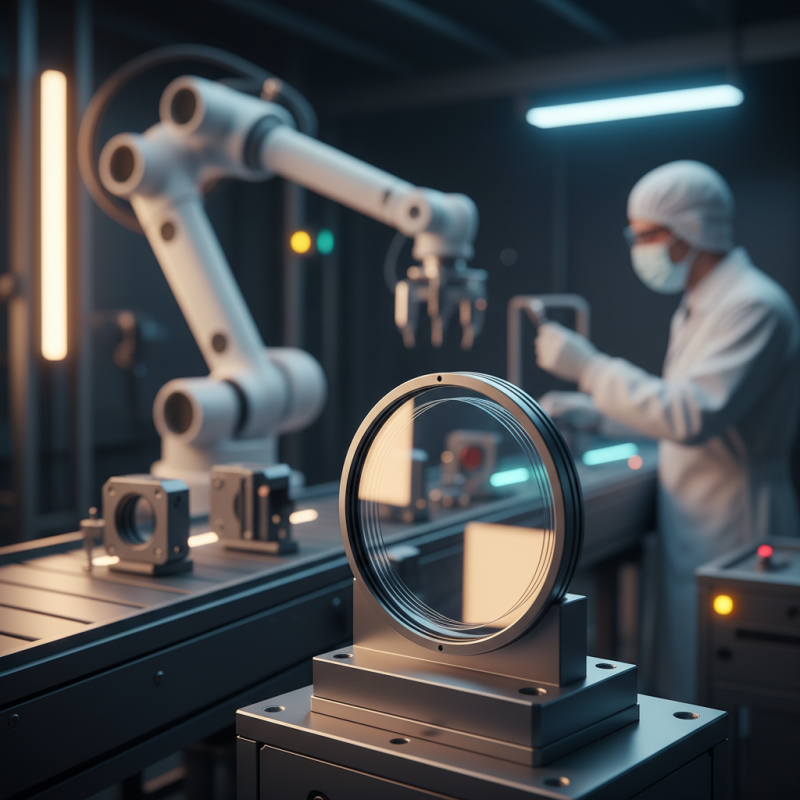
Hot mirrors play a vital role in various sectors, including optics, lighting, and thermal management. These specialized mirrors reflect infrared light while allowing visible light to pass through. This functionality is crucial for applications where heat dissipation is essential. According to a recent report, the global hot mirror market is projected to grow at a steady rate of around 5% annually. This growth is driven by the increasing demand for efficient thermal management systems.
In industrial settings, hot mirrors are increasingly used in LED lighting solutions. By effectively managing heat and improving energy efficiency, they enhance performance and lifespan. For example, studies reveal that integrating hot mirrors can boost LED efficacy by up to 30%. This efficiency leads to lower operational costs and reduces the environmental impact. Moreover, the complexities of designing effective hot mirror systems necessitate a thorough understanding of optical materials and thermal properties.
Nonetheless, the implementation of hot mirrors isn’t without its challenges. Achieving the right balance between reflection and transmission requires meticulous experimentation. Variations in coating materials can affect performance, leading to inconsistent results. Continuous developments in materials science aim to address these issues. While advancements in technology improve consistency, ongoing research is crucial for optimizing hot mirror applications across industries.
Types of Hot Mirrors and Their Distinct Properties
Hot mirrors are specialized optical devices used primarily to reflect infrared (IR) light while allowing visible light to pass through. They find applications across various industries, including telecommunications, medical devices, and consumer electronics. The effectiveness of hot mirrors is largely determined by their construction and the materials used, which gives rise to different types with distinct properties.
One common type is the dichroic hot mirror. These mirrors are designed to provide high reflectivity for IR light and high transmission for visible wavelengths. This property is critical in applications such as projectors, where accurate color reproduction is essential. A notable report by the Optical Society of America estimates that the use of dichroic hot mirrors has increased efficiency in lighting systems by up to 30%.
Another type is the multilayer hot mirror. This mirror consists of multiple thin film layers, which enhance its performance across a range of temperatures. Research shows that multilayer mirrors reduce heat buildup in optical systems, thereby extending their lifespan. While these mirrors offer improved performance, they can also lead to higher costs and complexity in manufacturing. This is a consideration for industries looking to balance quality with budget constraints.
Applications of Hot Mirrors in Optical Devices
Hot mirrors are specialized optical components widely used in various industries. They reflect infrared radiation while allowing visible light to pass through. This capability makes them valuable in laser and LED applications. According to a recent market report, the optical filter market, which includes hot mirrors, is projected to grow by 8% annually through 2026.
These mirrors find applications in medical devices, projectors, and imaging systems. In medical imaging, for example, hot mirrors help increase image quality by filtering unwanted light. In projection technologies, they enhance color accuracy and brightness. The use of hot mirrors in these applications is pivotal for improving performance and user experience.
Tips: When selecting hot mirrors, consider factors like wavelength range and polarization. Make sure to analyze your specific needs thoroughly. The efficiency of your optical setup may depend on these details. Understand that each application might require different specifications, and flexibility in your choice can be beneficial.
Industrial Uses of Hot Mirrors in Imaging Systems
Hot mirrors are optical filters that reflect infrared light while allowing visible light to pass through. This property makes them essential in various imaging systems across different industries. For instance, in medical imaging, hot mirrors help separate thermal components from visible signals, improving image clarity. This application is vital for accurate diagnostics.
In the field of industrial inspection, hot mirrors ensure high-quality imaging. They reduce the heat in optical systems, preserving the integrity of sensitive components. Without proper thermal management, imaging tools can become less reliable. Quality can suffer. However, integrating hot mirrors into these systems not only enhances performance but also extends the lifespan of the equipment.
Despite their benefits, challenges exist in using hot mirrors effectively. They may not perform well under all conditions, and environmental factors can affect their efficacy. Manufacturers must often conduct thorough testing to optimize their usage. Through experiments, industries can find the right balance between performance and durability, ensuring that hot mirrors serve their purpose well in imaging systems.
Future Trends and Innovations in Hot Mirror Technology
Hot mirror technology is evolving rapidly. As industries seek to improve efficiency and performance, innovations are emerging. Hot mirrors adjust light wavelengths. They reflect infrared light while allowing visible light to pass through. This unique property is beneficial in many applications.
In the medical field, hot mirrors play a crucial role. Operating rooms use them to enhance image clarity in surgical lights. Photonic devices in telecommunications also rely on this technology. High precision is vital for data transmission. Moreover, advancements in materials are making hot mirrors more durable and efficient.
Future trends suggest a focus on miniaturization. Smaller hot mirrors could be integrated into compact devices. This could revolutionize consumer electronics. Additionally, smart materials that adapt to temperature changes are being explored. Challenges remain in cost-effectiveness and scalability. The journey of hot mirror technology is ongoing and full of potential.
Hot Mirror Technology Applications and Market Trends