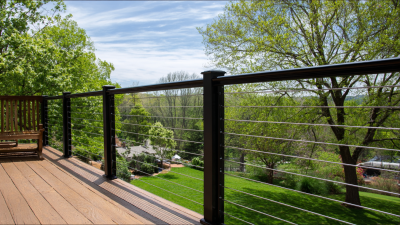
10 Essential Tips for Installing Cable Railing for Decks

When it comes to "cable railing for decks," proper installation is crucial for both safety and aesthetics. David Miller, a leading expert in outdoor design, once said, "A well-installed cable railing transforms a deck into a stunning space." Understanding how to install cable railing correctly can make a significant difference in your outdoor area.

Imagine a deck overlooking a picturesque view, but with a poorly installed railing. It could ruin the whole experience. Many newcomers struggle with measurements and alignment. Mistakes can lead to unstable railings that compromise safety. Attention to detail is essential.

Choosing the right materials and tools can be overwhelming. However, any misstep can lead to costly repairs. Learning from others' experiences can save time and money. With the right tips in hand, you can achieve a sleek and secure cable railing. Your dream deck awaits.
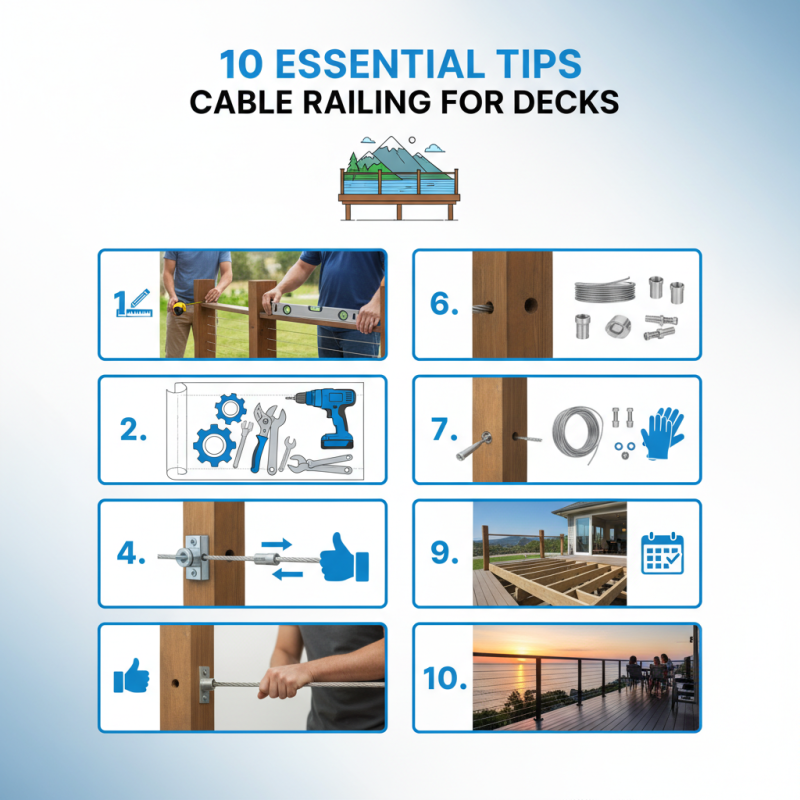
10 Essential Tips for Installing Cable Railing for Decks

Choosing the Right Materials for Cable Railing Systems

Choosing the right materials for a cable railing system is crucial for both safety and aesthetics. Stainless steel cables are a popular choice due to their strength and corrosion resistance. According to a recent industry report, stainless steel railings can last over 30 years with proper maintenance. This can lead to significant savings over time. However, some might overlook the importance of regular inspections. Cables can wear out or suffer from environmental damage over time.

When considering wooden posts, species like cedar and redwood are excellent for their natural decay resistance. Yet, wood is susceptible to weather conditions. It may require additional treatments to maintain its look and structural integrity. Be mindful of local climates when selecting materials. In some areas, composite materials offer another durable option. These are designed to withstand harsh weather but can be pricier upfront.

Tip: Always check compatibility between posts and cables. This ensures a stable structure. If the fit is too loose or too tight, safety can be compromised. Regular maintenance is essential. Inspect connections and fittings at least twice a year, especially after severe weather. It's easy to overlook these details, but they can make a significant difference in safety and longevity.

10 Essential Tips for Installing Cable Railing for Decks - Choosing the Right Materials for Cable Railing Systems

Tip Description Material Options Cost Range ($)
Select Quality Materials Choose high-quality stainless steel for durability and corrosion resistance. Stainless Steel, Aluminum 50 - 150
Consider Cable Thickness Thicker cables provide more strength but may affect visual aesthetics. 3/16" or 1/4" Cable 10 - 30
Check Building Codes Ensure compliance with local safety regulations regarding railings. N/A N/A
Evaluate Post Materials Choose sturdy posts that match the cable railing system. Wood, Metal 20 - 100
Plan for Installation Make a clear layout plan to ensure accurate measurements. N/A N/A
Choose Appropriate Fasteners Use corrosion-resistant fasteners to secure the railing properly. Stainless Steel Screws, Anchors 5 - 20
Ensure Cable Tensioning Properly tension cables to maintain safety and aesthetics. Tensioning Kits, Turnbuckles 15 - 50
Regular Maintenance Perform routine checks to prevent rust and ensure integrity. N/A N/A
Consider Aesthetic Designs Choose styles that complement your deck and home design. Varied Finishes (Satin, Polished) Varies

Understanding Building Codes and Safety Regulations for Deck Railing

10 Essential Tips for Installing Cable Railing for Decks

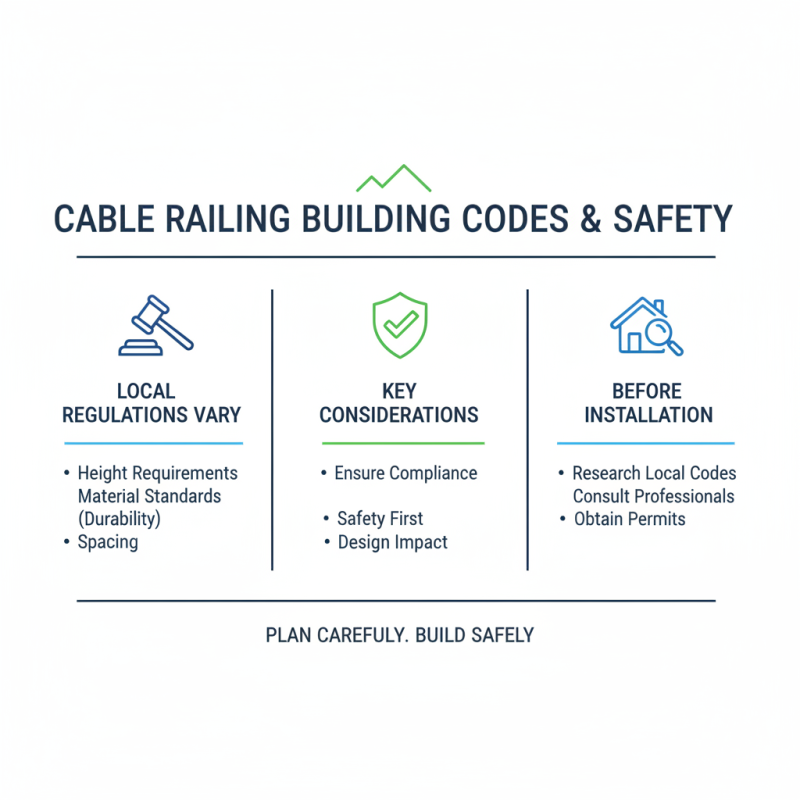
When planning to install cable railing for your deck, understanding building codes and safety regulations is crucial. These guidelines vary by location, affecting your design choices. Some areas require specific heights, while others mandate certain materials for durability. Research local regulations to ensure compliance before starting your installation.

Safety must be a priority in your design. It’s essential to verify that the cable spacing adheres to safety standards. Gaps that are too wide can pose a risk for children and pets. Consider using tensioned cables that meet recommended strength specifications. It’s not just about appearance; it’s about securing your space for everyone.

Reflecting on the process, many find the rules overwhelming and complex. Documenting the requirements can help in managing them. Consulting with a local expert might clarify some confusing aspects. Take time to review your plans. You may find that overlooking one small detail can lead to costly changes later.

Tools and Equipment Needed for Installing Cable Railing

Installing cable railing for decks requires careful planning and the right tools. A tape measure is crucial. It helps to ensure accurate measurements. An error in measuring can lead to an improper fit. One study noted that 34% of DIY installation issues stem from measurement mistakes.

Drills and tensioning tools are equally important. A good drill ensures a clean installation. Using a drill with adjustable speed settings can help you control the installation better. Tensioning tools give the railing the required tightness. This is essential for safety. According to industry data, improperly tensioned cables contribute to 15% of railing failures.

You will also need a level and a pair of pliers. A level ensures your posts are straight. Uneven posts can cause aesthetic issues. Sometimes, homeowners overlook this step, leading to a skewed installation. In addition, having high-quality pliers can make wire handling much more manageable. Being prepared is key. All these tools lead to a successful installation process.

However, a poorly organized workspace can lead to frustration. Work smart, and keep your tools within reach.

Step-by-Step Guide to Measuring and Marking for Cable Installation

When you’re ready to install cable railing for your deck, accurate measuring and marking are vital. Begin by determining the height of your railing. Most decks require a height of 36 to 42 inches. Use a level and ruler to assist your measurements. A small mistake can lead to uneven cables or misaligned posts. This crucial step sets the foundation for the entire project.

Tip: Always double-check your measurements. It’s easier to fix these errors than to deal with the consequences later. You might find that certain tools, like a chalk line, can simplify this process. Marking the placement for posts where the cables will be attached is equally important. Ensure that you have a clear outline of where each cable will run.

Another key tip is to account for cable tension. Not all cables will slide smoothly into place. You might need adjustments during installation. Consider marking multiple lines on your deck to visualize the final product. Sometimes, things don’t go as planned, and it's beneficial to revisit your measurements if cables feel too tight or loose. Let your eyes lead; that might help with alignment before finalizing your installation.

Cable Railing Installation: Essential Tips Overview

Common Mistakes to Avoid During Cable Railing Installation

10 Essential Tips for Installing Cable Railing for Decks

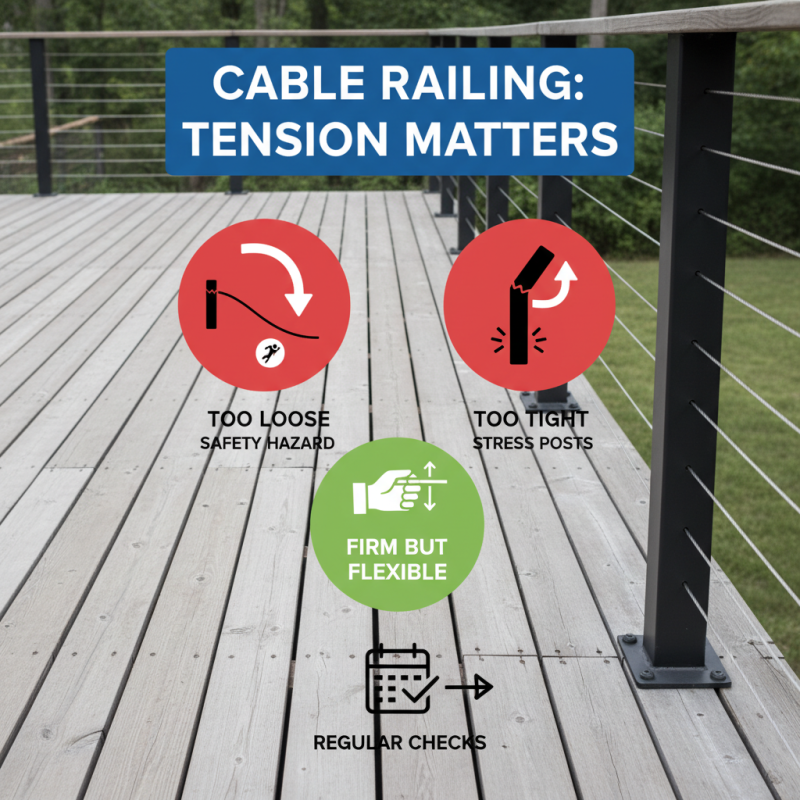
Installing cable railing for your deck can be a rewarding project, but it's easy to make common mistakes. One frequent issue is improper tensioning of the cables. If cables are too loose, they may sag and create safety hazards. Conversely, overly tight cables can stress the posts. Aim for a tension that is firm but allows for some flexibility. Check the tension regularly after installation.

Another mistake is overlooking the spacing of the posts. It’s crucial that posts are placed at appropriate intervals to support the cable effectively. Too much distance can lead to instability. Ensure that the posts are securely anchored to the deck. Using adequate mounting hardware will provide the necessary strength.

Also, don’t underestimate the importance of planning. Measure twice and cut once. Rushing this step can lead to errors in cable lengths, resulting in wasted materials. Take time to visualize how each part fits together. This mindfulness can save you from future frustrations with awkward angles or uneven cable layouts. Pay attention to these aspects, and your installation will proceed much smoother.