What Is Copper Alloy Winding Wire Used For?
Copper Alloy Winding Wire plays a quiet but essential role in modern electrical equipment. It carries current through motors, transformers, generators, relays, and specialized coils. Unlike ordinary copper wire, it combines copper with carefully selected alloying elements. This adjustment can improve tensile strength, wear resistance, thermal stability, or resistance to repeated bending. The result is a conductor designed for demanding winding conditions, not merely for electrical conductivity.
In a factory motor, the wire may pass through narrow slots and form hundreds of compact turns. It must withstand vibration, heat, varnish, and occasional mechanical stress. In transformers, stable dimensions and reliable insulation help maintain consistent performance over long operating periods. Engineers may select an alloy wire when pure copper lacks the required strength or durability. However, higher strength does not automatically mean better efficiency. Some alloys increase electrical resistance, so designers must balance conductivity, temperature rise, flexibility, and manufacturing cost. That trade-off is easy to underestimate.
Reliable selection depends on the application. Engineers normally review current density, operating temperature, winding tension, insulation compatibility, and applicable industry standards. Manufacturer test data also matters, especially for elongation, resistance, and thermal aging. Practical experience shows that small differences in wire hardness can affect production quality. A wire that looks suitable on paper may still create problems during forming or soldering. This is why Copper Alloy Winding Wire should be evaluated as part of the complete winding system. The right choice supports safer operation, longer service life, and more predictable maintenance. Not every project needs it. That is worth remembering.
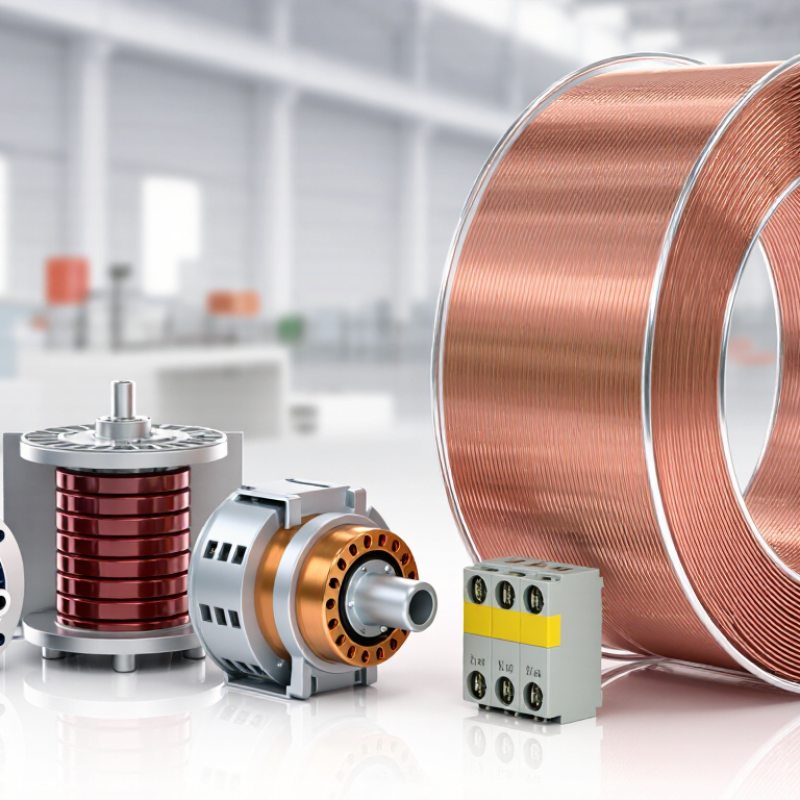
Types and Key Properties of Copper Alloy Winding Wire
Copper alloy winding wire is used in motors, transformers, generators, inductors, and compact electromagnetic assemblies. Its alloy type influences performance more than many buyers expect. Copper-silver wire offers improved strength and better softening resistance at elevated temperatures. Copper-chromium-zirconium wire provides high mechanical strength and useful thermal stability. Copper-nickel wire has higher electrical resistance, making it suitable for resistance windings and controlled heating applications. Standard high-conductivity copper remains preferable when low electrical loss matters most.
Key properties include conductivity, tensile strength, elongation, fatigue resistance, thermal endurance, and dimensional consistency. A winding wire must survive bending, repeated vibration, and the pressure created during coil forming. Its enamel insulation also needs suitable dielectric strength and temperature compatibility. A higher strength rating is not automatically better. Some stronger alloys conduct less efficiently and may require different winding tension or termination methods. In practical coil work, ignoring this trade-off can create unnecessary heat. That mistake is easy to miss.
Tips: Match the alloy to the operating temperature, current density, and mechanical stress. Check resistance at the actual working temperature, not only at room temperature. Confirm wire diameter, insulation thickness, and bend radius with the winding equipment. Small differences matter. Test a short sample coil before full production, because theoretical data may not reflect real forming conditions.
What Is Copper Alloy Winding Wire Used For?
Typical electrical conductivity of selected copper-alloy winding-wire materials at room temperature
Copper-alloy winding wire is used in motor, generator, transformer, relay, and high-temperature coil applications. Copper-silver alloys preserve high conductivity while improving strength and thermal stability. Copper-chromium-zirconium alloys provide a balance of conductivity, mechanical strength, and resistance to softening. Copper-magnesium and copper-tin alloys offer higher mechanical strength and improved wear or heat resistance, but their conductivity is lower. The values shown are representative ranges expressed as a percentage of the International Annealed Copper Standard (IACS); exact performance depends on alloy composition and temper.
How Copper Alloy Winding Wire Is Manufactured
Copper alloy winding wire is used in motors, transformers, generators, and compact electrical coils. It carries current while offering improved strength, heat resistance, or flexibility. Its final performance begins with careful material selection.
Manufacturing starts by melting refined copper with measured alloying elements. The blend is heated in a controlled furnace and cast into a thick rod. A small variation matters. The rod then passes through several drawing dies, each reducing its diameter. Lubrication limits friction and surface damage. Intermediate annealing restores ductility after repeated drawing. Without this step, the wire may crack during later forming.
After drawing, technicians check diameter, tensile strength, elongation, and electrical resistance. They inspect the surface under magnification for scratches or tiny seams. If insulation is required, the cleaned wire receives a thin enamel coating through repeated heating and curing. The coating must remain even around bends and tight coil corners. A rough surface can weaken insulation and shorten service life. It is easy to focus on conductivity alone, but winding reliability depends on both metal and coating. The process is controlled, yet never perfectly simple. A perfect-looking wire can still fail if testing is rushed or handling is careless.
What Is Copper Alloy Winding Wire Used For? - How Copper Alloy Winding Wire Is Manufactured
| Data Dimension | Typical Technical Data | Use or Manufacturing Significance |
|---|---|---|
| Primary purpose | To carry current while providing improved strength, heat resistance, creep resistance, or controlled electrical resistance compared with commercially pure copper. | Used when ordinary copper cannot provide the required mechanical durability or operating-temperature performance. |
| Electrical machines | Winding conductors for motors, generators, alternators, and traction machines. | The alloy can improve resistance to vibration, centrifugal force, thermal cycling, and conductor deformation in rotating equipment. |
| Transformers and inductors | Round or rectangular enamelled wire used for primary, secondary, and magnetic-component windings. | Higher-strength conductor grades can help maintain dimensional stability during winding, clamping, and thermal cycling. |
| Common alloy families | Copper-silver (Cu-Ag), copper-chromium-zirconium (Cu-Cr-Zr), copper-magnesium (Cu-Mg), copper-tin (Cu-Sn), and copper-nickel (Cu-Ni). | Each alloy family balances conductivity, tensile strength, elongation, temperature capability, and manufacturability differently. |
| Cu-Ag winding wire | Typically retains high copper conductivity while providing better softening resistance than unalloyed copper; exact properties depend on silver content and temper. | Suitable for high-current or high-temperature windings where conductivity and resistance to thermal softening are both important. |
| Cu-Cr-Zr winding wire | A precipitation-strengthened copper alloy; electrical conductivity is commonly lower than pure copper but mechanical strength and softening resistance are substantially higher. | Used for demanding coils, high-current conductors, and applications exposed to elevated temperature, vibration, or electromagnetic forces. |
| Cu-Ni winding wire | Electrical resistivity increases with nickel content; conductivity is therefore much lower than that of pure copper. | Used where predictable resistance, thermal stability, or resistance-wire behavior is more important than maximum current-carrying capacity. |
| Conductor cross-section | Round wire is common; rectangular and square profiles are also produced for high slot-fill and high-current windings. | The selected shape affects packing density, heat dissipation, bending behavior, and the amount of copper that fits into a winding slot. |
| Typical insulation | Enameled insulation based on polyester, polyesterimide, polyamide-imide, or related high-temperature systems; insulation class may include 155, 180, 200, or 220. | The coating provides turn-to-turn electrical isolation and must withstand voltage, abrasion, solvents, heat, and winding stress. |
| Raw material preparation | High-purity copper is combined with controlled quantities of alloying elements, commonly by melting and continuous casting or billet casting. | Chemical composition and cleanliness must be controlled because inclusions and composition variation can reduce conductivity, ductility, and coating quality. |
| Hot working | Cast billets or rods are hot rolled or otherwise reduced to produce a smaller copper-alloy rod suitable for wire drawing. | Hot working refines the structure, reduces the cross-section, and prepares the alloy for controlled cold deformation. |
| Cold drawing | The rod passes through progressively smaller dies until the required wire diameter or profile is reached. | Drawing improves dimensional accuracy and surface finish but increases work hardening, so intermediate annealing may be required. |
| Heat treatment | Annealing restores ductility; precipitation-hardening alloys may receive solution treatment, quenching, and aging under controlled conditions. | Heat treatment establishes the required balance between tensile strength, elongation, conductivity, and resistance to softening. |
| Enamelling process | The cleaned wire passes through repeated coating and curing stages until the specified insulation thickness and electrical performance are obtained. | Multiple thin layers generally provide more uniform coverage and better resistance to pinholes, abrasion, and winding damage. |
| Quality checks | Typical checks include diameter, electrical resistance, conductivity, tensile strength, elongation, surface condition, insulation breakdown voltage, and coating continuity. | Testing confirms that the finished winding wire meets the required electrical, mechanical, dimensional, and thermal specifications before use in a coil. |
Its Role in Motors, Generators, and Transformers
What Is Copper Alloy Winding Wire Used For?
Copper alloy winding wire supports the electromagnetic work inside motors, generators, and transformers. Its copper base carries current, while selected alloy elements can improve strength, heat resistance, or resistance to mechanical wear. This matters when wires face vibration, repeated bending, or tight winding spaces.
In motors, the wire forms stator or rotor coils that create magnetic fields and transfer electrical energy into motion. In generators, it carries current produced by rotating magnetic fields. In transformers, it connects primary and secondary windings, helping transfer energy between different voltage levels. Alloy wire can be useful where winding tension is high or thermal cycling is severe. However, higher strength may reduce electrical conductivity. The trade-off is easy to miss.
A stronger wire is not automatically better. Engineers should compare resistance, temperature rise, flexibility, insulation compatibility, and long-term reliability. During inspection, they may check surface damage, winding tightness, and resistance changes after heat testing. These details often reveal problems that a specification sheet does not show. Real designs also depend on voltage, current, frequency, cooling, and available space.
Tips: Match the alloy to the operating conditions. Keep joints clean and secure. Check insulation after winding. Do not judge performance by conductivity alone. A practical test can prevent an expensive redesign.
Applications in Automotive and Electrical Equipment
What Is Copper Alloy Winding Wire Used For?
Applications in Automotive and Electrical Equipment
Copper alloy winding wire carries electrical current through coils while tolerating heat, vibration, and repeated mechanical stress. It is used when ordinary copper lacks enough strength or durability. Alloying elements can improve tensile strength, resistance to softening, or performance at elevated temperatures. However, higher strength may reduce electrical conductivity. The best choice depends on the coil design.
In automotive equipment, this wire appears in traction motors, alternators, starter motors, solenoids, and compact ignition systems. Electric vehicle motors demand stable performance during rapid acceleration and frequent temperature changes. A stronger conductor can resist stretching during winding and reduce damage from vibration. Tight winding also helps engineers fit more turns into a limited space. Small details matter here. Poor tension control can create weak spots.
Electrical equipment uses copper alloy winding wire in transformers, inductors, relays, generators, and industrial motors. These components may operate continuously, so thermal aging becomes a serious concern. Engineers examine conductivity, enamel insulation, bendability, and compatibility with varnish or impregnation materials. Alloy wire is not automatically better. It can cost more and may require adjusted winding tools. Field testing remains important because laboratory results cannot reveal every fault caused by moisture, vibration, or uneven cooling. One assumption can fail.
Benefits, Limitations, and Selection Considerations
What Is Copper Alloy Winding Wire Used For?
Copper alloy winding wire is used in motors, transformers, generators, inductors, and compact electrical actuators. It carries current through coils while handling heat, vibration, and repeated mechanical stress. Compared with pure copper, selected alloys can offer better tensile strength, improved fatigue resistance, or greater stability during winding. This matters when wire passes through tight slots or operates under continuous thermal cycling. In practical production, stronger wire can reduce breakage during forming. That saves time.
The main limitation is conductivity. Most copper alloys conduct less efficiently than high-purity copper, so they may create higher resistance and heat. Some grades also cost more or become harder to shape after repeated bending. A stronger alloy is not automatically better. Engineers should compare conductivity, tensile strength, elongation, wire diameter, insulation compatibility, and operating temperature. Frequency also matters because alternating current can increase losses in certain winding designs. Small differences can become serious in high-duty equipment. Testing is still necessary; calculations alone can miss installation problems.
Tips: Match the wire to the coil’s current density and cooling method. Check insulation performance after winding and heat treatment. Ask for verified electrical and mechanical data. Leave a practical safety margin, but avoid excessive strength that complicates forming. Field results sometimes challenge the first design choice. That is worth reviewing.