Top Tips for Choosing the Right Steel Mesh for Your Project?
Choosing the right steel mesh can significantly impact your project's success. As industry expert John Smith once noted, "The right steel mesh is the backbone of any solid construction." This highlights the importance of understanding project needs.
Steel mesh serves various applications, from concrete reinforcement to industrial flooring. Every choice carries weight. Selecting a product that can't support your project's demands can lead to costly revisions. Explore your options carefully. Consider load capacities, corrosion resistance, and installation requirements. Each factor plays a role in overall performance.
No solution is perfect. Some meshes may seem ideal but may falter under specific conditions. Understanding your materials is crucial. Look into testing standards and manufacturer credibility. A well-informed choice can make all the difference in achieving structural integrity.
Understanding the Different Types of Steel Mesh Available
When selecting the right steel mesh for your project, understanding the various types available is crucial. Steel mesh comes in many forms, each serving different purposes. Welded wire mesh is popular for its strength and versatility. It provides an even distribution of weight and is commonly used in concrete applications. However, it may not be suitable for all situations.
Another option is hexagonal wire mesh, known for its unique shape. It's often used in landscaping and fencing. This type offers flexibility but might lack the rigidity needed for heavy-duty projects. Additionally, the gauge of the wire plays a significant role. Thicker wires mean more strength but can also increase the project's weight and cost.
Consider your project’s specific needs. Will you require corrosion resistance? Galvanized steel mesh could be your best option. But, remember, this type might not be ideal for every budget. Reflect on the balance between cost and quality. Take your time to assess the demands of your project before making a final decision.
Top Tips for Choosing the Right Steel Mesh for Your Project
Factors to Consider When Selecting Steel Mesh for Your Project
When selecting steel mesh for your project, consider its intended use. The type of construction greatly influences which mesh is best. For example, reinforced concrete may require a different wire gauge compared to fencing. Understanding the purpose will guide your choice.
Next, think about environmental factors. Will the mesh be exposed to moisture or chemicals? Corrosion resistance is crucial in such cases. Pay attention to the coating type. Hot-dip galvanizing offers good protection, but it may not be the best for every scenario.
Lastly, keep in mind local regulations. Sometimes, specific standards dictate the use of certain materials. Researching these can feel tedious. However, it ensures safety and compliance. Not considering these factors could lead to costly mistakes.
Top Tips for Choosing the Right Steel Mesh for Your Project
| Mesh Type |
Wire Diameter (mm) |
Aperture Size (mm) |
Load Capacity (kg/m²) |
Ideal Uses |
| Welded Wire Mesh |
4 |
50 x 50 |
900 |
Concrete reinforcement, fencing |
| Expanded Metal Mesh |
3 |
25 x 25 |
700 |
Grating, ventilation |
| Crimped Wire Mesh |
5 |
10 x 10 |
600 |
Filtration, sieving |
| Bar Grating |
6 |
32 x 5 |
1300 |
Walkways, flooring |
| Reinforcement Mesh |
5 |
20 x 20 |
800 |
Structural applications, slabs |
Evaluating the Strength and Durability of Steel Mesh Options
When selecting steel mesh for a project, evaluating its strength and durability is crucial. Steel mesh comes in various grades, each with unique properties. According to the American Institute of Steel Construction, higher grade steel typically offers better tensile strength. For example, grade 60 steel can withstand a tensile strength of 60,000 psi. This statistic can help in understanding the demands of your specific construction project.
Durability is often measured by factors such as corrosion resistance and fatigue limits. The NATIONAL ASSOCIATION OF CORROSION ENGINEERS suggests using galvanized steel mesh in environments exposed to moisture. This can increase longevity by up to 30%. However, there’s a trade-off; galvanized steel may not hold up under extreme temperatures. Projects in harsh climates should take this into consideration.
Maintenance is also an essential factor. Steel mesh needs regular inspections to ensure integrity over time. A study from the International Journal of Structural Engineering noted that poorly maintained steel mesh showed a 20% reduction in load-bearing capacity after just five years. Such insights underscore the importance of regular assessment and timely repairs, especially in structural applications.
Analyzing Cost-Effectiveness of Various Steel Mesh Materials
When selecting steel mesh for your project, evaluating cost-effectiveness is critical. Different types of steel mesh materials have varying prices and performance characteristics. For instance, welded wire mesh may appear less expensive upfront, but consider its durability and longevity. Sometimes, paying a bit more for a robust option can save future costs.
To choose wisely, consider the specific needs of your project. If weight and strength are priorities, opt for a mesh with higher tensile strength. It will serve you better in the long run. Check if the mesh is made from recycled materials. This can reduce costs and promote sustainability.
Look out for hidden expenses as well. Installation can be tricky with certain types of mesh. Get multiple quotes to gauge the true cost. If it looks too cheap, reflect. It might mean lower quality. Balance affordability and reliability to make the best choice for your project.
Guidelines for Sizing and Customizing Steel Mesh for Specific Needs
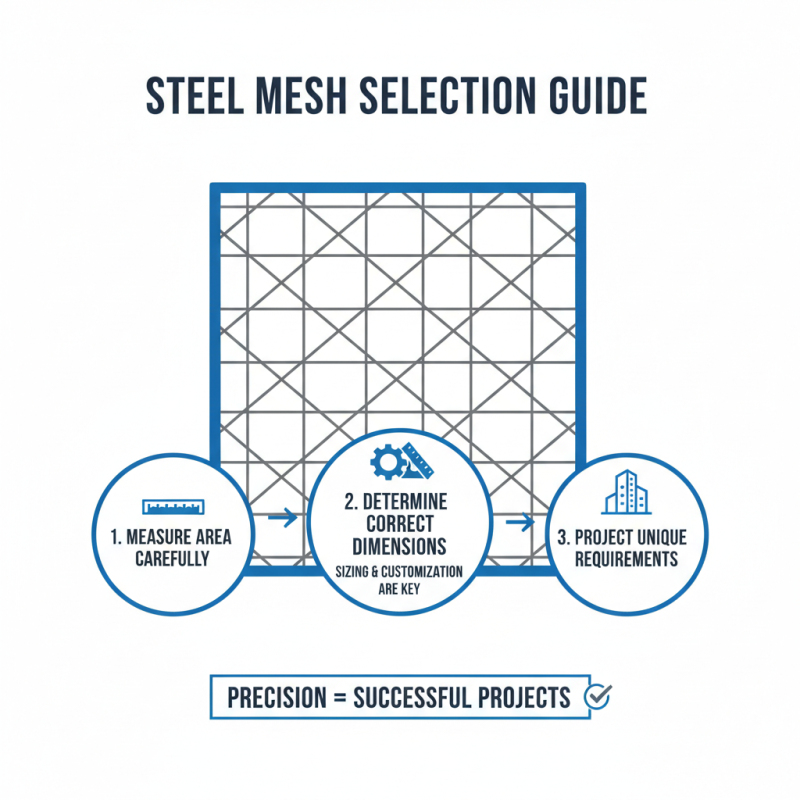
When choosing steel mesh for your project, sizing and customization are key. Each project has unique requirements. Understanding the right dimensions is crucial. Consider the area where the mesh will be installed. Measure carefully to ensure precision.
Tip 1: Think about the load the mesh will bear. Different projects may need varying levels of strength. If it's for construction, thicker mesh may be essential. For light landscaping, finer mesh might do.
Customization options are vast. You can choose the gauge, size, and pattern. For instance, a tighter mesh can provide more support. However, it might not be necessary in all cases. Reflect on the specific use. You might find you overestimate your needs.
Tip 2: Consider the environmental factors too. Will the mesh face corrosion? If yes, selecting a suitable coating may be a must. It's easy to overlook these details. Yet they can greatly impact the mesh's longevity and performance.