How to Choose the Right Stainless Steel Mesh for Your Needs?
Choosing the right stainless steel mesh is crucial for various applications, from industrial uses to home improvement projects. Expert Anna Johnson, a renowned specialist in stainless steel mesh solutions, emphasizes, "Selecting the correct mesh can significantly impact your project's success." Her insights reflect years of experience in the industry.
Stainless steel mesh comes in various grades and styles. Each has unique properties that suit different needs. For instance, a finer mesh offers enhanced filtration, while a coarser mesh can provide structural support. Understanding these differences is essential for making an informed choice.
Many users may overlook the importance of mesh specifications. A common mistake is prioritizing aesthetics over functionality. This oversight can lead to poor performance. Therefore, evaluating both the application and the environment where the mesh will be installed is vital. Investing time in this decision can lead to a more effective and reliable use of stainless steel mesh.
Understanding the Different Types of Stainless Steel Mesh Available
When selecting stainless steel mesh, understanding the different types is crucial. Stainless steel mesh varies widely in weave pattern, wire diameter, and grade. Common types include welded mesh, woven mesh, and expanded metal. Each has unique characteristics suited for specific applications. A study by the Specialty Steel Industry of North America indicates that the most common grades used are 304 and 316, each offering distinct benefits in terms of corrosion resistance and strength.
Woven mesh is known for its flexibility and versatility. It is often used in filtration applications. Welded mesh provides greater structural integrity and is popular in construction and safety uses. However, welded options may not perform as well under high-temperature conditions. A report from the American Institute of Steel Construction notes that selecting the right type depends heavily on intended use and environmental factors.
Choosing the wrong type can lead to early failure or inefficiency. For instance, using a woven mesh in harsh environments can compromise durability. It’s essential to assess your specific needs thoroughly. Often, professionals find that a thorough evaluation of mesh specifications reveals unexpected insights. Understanding the nuances can significantly impact the effectiveness of your application.
Identifying the Key Factors in Selecting Stainless Steel Mesh
When selecting the right stainless steel mesh, several key factors come into play. The mesh's wire diameter significantly impacts its strength and durability. For instance, a study by the American Institute of Steel Construction highlights that thicker wires better resist wear and tensile stress, making them suitable for demanding applications. Fine wires, while offering excellent filtration, may lack the robustness needed for industrial environments.
The mesh's opening size also matters. Larger openings can allow more airflow and fluid flow but may not provide the level of filtration required for certain tasks. According to the International Journal of Advanced Manufacturing Technology, the choice of opening size directly affects performance, especially in filtration systems. Additionally, considering the environmental conditions—like corrosion resistance—is crucial for outdoor applications. Stainless steel grades like 304 and 316 offer varying levels of resistance, with 316 being more suited for corrosive situations.
It's essential to evaluate these elements based on the specific application. Testing prototypes can reveal unexpected limitations. For example, while a mesh may seem adequate during initial trials, it could falter under prolonged stress or exposure. Proper assessment ensures you select mesh that aligns with your operational demands.
Evaluating Mesh Specifications: Size, Wire Diameter, and Opening
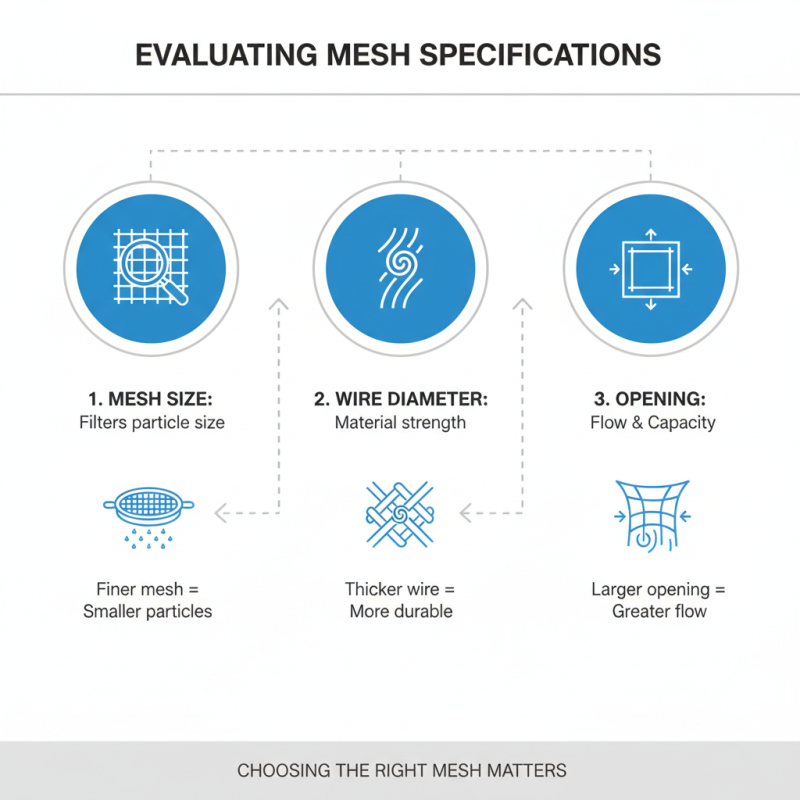
Choosing the right stainless steel mesh can be challenging. The specifications, including size, wire diameter, and opening, significantly impact its performance. For instance, mesh size directly dictates what materials can pass through. A finer mesh can filter smaller particles, which is crucial in applications like filtration.
Wire diameter is equally important. Thicker wires add strength, making the mesh more durable under pressure. However, thicker wires may also reduce the size of the openings. This trade-off requires careful consideration based on your project's needs. If you are unsure, testing different meshes can help clarify what works best.
Opening size plays a pivotal role too. Larger openings allow for quicker flow but may not filter out fine particles. Smaller openings provide better filtration but could impede flow. Therefore, reflecting on the specific requirements of your task is essential. Trial and error might lead to unexpected insights. Understanding the balance between these factors will guide you in making a more informed choice.
Applications of Stainless Steel Mesh in Various Industries
Stainless steel mesh plays a vital role across various industries, owing to its unique properties. In the food processing sector, for instance, it is essential for filtration and safety. According to a report by the Industrial Fabric Association International, stainless steel mesh helps maintain hygiene standards, ensuring product safety. Its resistance to corrosion makes it a favorite for environments with high moisture levels.
In the construction industry, stainless steel mesh provides reinforcement and stabilization for structures. The American Concrete Institute highlights that using stainless steel mesh can enhance concrete's tensile strength, which ultimately increases a building's durability. Many projects utilize this material for its ability to withstand harsh weather conditions.
In wastewater treatment, stainless steel mesh assists in screening and filtering processes, ensuring efficiency.
Despite these advantages, not every type of stainless steel mesh suits all applications. Selecting the wrong mesh can lead to failures in performance and safety. Factors such as wire diameter, mesh size, and material grade must be evaluated carefully. It's essential to reflect on project requirements to avoid potential pitfalls. Each application demands a tailored approach for optimal results.
Considering Cost and Availability When Choosing Stainless Steel Mesh
When selecting stainless steel mesh, cost and availability play crucial roles. You may find various types of stainless steel mesh, but prices can vary significantly. Budget constraints are common. It's essential to weigh your options carefully. Often, higher quality comes at a higher price. However, cheaper alternatives can lead to more frequent replacements. This is a crucial consideration for long-term projects.
**Tips:**
Explore local suppliers. They might offer competitive prices that online stores cannot match. This can save you both time and shipping costs. Check for bulk purchase discounts. It’s an effective way to cut expenses without sacrificing quality.
Availability can affect your project timeline. Long wait times can delay your work. Always plan ahead. It's wise to keep an eye on inventory levels of your preferred type of mesh. Unexpected demand can lead to shortages. Consider alternative materials if your first choice isn’t readily available.
**Tips:**
Visit multiple retailers to compare stock levels. Sometimes, a specific mesh type might be out of stock. Having alternatives in mind can keep your project on track. Regularly check for new suppliers who may have what you need at the right price.
How to Choose the Right Stainless Steel Mesh for Your Needs?
| Mesh Type |
Aperture Size (mm) |
Wire Diameter (mm) |
Cost (per sq. meter) |
Availability |
| 304 Stainless Steel |
1.0 |
0.5 |
$15 |
Widely Available |
| 316 Stainless Steel |
0.8 |
0.4 |
$20 |
Moderately Available |
| 28 Mesh |
0.6 |
0.3 |
$12 |
Available |
| 50 Mesh |
0.3 |
0.2 |
$18 |
Limited Availability |
| 100 Mesh |
0.15 |
0.1 |
$25 |
Special Order |