How to Choose the Best Stainless Mesh for Your Needs?
Choosing the right stainless mesh can be overwhelming. With various types available, it’s crucial to understand your specific needs. Stainless mesh is used in diverse applications, from industrial filters to architectural designs. Each type has unique properties that can impact your project.
When selecting stainless mesh, consider material quality and weave type. The grade of stainless steel affects strength and corrosion resistance. A finer mesh offers better filtration, but might not hold up in heavy-duty tasks. Visualizing how you will use the mesh can clarify your decision-making process.
Reflecting on your project needs is essential. Are you prioritizing durability or versatility? Balancing performance with cost is often challenging. Exploring different options helps, but it can create confusion. Making the right choice in stainless mesh requires thoughtful consideration of all these factors.
Understanding Different Types of Stainless Steel Mesh Available
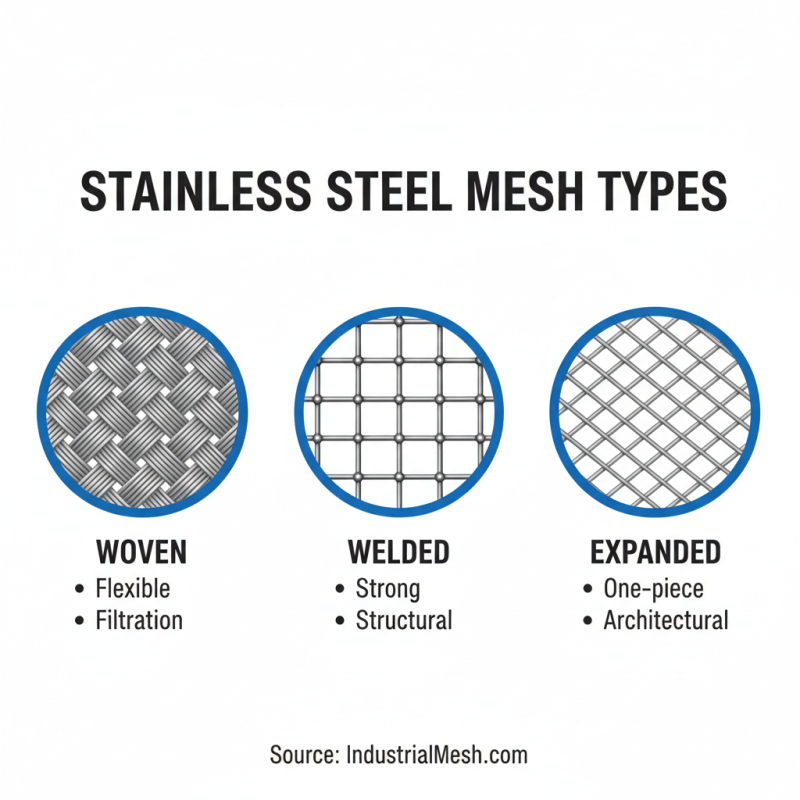
When selecting stainless steel mesh, understanding the types available is crucial. There are several variations, each with unique features. Common types include woven, welded, and expanded mesh. Woven mesh provides flexibility, making it suitable for various applications. It's often used in filtration processes.
Welded mesh is more rigid, offering strength and durability. This type is ideal for safety guards or enclosures. Expanded mesh, on the other hand, has larger openings and is lightweight. It's great for ventilation needs but may lack fine filtration.
Tips: Consider the mesh size. A smaller mesh size filters finer materials, while larger sizes provide better airflow. Evaluate the thickness as well. Thicker wires enhance strength but may reduce flexibility. Always think about your specific application. What works for one task might not suit another.
Key Factors to Consider When Choosing Stainless Steel Mesh
Choosing the right stainless steel mesh can be daunting. Several key factors can impact your selection. First, consider the mesh size. A finer mesh provides better filtering, while a coarser mesh allows for greater airflow. Think about your specific needs. Are you filtering liquids, solids, or gases? This will guide your decision.
Next, examine material quality. Different grades of stainless steel offer various levels of corrosion resistance. If you're in a humid environment, opt for a high-grade stainless steel. Pay attention to the thickness of the wire as well. Thicker wires provide strength but might limit flexibility.
Reflect on the application's demands. Will the mesh be subjected to heavy wear? You may need a more robust option. Also, don't forget to factor in maintenance. Some meshes require more care than others. Choosing the right stainless mesh is about balancing these elements to meet your specific requirements.
Assessing the Mesh Size and Its Impact on Performance
Choosing the right mesh size is crucial for optimal performance. A smaller mesh size can effectively filter fine particles. However, it may also restrict flow rates. This is a double-edged sword. If you need precision, small openings might be ideal. But too restrictive can lead to clogs and inefficiencies.
On the other hand, larger mesh sizes allow faster flow. They are suitable for applications with larger materials. Yet, they may not capture all the fine debris you want to eliminate. It's essential to find the balance. Think about your specific needs. What are you filtering? What is the desired flow rate?
Consider the consequences of your choice. A wrong mesh size can lead to failures. You might end up needing to replace it sooner than expected. It’s not just about picking a size. It’s about understanding your application and its demands. Reflect on how mesh size impacts operational efficiency. Quality performance comes from informed decisions.
Evaluating Corrosion Resistance for Longevity in Various Environments
When choosing stainless steel mesh, corrosion resistance is crucial. Different environments expose materials to various elements. For instance, coastal areas have salt, while industrial sites may have chemicals. Understanding the specific conditions is vital. The right mesh can significantly affect longevity.
Not all stainless steel meshes withstand harsh settings. Some may rust even with minor exposure. It's important to check the grade of stainless steel. Higher grades, like 316, offer better protection against corrosion. However, they can be more expensive. Sometimes, cheaper options do not last as long. It’s a trade-off worth considering.
Regular maintenance can improve mesh durability. Periodic inspections help identify early signs of corrosion. Some users overlook this aspect. They might assume that stainless steel is entirely immune to rust. In reality, even stainless steel requires care. Making informed choices can enhance both performance and longevity in diverse environments. But it’s also a learning process, as experience plays a significant role in understanding material behavior.
How to Choose the Best Stainless Mesh for Your Needs?
| Stainless Mesh Type | Corrosion Resistance | Best Use Environment | Longevity (Years) |
|---|---|---|---|
| 304 Stainless Steel | Moderate | Indoor use with minimal exposure to moisture | 5-10 |
| 316 Stainless Steel | High | Marine environments and chemical exposure | 10-15 |
| 430 Stainless Steel | Low | Indoor applications with low corrosive activity | 3-7 |
| Duplex Stainless Steel | Very High | Highly corrosive environments | 15-25 |
| Super Duplex Stainless Steel | Excellent | Oil and gas industries | 20-30 |
Cost Considerations and Budgeting for Stainless Steel Mesh Options
When budgeting for stainless steel mesh options, it’s essential to consider various cost factors. The price of stainless steel mesh can vary greatly based on material grade, wire diameter, and mesh size. According to a recent industry report, high-grade stainless steel mesh can range from $1 to $4 per square foot. This range can quickly add up for larger projects.
Additionally, it's important to factor in maintenance costs. Stainless steel is known for its durability, but location can impact longevity. For instance, coastal areas may require a higher grade to withstand corrosion. Some reports indicate that using lower-grade mesh could result in increased replacement costs over time.
Assessing your specific needs is crucial. Are you using it in construction or for filtration? Your choice will impact not just the initial cost but also long-term expenses. Investing in the right type might seem pricey, but it can save money down the line. Opting for lower-cost options might not fulfill your needs properly, leading to unforeseen issues later. Balancing budget and quality is a complex decision that requires careful thought.
Related Posts
-
The Science Behind Stainless Mesh and Its Impact on Modern Industries
-

2026 Top Stainless Mesh Innovations for Industrial Applications?
-

Why Choose Stainless Mesh for Your Next Project? Key Benefits Explained
-

Exploring the Benefits of Wire Deck Railing: A Comprehensive Guide to Safety and Aesthetics
-

How to Choose the Right Cable Railing Hardware for Your Project?
-
Top 10 Benefits of Cable Railing for Decks: Enhance Safety and Style