How to Choose Spray Can Machinery in 2026?
Choosing Spray Can Machinery in 2026 requires more than comparing speed, price, and advertised capacity. Manufacturers must examine product requirements, container dimensions, filling accuracy, sealing quality, and long-term service support. A machine that fills 120 cans per minute may appear attractive, but it can create costly downtime during format changes. Real production needs a closer look.
The right equipment should match the can diameter, valve design, propellant system, and material compatibility. Stainless-steel contact parts can support hygiene and corrosion resistance. Servo controls may improve consistency, while automatic inspection systems can identify dents, poor seams, or incorrect fill levels. However, advanced features are not always necessary. They can increase training demands and maintenance costs. Practical value matters more than impressive specifications.
Experienced buyers should request factory demonstrations, sample runs, safety documentation, and references from comparable facilities. Ask how quickly operators can replace seals, adjust guides, and clean filling lines. Reliable suppliers should explain spare-part availability, warranty conditions, installation support, and operator training clearly. Independent technical advice can also reveal limitations hidden in sales presentations. Compliance requirements must be reviewed with qualified professionals before purchase.
There is no universally perfect machine. A compact line may suit a growing business, yet restrict future capacity. A high-speed system may deliver more output, but demand stronger utilities and tighter quality control. My initial preference might change after testing real cans and formulas. Careful evaluation, documented trials, and honest cost calculations create a safer and more dependable investment in 2026.
Define Spray Can Machinery Types and Production Applications
How to Choose Spray Can Machinery in 2026?
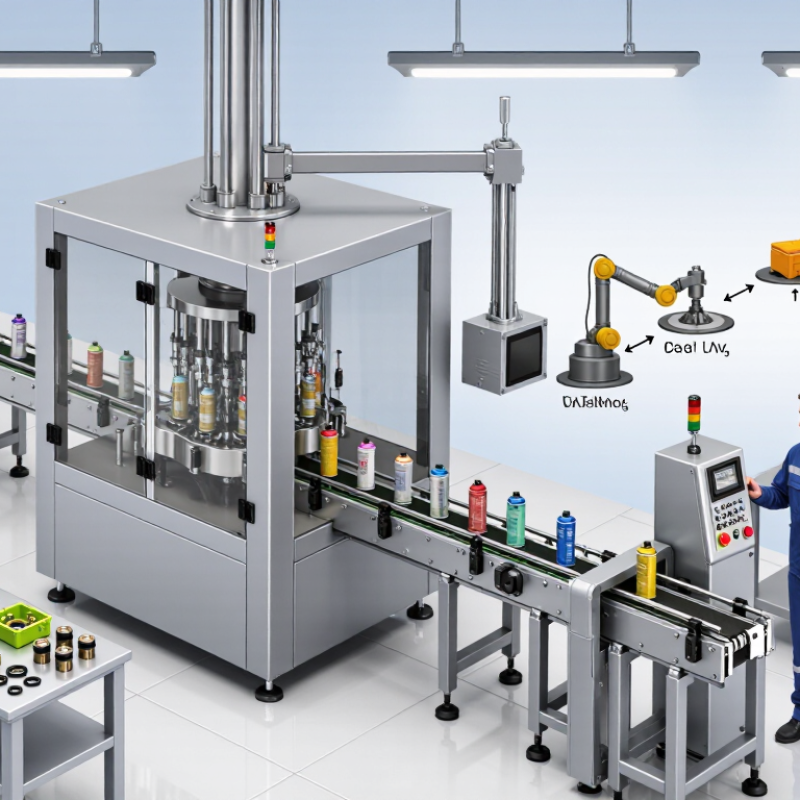
Spray can machinery covers several equipment groups, and each group serves a different production stage. Can-making lines form, weld, flange, neck, and test metal containers. Filling systems add the product, propellant, valve, and actuator under controlled conditions. Packaging equipment then checks weight, prints codes, and places finished cans into cartons. The right selection depends on container material, diameter, height, and planned output.
For three-piece tinplate cans, body-welding machines suit high-volume household, maintenance, and personal-care products. Aluminum monobloc lines create seamless cans with fewer joints and a clean appearance. They often fit premium packaging and compact product formats. Valve crimping machines need accurate pressure control and repeatable positioning. Leak testers are essential for every application. Small details matter.
A practical equipment review should examine changeover time, filling accuracy, guarding, spare-part access, and operator training. Capacity is not everything. A machine rated for 300 cans per minute may perform poorly with frequent size changes. Ask for trial runs using your actual can dimensions and formulation behavior. Record rejection rates, noise levels, cleaning time, and compressed-air consumption. I would also question optimistic factory claims; real performance can fall when inexperienced operators handle adjustments. Production teams should confirm quality procedures, traceability, and applicable safety requirements before purchase.
| Machinery Type | Primary Production Function | Typical Materials | Typical Can Formats | Indicative Production Range | Main Production Applications | Important Selection Criteria |
|---|---|---|---|---|---|---|
| Two-Piece Aluminum Impact-Extrusion Line | Forms the can body and integral bottom from a single aluminum slug through impact extrusion, followed by trimming, washing, printing and internal coating. |
|
| Approximately 60–250 cans per minute, depending on can size, decoration process and line configuration. |
|
|
| Three-Piece Tinplate Aerosol Can Line | Forms a body from a rectangular metal sheet, creates a welded side seam, and attaches the top and bottom ends by double seaming. |
|
| Approximately 100–600 cans per minute for high-volume body-making and seaming systems; actual speed depends on diameter, seam design and inspection requirements. |
|
|
| Can Necking and Beading Machine | Reduces or shapes the open end of the can and forms beads or profiles that support valve-cup attachment and improve structural stability. |
| Necked cans prepared for standard valve-cup and actuator assemblies. | Approximately 100–500 cans per minute, depending on the number of forming stations and the required neck profile. |
|
|
| Internal Lacquer and External Coating Line | Applies protective coatings to prevent product interaction, corrosion and loss of package integrity; external coatings also provide decoration and abrasion resistance. |
| Two-piece and three-piece aerosol cans requiring internal chemical resistance or external decoration. | Commonly matched to the can-making line, from approximately 100 to more than 500 cans per minute. |
|
|
| Printing and Decoration Machine | Prints graphics, regulatory information, batch areas and brand-independent product information directly onto metal can bodies or applies labels. |
| Cylindrical aerosol cans with one-color to multi-color decoration requirements. | Approximately 100–600 cans per minute for rotary printing systems; speed varies with print stations, curing and inspection. |
|
|
| Aerosol Filling Line | Fills the product concentrate into the can, inserts the valve, crimps the valve cup, adds propellant and completes final assembly. |
| Most standard aerosol cans, including personal-care, household, industrial and technical formats. | Approximately 30–300 cans per minute for many commercial lines; specialized high-speed systems may exceed this range. |
|
|
| Valve Insertion and Crimping Machine | Places the aerosol valve assembly on the can and crimps the valve cup to create a controlled mechanical seal. |
| Standard aerosol cans using one-inch or other application-specific valve systems. | Approximately 60–400 cans per minute, depending on valve design, crimp specification and automation level. |
|
|
| Propellant Gassing Machine | Introduces liquefied or compressed propellant into the filled and sealed can using a pressure-controlled process. |
| Pressurized aerosol cans requiring controlled propellant dosage and safe gas handling. | Approximately 30–250 cans per minute, depending on propellant method, can size and safety system design. |
|
|
| Water-Bath Leak Tester | Tests filled aerosol cans in a heated water bath to reveal leakage, abnormal deformation or pressure-related defects before packing. |
| Pressurized cans requiring final leak and deformation verification. | Approximately 30–300 cans per minute, depending on immersion time, bath length and inspection method. |
|
|
| Non-Destructive Leak and Pressure Inspection System | Uses pressure decay, vacuum, force, vision or other non-destructive methods to detect leaks and verify closure quality without immersing every can in heated water. |
| Standard and specialty cans where continuous, automated quality monitoring is required. | Approximately 60–400 cans per minute, depending on the inspection technology and test sensitivity. |
|
|
| Actuator, Cap and Dip-Tube Assembly Machine | Fits the actuator, protective cap and dip tube after filling, creating a ready-to-pack aerosol product. |
| Spray, foam, continuous-dispensing and metered-dose aerosol packages. | Approximately 60–500 cans per minute, depending on component geometry and inspection requirements. |
|
|
| Vision Inspection, Coding and Packaging System | Checks fill level, valve presence, cap position, print quality and code readability, then packs cans into cartons or trays. |
| Finished consumer, household, industrial and technical aerosol products. | Approximately 60–400 cans per minute, depending on camera resolution, coding method and packing pattern. |
|
|