How to Choose the Best Cable Railing for Your Home Design Needs?
Choosing the best cable railing for your home design needs can be overwhelming. According to industry expert Emma Martinez, "The right cable railing transforms your space." This statement highlights the significance of making an informed decision.
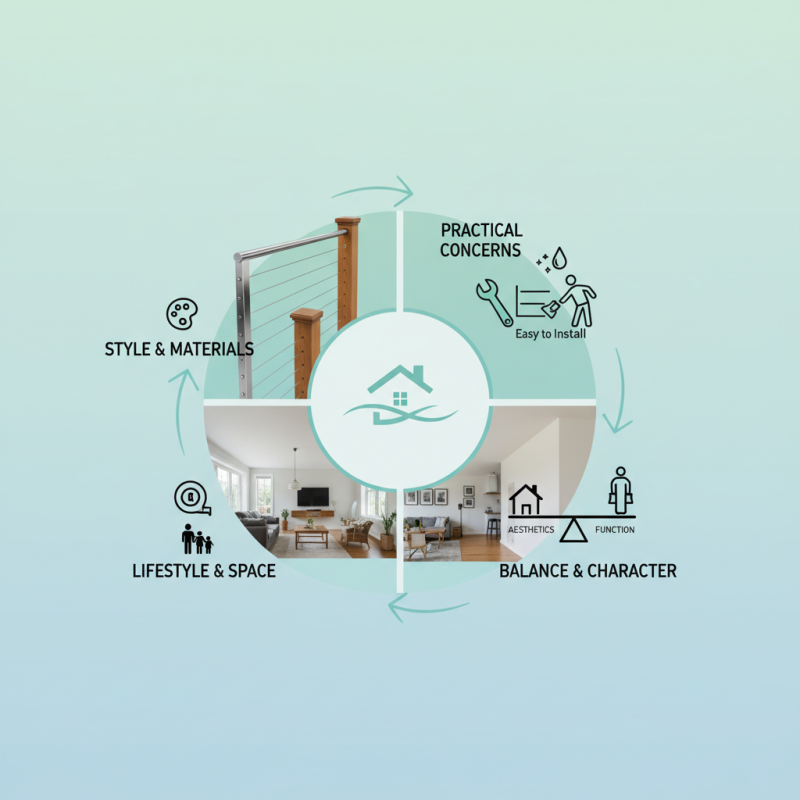
Cable railing comes in various styles and materials. Each option offers unique design elements that influence the overall aesthetic of your home. For instance, stainless steel provides a modern feel, while wood can warm up a space. It's crucial to consider these factors when deciding.
Yet, many homeowners overlook practical concerns. Not all cable railings are easy to install. Maintenance can be a challenge too, depending on the material chosen. Thinking deeply about both style and function is essential. Evaluating your lifestyle and space will guide you to the best choice. Balancing aesthetics and practicality is often a reflection of your home’s character.
Choosing the Right Cable Railing Material: Wood vs. Metal vs. Composite
When selecting the right cable railing material, consider wood, metal, and composite options. Each has unique characteristics that can enhance your home's design.
Wood offers a natural, warm look. It blends well with rustic or traditional styles. However, wood can warp or splinter over time. Maintenance is essential, as weather can take a toll on its appearance.
Metal railings, like stainless steel, are sleek and modern. They provide durability and are resistant to rust. Metal's clean lines fit well in contemporary settings. The downside is that metal can feel cold or harsh in some environments. It might not suit homes aiming for a cozy vibe.
Composite materials are a blend of different resources. They can mimic wood's appearance without the upkeep. However, quality varies—a low-grade composite may not last as long.
Think about how each material fits into your home's aesthetic. Experiment with samples before making a decision. Reflect on the long-term implications of your choice. Your railing should not only look good but also serve its purpose effectively.
Understanding Building Codes and Regulations for Cable Railings
When considering cable railings for your home, understanding building codes is crucial. Local regulations can vary significantly. Many areas require specific wire spacing to ensure safety, especially in homes with children or pets. The maximum gap between cables is typically no more than four inches. If you're not careful, you could face costly fines or required alterations.
Additionally, check the height requirements for your railings. Most codes mandate a minimum height, often around 36 inches for residential areas. This can differ for balconies or decks. Ignoring these rules might lead to unsafe conditions and potential liability issues. It's essential to research these regulations before making a decision.
Engage with your local building department. They can provide guidance and resources tailored to your needs. Consider consulting a professional. Their insights can help clarify any confusion. Understanding these codes is about more than compliance; it's about creating a safe and welcoming space in your home.
Assessing the Aesthetic Impact of Cable Railing Styles on Home Design
When choosing cable railing, consider its style. Different designs can dramatically alter your home's aesthetic.
Sleek, modern cable railings add a minimalistic touch. They blend well with contemporary architecture. Rustic options bring warmth and charm to traditional designs. Each choice speaks volumes about your taste and lifestyle.
The finish of the cable railings matters too. Stainless steel offers a clean, polished look, enhancing open spaces. Powder-coated options provide color, adding character to the setting. The visual contrast can be striking or subtle, depending on your surrounding décor. Reflect on how these elements interact with your home's design.
Evaluating the height and spacing of the cables is essential. Spaced too widely, they may feel insecure. However, too tightly arranged may seem overwhelming. It's a balance that demands careful thought. Look around your space to envision how the cable railings will fit in. Sometimes, it’s about more than just safety—it’s about harmony, too.
Evaluating Durability and Maintenance Requirements for Different Cable Railings
When choosing cable railings, durability and maintenance are key factors. Stainless steel cables are renowned for their strength and resistance to corrosion. According to a report by the American Architectural Manufacturing Association (AAMA), stainless steel railings can last over 30 years with proper care. However, they require periodic maintenance to maintain their appearance and functionality.
On the other hand, aluminum railings are lightweight. They resist fading and rotting, making them appealing to many homeowners. Yet, some researchers suggest that aluminum may not offer the same long-term durability as stainless steel. This means less maintenance but possibly shorter lifespan.
The choice may also depend on climate. In coastal areas, higher humidity and salt exposure can impact metal railings, requiring a thorough examination of materials. Visual inspections every season could help, but can be easily overlooked. Understanding these maintenance requirements is essential for ensuring that your cable railing serves its purpose over time.
How to Choose the Best Cable Railing for Your Home Design Needs? - Evaluating Durability and Maintenance Requirements for Different Cable Railings
| Cable Railing Type |
Material |
Durability |
Maintenance |
Cost Range |
| Stainless Steel Cable Railing |
Stainless Steel |
High (25+ years) |
Low - occasional cleaning |
$50 - $100 per linear foot |
| Vinyl Coated Cable Railing |
Steel with Vinyl Coating |
Medium (15-20 years) |
Medium - regular cleaning |
$40 - $80 per linear foot |
| Aluminum Cable Railing |
Aluminum |
Medium-High (20+ years) |
Low - periodic washing |
$60 - $120 per linear foot |
| Wood Composite Cable Railing |
Wood Composite |
Medium (10-15 years) |
High - requires sealing/staining |
$30 - $70 per linear foot |
Comparing Cost: Initial Investment vs. Long-Term Value of Cable Railings
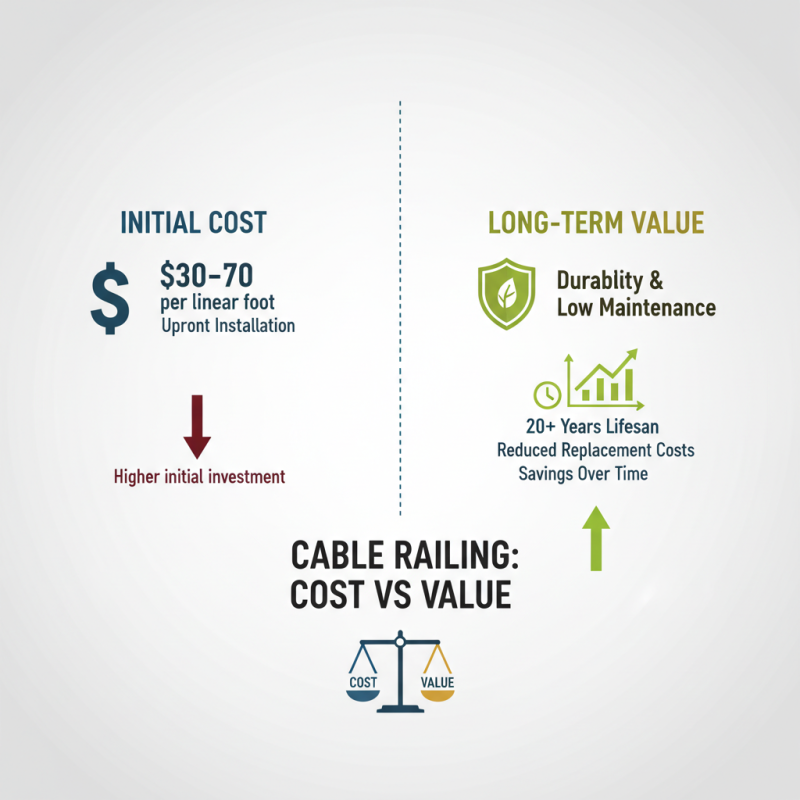
When considering cable railings, it's essential to compare initial costs with their long-term value. The upfront installation cost of cable railings typically ranges from $30 to $70 per linear foot. While this may seem steep, their durability and low maintenance requirements can lead to savings over time. For instance, a recent study indicated that the lifespan of cable railings can exceed 20 years with proper care, significantly reducing replacement costs.
Beyond immediate expenses, cable railings offer a modern aesthetic that can enhance property value. Properties featuring cable railings have reported a 10% higher appraisal value compared to traditional wood or metal railings. Additionally, homeowners often find that their insurance costs decrease due to the safety features that cable railings provide. Yet, it's worth noting that not every home is suited for cable railings. Some installations may demand more engineering to ensure compliance with local codes, thus increasing initial investments.
Investing in cable railings requires careful thought. A homeowner might find them perfect for a deck overlooking a beautiful view. However, if the existing structure doesn't support them, adjustments can quickly escalate costs. Planning and understanding both the short-term and long-term implications is crucial for making an informed decision.