10 Best Metal Stamping Parts Suppliers for Global Buyers
Choosing reliable Metal Stamping Parts suppliers is rarely as simple as comparing prices. A low quotation may hide tooling limitations, inconsistent tolerances, or long replacement cycles. Global buyers need evidence, not attractive promises. They should examine press capacity, material traceability, mold maintenance, inspection methods, packaging, and export experience. Small details matter. A scratched surface can stop an assembly line.
W. Edwards Deming, a respected manufacturing quality expert, stated, “Quality comes not from inspection, but from the improvement of the production process.” His principle remains valuable when evaluating stamping manufacturers. Strong suppliers build quality into design reviews, die development, production control, and final inspection. They also communicate clearly when a drawing is difficult, incomplete, or commercially unrealistic. That honesty can prevent expensive rework.
This guide introduces 10 Best Metal Stamping Parts Suppliers for Global Buyers. The selection considers technical capability, production consistency, certifications, delivery performance, customization support, and customer service. It is not a universal verdict. Supplier performance can change with ownership, equipment upgrades, material availability, and order volume. Buyers should still request samples, audit relevant records, and confirm current capacity before signing a contract.
Some manufacturers may excel at precision electronic components. Others may perform better with automotive brackets, stainless steel clips, or high-volume progressive stamping. The right choice depends on your drawings, annual demand, tolerances, surface requirements, and destination market. There is no perfect supplier. Careful comparison remains essential. A thoughtful sourcing decision begins with realistic questions, measurable requirements, and a willingness to challenge convenient assumptions.
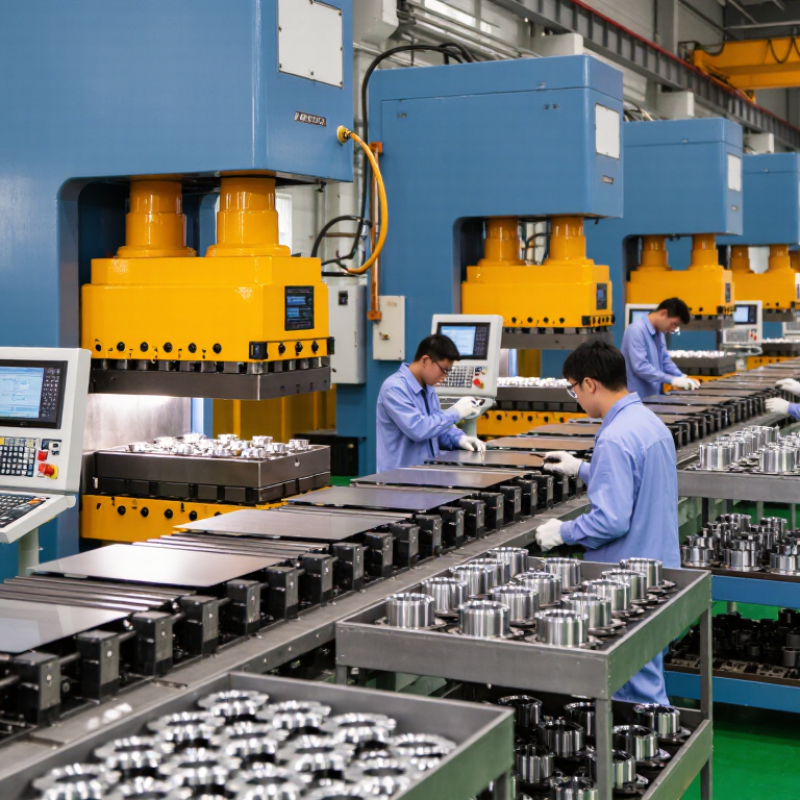
Understanding Metal Stamping Parts and Their Industrial Applications
Metal stamping parts are formed by pressing sheet metal between dies. The process creates brackets, terminals, shields, clips, and structural panels with repeatable dimensions. Common materials include steel, stainless steel, aluminum, copper, and selected alloys. Each material changes the required force, die clearance, springback, and surface treatment.
The global metal stamping market was valued at about USD 220 billion in 2023, according to Grand View Research, which forecasts continued growth through 2030. Automotive production remains a major demand center, while electrical equipment, appliances, construction hardware, and medical devices also use stamped components. The International Organization of Motor Vehicle Manufacturers reported more than 93 million motor vehicles produced worldwide in 2023. That volume explains the need for fast, consistent parts. It does not guarantee good quality.
In practical sourcing, buyers should inspect tolerance control, press capacity, coil handling, tooling life, and traceability records. A thin battery shield may need clean edges and stable flatness. A vehicle bracket may require higher tensile strength, corrosion protection, and controlled forming. ISO 9001 certification can support process discipline, but certification alone is not proof of capability. That distinction matters. Incomplete drawings, unclear material grades, or rushed tool trials often create avoidable defects. Even experienced teams miss details sometimes, especially when production changes faster than documentation. A reliable supplier should provide inspection data, sample approvals, and honest limitations before mass production begins.
10 Best Metal Stamping Parts Suppliers for Global Buyers - Understanding Metal Stamping Parts and Their Industrial Applications
A practical comparison of anonymous supplier profiles for evaluating metal stamping part production, technical capability, quality control, and industrial fit.
| Rank | Supplier Profile | Best-Fit Production Model | Common Materials | Typical Material Thickness | Primary Stamping Processes | Typical Production Volume | Typical Capability Indicators | Industrial Applications | Key Buyer Verification Points |
|---|---|---|---|---|---|---|---|---|---|
| 1 | High-volume precision supplier | Stable, repeat-production programs requiring consistent dimensional control | Low-carbon steel Stainless steel Aluminum | Approximately 0.30–3.00 mm | Progressive die stamping, piercing, blanking, forming | 100,000 to several million parts per year | Automated coil feeding, in-process inspection, multi-stage dies, documented process control | Automotive brackets, electrical terminals, appliance components, industrial hardware | Confirm press tonnage, die-maintenance procedures, material traceability, and capacity allocation |
| 2 | Automotive structural-component supplier | Safety-related and load-bearing components with demanding validation requirements | High-strength steel Galvanized steel Aluminum | Approximately 0.80–4.00 mm | Progressive stamping, transfer stamping, deep forming, bending | 50,000 to more than 1 million parts per year | Large mechanical or servo presses, forming simulation, dimensional reports, controlled welding interfaces | Seat supports, underbody parts, reinforcement brackets, chassis subcomponents | Review material grades, forming limits, PPAP capability, corrosion requirements, and validation records |
| 3 | Fine-blanking specialist | Parts needing smooth sheared edges, tight flatness, and reduced secondary machining | Carbon steel Alloy steel Stainless steel | Approximately 1.00–8.00 mm | Fine blanking, piercing, coining, shallow forming | 20,000 to 500,000 parts per year | Three-action fine-blanking presses, controlled clearance, edge-quality inspection, flatness measurement | Gears, ratchets, locking components, wear plates, precision mechanical parts | Specify edge rollover, fracture-zone limits, flatness, hardness, and burr-height acceptance criteria |
| 4 | Electronics and connector parts supplier | Miniature, high-repeatability parts produced from thin strip materials | Copper alloys Brass Phosphor bronze Stainless steel | Approximately 0.05–1.50 mm | Micro-stamping, progressive stamping, coining, bending | 500,000 to tens of millions of parts per year | High-speed presses, optical inspection, controlled burr reduction, reel-to-reel handling | Terminals, contacts, shielding parts, spring clips, sensor components | Verify conductivity, temper, plating compatibility, burr direction, coplanarity, and clean-room needs |
| 5 | Deep-drawing and drawn-cup supplier | Seamless hollow parts with moderate-to-high depth-to-diameter ratios | Aluminum Low-carbon steel Stainless steel | Approximately 0.30–2.50 mm | Deep drawing, redrawing, ironing, trimming, piercing | 10,000 to 1 million parts per year | Draw-bead control, lubrication management, blank-holder control, wall-thickness inspection | Housings, cans, fluid cups, lighting bodies, filter shells, sensor enclosures | Check material drawability, allowable thinning, surface-finish limits, tooling stages, and springback control |
| 6 | Low-volume and prototype supplier | Prototype, pilot, replacement, and frequently revised part programs | Mild steel Stainless steel Aluminum Copper | Approximately 0.50–6.00 mm | Short-run stamping, laser-cut blanking, press-brake forming, simple dies | 10 to 50,000 parts per order | Fast tooling changes, flexible scheduling, engineering feedback, modular or soft tooling options | Product prototypes, replacement brackets, development samples, customized enclosures | Confirm prototype-to-production transition plan, first-article timing, revision control, and tooling ownership |
| 7 | Electrical enclosure and panel supplier | Medium-to-large sheet-metal parts with appearance and fit requirements | Galvanized steel Stainless steel Aluminum | Approximately 0.80–3.00 mm | Blanking, bending, embossing, louver forming, piercing | 1,000 to 250,000 parts per year | Large-bed presses, CNC forming support, flat-pattern control, powder coating or plating coordination | Control cabinets, junction boxes, HVAC panels, switchgear covers, machine guards | Define surface class, bend-radius limits, enclosure rating requirements, coating thickness, and grounding features |
| 8 | Medical and laboratory component supplier | Clean, traceable parts for regulated equipment and controlled environments | Stainless steel Titanium Aluminum Nickel alloys | Approximately 0.20–2.00 mm | Precision blanking, micro-forming, deep drawing, laser-assisted secondary operations | 5,000 to 500,000 parts per year | Lot traceability, controlled cleaning, validated inspection methods, documented change control | Instrument covers, surgical-device components, diagnostic equipment parts, laboratory fittings | Verify quality-system certification, cleaning validation, biocompatibility needs, inspection records, and packaging controls |
| 9 | HVAC and appliance component supplier | Repeatable medium-volume parts balancing cost, formability, and corrosion resistance | Galvanized steel Aluminum Stainless steel | Approximately 0.50–2.50 mm | Progressive stamping, blanking, lancing, flanging, embossing | 25,000 to 750,000 parts per year | Coil-fed production, anti-corrosion material handling, gauge inspection, assembly support | Fan brackets, compressor mounts, heat-exchanger supports, appliance panels, clips | Assess corrosion performance, oil or coolant compatibility, noise-control features, and packaging protection |
| 10 | Industrial hardware and fastener-component supplier | Robust parts for machinery, construction equipment, and general industrial use | Carbon steel Spring steel Stainless steel Brass | Approximately 0.50–5.00 mm | Blanking, piercing, bending, coining, thread-forming support operations | 20,000 to 1 million parts per year | Heat-treatment coordination, hardness testing, coating management, automated sorting | Retaining clips, washers, mounting plates, clamps, machine brackets, locking hardware | Confirm tensile and hardness requirements, coating specification, burr limits, sorting accuracy, and packaging quantity |