Best Type of LP207 Pillow Block Bearing for 2026 Buyers
Choosing the best Lp207 Pillow Block Bearing for 2026 is not just a matter of matching a product code. Buyers need to check shaft size, operating load, speed, mounting space, lubrication, and exposure to dust or moisture. A bearing beside a washdown line faces different demands from one supporting a fan in a dry warehouse. Small details matter.
The U.S. Department of Energy’s “Improving Motor and Drive System Performance: A Sourcebook for Industry” reports that motor-driven systems use about 69% of the electricity consumed by U.S. industry. That figure does not measure bearing failures, but it shows why dependable rotating equipment deserves careful attention. For buyers, an unsuitable bearing can mean avoidable maintenance, alignment problems, or production interruptions. Verify dimensions against the manufacturer’s drawing, then compare load ratings and sealing options using the actual duty cycle. I would not select by price alone; the cheapest unit may not suit the site conditions. Even catalog descriptions can leave questions, so confirm fit and operating limits with the supplier. This guide compares practical selection factors for 2026 buyers, while noting that the right choice depends on the application—not a universal “best” label.
What an LP207 Pillow Block Bearing Is and How It Works
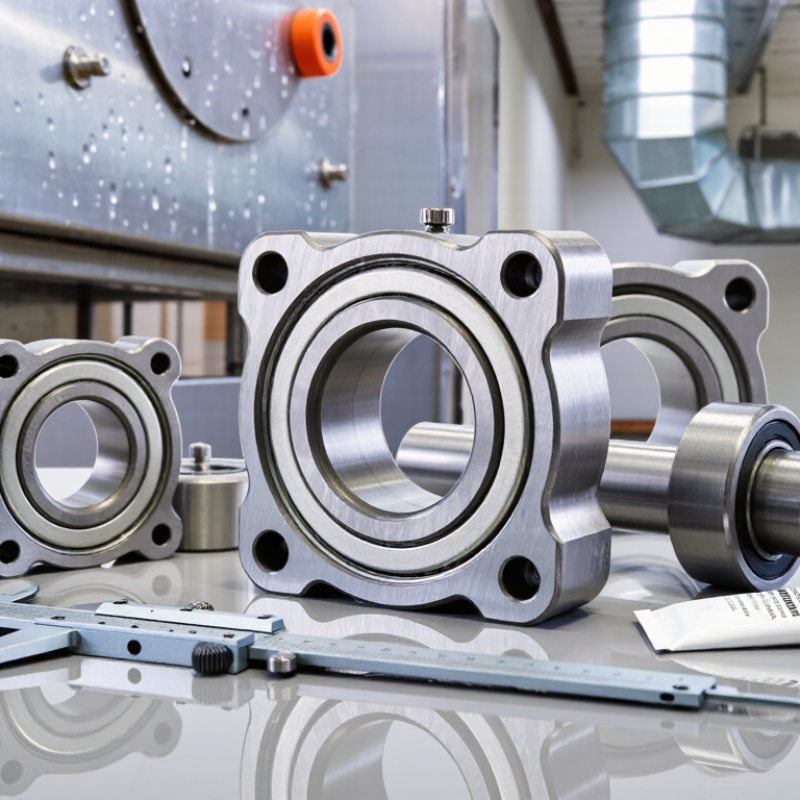
An LP207 pillow block bearing supports a rotating shaft while mounting it above a flat frame or base. The unit combines a bearing insert with a shaped housing, often made from cast metal. The insert contains rolling elements between inner and outer raceways. As the shaft turns, these elements reduce sliding friction and help carry radial loads. A practical detail: the housing’s bolt holes make alignment and replacement easier.
Many LP207 units use set screws to secure the insert to the shaft, though locking details can vary. Grease helps protect the rolling surfaces, but the correct lubricant and service interval depend on speed, load, temperature, and operating conditions. Keep the mounting surface clean and check that the shaft sits straight; even a small misalignment can cause extra heat or vibration. Listen for rough running. That can be an early warning, not a diagnosis. Before buying, confirm the bore, housing dimensions, load rating, and sealing arrangement against the equipment requirements. “LP207” alone may not identify every dimension across suppliers, so checking a drawing or measuring the existing unit is a sensible step.
Key Design Features and Specifications of LP207 Bearings
A common LP207 pillow block uses a 35 mm shaft bore and a two-bolt base. Typical dimensions include a 161 mm base length, 117 mm mounting-hole spacing, and 47.6 mm center height. These figures help with layout, but LP207 dimensions can vary by manufacturer. Check the product drawing before drilling mounting holes. A small mismatch can twist the housing and shorten bearing life.
The insert commonly uses a spherical outer surface to accommodate modest mounting misalignment, with set screws securing the shaft. A grease fitting allows relubrication; keep the fitting accessible after installation. Dirt matters. A clean shaft, flat mounting surface, and evenly tightened bolts reduce avoidable vibration.
ISO 281:2007 defines basic rating life as L10, the life reached by 90% of a sufficiently large group of identical bearings under specified conditions. For ball bearings, its life equation uses a cubed load ratio, so higher loads can sharply reduce calculated life. Still, that estimate does not capture every real-world factor. Check the LP207’s published dynamic and static load ratings, operating speed, and lubrication guidance for the actual application.
LP207 Bearing Variants and Their Differences
For 2026 buyers, an LP207 pillow block bearing is not always a one-choice purchase. Units may differ in insert construction, sealing, locking method, and housing material. The bore is commonly 35 mm, but verify the shaft size and product drawing before ordering. A small mismatch can cause movement, noise, or early wear.
Set-screw inserts grip the shaft with two screws and suit many general-purpose setups. Eccentric-collar versions use a collar that tightens in the direction of rotation; they can be useful where shaft positioning matters. Sealed inserts help keep dust and splash away from rolling surfaces, while less protected versions may need more frequent attention. Housing options vary too. Cast housings generally handle sturdier mounting needs, while lighter housings may fit less demanding equipment. Details differ by supplier, so check rated loads, speed limits, and mounting dimensions rather than relying on the LP207 code alone.
Tips: Check the shaft diameter, bolt spacing, seal style, and locking method against your old unit. Look for shaft scoring before installation. It is easy to blame the bearing, though a bent shaft or loose base can be the real problem. Don’t overtighten the set screws; follow the maker’s torque guidance.
Best Type of LP207 Pillow Block Bearing for 2026 Buyers — LP207 Bearing Variants and Their Differences
How to choose: Match the insert bore to the shaft diameter. Inch-designated 207 variants shown here correspond to common fractional-inch bores converted to millimeters; the standard metric UC207 bore is 35 mm. These are bore-size comparisons, not load ratings. Confirm the exact insert code and housing compatibility in the supplier’s catalog before ordering, since designations can vary.
How to Choose the Best LP207 Type for Your Application
Choosing the best LP207 type starts with the shaft, load, and mounting space. Confirm the bore and bolt-hole spacing against the machine drawing; similar designations can vary between suppliers. Check radial and axial loads, operating speed, vibration, and shaft alignment. A bearing that fits neatly may still fail early under shock loads.
Next, match the locking method, seals, and lubrication arrangement to the working conditions. Set-screw and other locking designs behave differently under vibration, so verify the manufacturer’s technical drawing before ordering. In dusty service, effective sealing matters; in wet areas, confirm that housing and bearing materials suit frequent cleaning. Small details count. The U.S. Department of Energy’s 2010 Operations & Maintenance Best Practices Guide estimates predictive maintenance can reduce costs by 8–12% compared with preventive maintenance and 30–40% compared with reactive maintenance. These are program-level estimates, not a guaranteed saving from choosing one bearing.
For a vibrating conveyor, inspect shaft fit and mounting rigidity, then compare the unit’s load rating with the calculated duty. ISO 281 provides a method for estimating rolling-bearing life, but real service life also depends on installation, contamination, and lubrication. Catalog numbers are useful, not enough. I would recheck the fit after a trial installation; that step is easy to overlook.
Best Type of LP207 Pillow Block Bearing for 2026 Buyers - How to Choose the Best LP207 Type for Your Application
| Type or selection factor | Typical configuration | Best suited applications | Advantages | Check before buying |
|---|---|---|---|---|
| Standard LP207 pillow block unit | Mounted bearing insert in a pillow-block housing; shaft size, housing shape, and locking method depend on the specific LP207 product specification. | General-purpose support for rotating shafts in conveyors, fans, and light-to-medium machinery, when the unit’s ratings match the operating conditions. | Ready-to-mount arrangement; convenient for replacing a complete bearing unit. | Confirm bore diameter, overall dimensions, bolt-hole spacing, housing material, allowable load, speed, and lubrication method from the product drawing. |
| Set-screw-locking insert | Two radial set screws secure the insert to the shaft; a common arrangement for insert bearings such as the UC-style series. | Applications with a constant rotation direction and ordinary positioning requirements. | Simple installation and adjustment; widely used in mounted bearing units. | Use the specified tightening procedure. Set screws can mark the shaft, and this arrangement may be less suitable where frequent reversing or severe vibration occurs. |
| Eccentric-collar-locking insert | An eccentric collar turns against the inner ring to lock the bearing to the shaft; compatibility depends on the insert and housing design. | Many light- and medium-duty applications where a collar-locking insert is specified. | No radial set screws are required for the locking action. | Do not assume an eccentric-collar insert is interchangeable with a set-screw insert. Confirm the insert designation, shaft fit, and direction of rotation. |
| Relubricatable version | Housing and insert include a grease fitting and lubrication passages, where provided by the design. | Equipment with scheduled maintenance access and operating conditions that require periodic relubrication. | Allows replenishment of grease when the unit is designed for it and the correct maintenance interval is followed. | Check fitting position, grease compatibility, relubrication guidance, and whether excess grease can escape. Not every LP207 unit is relubricatable. |
| Sealed or shielded insert | Insert uses contact seals, shields, or another specified closure arrangement; the exact protection level varies by design. | Dusty or damp environments when the selected seal is suitable for the contaminants and temperature. | Helps retain lubricant and restrict entry of contaminants. | “Sealed” does not mean suitable for every washdown, chemical, or abrasive environment. Check seal material, temperature limits, and cleaning requirements. |
| Corrosion-resistant configuration | May use stainless-steel or coated components, corrosion-resistant seals, and compatible lubricant; confirm the full material specification. | Food-processing areas, outdoor equipment, or humid locations where corrosion resistance is needed. | Can improve resistance to corrosion compared with a standard uncoated unit. | Verify the materials of the housing, insert, fasteners, and seals separately. A corrosion-resistant housing alone does not make the entire unit corrosion-proof. |
| Temperature-specific configuration | Uses bearing, seal, lubricant, and sometimes housing materials selected for the stated operating-temperature range. | Equipment operating outside ordinary ambient conditions, such as near ovens or in cold rooms. | Can be selected to match a defined temperature range. | Check the limits for the complete unit, not just the bearing insert. Standard seals and grease may not suit elevated or low temperatures. |
| Standard UC207 insert dimensional reference | A common UC207 insert has a 35 mm bore, 72 mm outside diameter, and 42.9 mm inner-ring width. | Useful as a reference when identifying a unit explicitly specified with a UC207 insert. | Provides a practical starting point for checking a replacement insert. | These are insert dimensions, not the overall dimensions of an LP207 pillow block. Verify the actual insert designation and the complete unit drawing before ordering. |
| Load, speed, and alignment check | Selection depends on radial and axial loads, shaft speed, operating hours, shock, vibration, and shaft alignment. | Every application, especially continuous-duty or shock-loaded machinery. | Helps prevent premature wear, overheating, and unexpected downtime. | Use the manufacturer’s load and speed data for the exact unit. Account for shaft and mounting-surface alignment; do not select by bore size alone. |
Buyer note: “LP207” is not enough by itself to establish a universal bore, housing dimension, locking style, or load rating. Before ordering, compare the existing unit’s markings and measurements with the supplier’s drawing, and confirm the shaft diameter and mounting-hole pattern.
Buyer Checklist for Sourcing LP207 Bearings in 2026
Best Type of LP207 Pillow Block Bearing for 2026 Buyers
Buyer Checklist for Sourcing LP207 Bearings in 2026
Choosing an LP207 pillow block bearing starts with the machine, not the product label. Confirm the shaft diameter, housing footprint, mounting-hole spacing, and locking method against a current drawing. LP207 variants can differ, so do not assume that a matching code guarantees a direct fit. Fit comes first. Also check the load, operating speed, and expected vibration. A bearing suited to a clean conveyor may struggle near abrasive dust or washdown areas.
Tips: Ask for a dimensional drawing, material details, load ratings, speed limits, and lubrication guidance. Check whether seals suit the site conditions. Compare the stated specifications with your equipment records, and keep the documentation with the purchase order. Small details matter.
Before ordering, confirm stock quantity, lead time, packaging, and traceable inspection records. For a replacement, measure the shaft and mounting points rather than relying on an old label. On arrival, inspect the housing and seals, then verify the fit before full operation. A simple incoming check can catch a mismatch early. I would still avoid treating a supplier’s general specification sheet as proof of suitability; actual installation conditions deserve a second look.